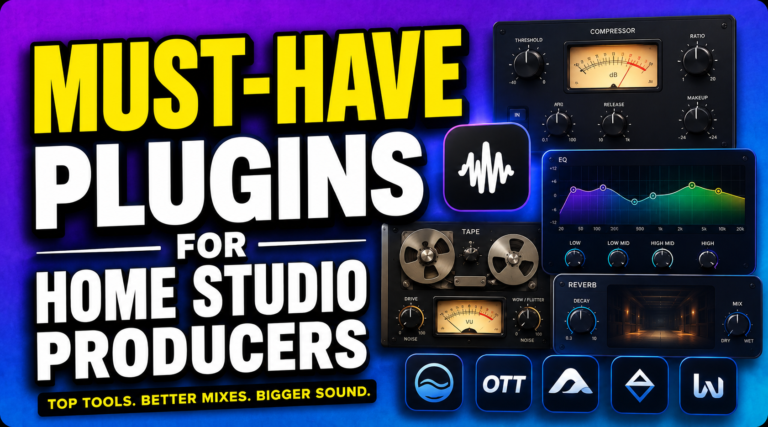

On the journey to hone your own unique sound, you’ll find that you need go-to effects such as reverb. Reverb will give your sound more room and glue all the other elements together.
Space is important in your mixes and this is where reverb comes in as it adds roominess. Now choosing a reverb VST is another story altogether and can become overwhelming for beginners.
Fortunately, all the best reverb plugins have trials you can install and try out before you purchase.
Here’s a good list of awesome reverb plugins that actually sound great.
Key Takeaways
- Valhalla Room offers the best value at $50 with lush, versatile algorithms
- Convolution reverbs recreate real spaces, while algorithmic reverbs create a unique character
- Different reverb types (plate, hall, room, chamber, spring) serve different mixing purposes
- Most top reverbs offer free trials so you can test before purchasing
Reverb Types (What You Actually Need to Know)
Let’s be honest, walking into the reverb plugin market without understanding the basics is like ordering food in a language you don’t speak. You might get something good, but you probably won’t get what you actually wanted.
The main point is that different reverb types serve different purposes in your mix. A plate reverb will push vocals forward and make them shine.
A hall reverb will push instruments back and create depth. A room reverb glues everything together in a shared space.
There are two overarching categories you need to know about. Convolution reverbs use samples of real spaces (called impulse responses) to recreate how those actual rooms sound.
Algorithmic reverbs use digital processing to generate reverb, often emulating classic hardware units or creating entirely new textures.
| Reverb Type | Best For | Character | Common Uses |
|---|---|---|---|
| Room | Cohesive glue across mix | Natural, subtle, intimate | Full mix, drums, acoustic instruments |
| Hall | Depth and space | Big, smooth, spacious | Orchestral, strings, pushing sounds back |
| Plate | Front-of-mix elements | Bright, smooth, forward | Vocals, snares, guitars |
| Chamber | Dense reflections | Thick, colored, dense | Vintage tones, special effects |
| Spring | Guitar and vintage sounds | Bouncy, metallic, lo-fi | Electric guitar, surf rock, retro vibes |
Valhalla Room (The Budget King)
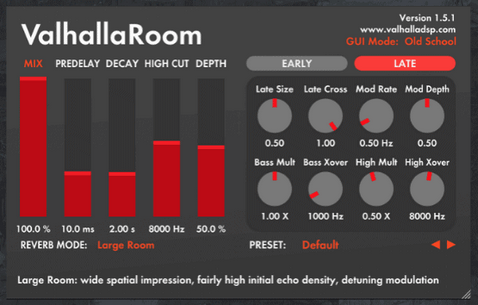
Did somebody say best bang for your buck? Valhalla Room sits at just $50 and punches way above its weight class. This plugin has become legendary in the producer community, especially among electronic music makers.
The sound is lush, smooth, and slightly unnatural in the most pleasing way possible. It doesn’t try to recreate a real room.
Instead, it creates beautiful digital spaces that sit perfectly in modern productions. The interface is clean and simple despite offering plenty of advanced options under the hood.
I personally like using Valhalla Room on synths, drums, and any time I want a wide, spacious reverb tail. It excels at creating those long, evolving reverbs that fill up the stereo field without muddying your mix.
One of my biggest wins with this plugin came on an EDM track where the lead synth needed presence without getting lost.
A touch of Valhalla Room with the Early Cross parameter pushed up created this massive, wide reverb that made the synth feel huge while keeping it clear and defined.
iZotope Neoverb (The Smart Assistant)
At around $220, Neoverb costs more than Valhalla but brings serious technology to the table. The standout feature is the AI-powered Reverb Assistant that analyzes your track and suggests settings. It’s like having an experienced engineer looking over your shoulder.
You can blend Hall, Plate, and Room algorithms together, creating hybrid reverbs that would be impossible with hardware. The built-in EQ section helps prevent the muddiness that plagues dense mixes, automatically carving out space for your reverb to sit cleanly.
The sound itself is more clinical and transparent than character-driven plugins like Valhalla. This makes it perfect for modern productions where clarity matters more than vintage vibe. Vocals especially benefit from Neoverb’s clean, polished approach.
The downside is that the interface can feel busy for total beginners. There are a lot of options and controls that might overwhelm someone just starting out. That said, the AI assistant helps smooth the learning curve significantly.
FabFilter Pro-R 2 (The Precision Tool)
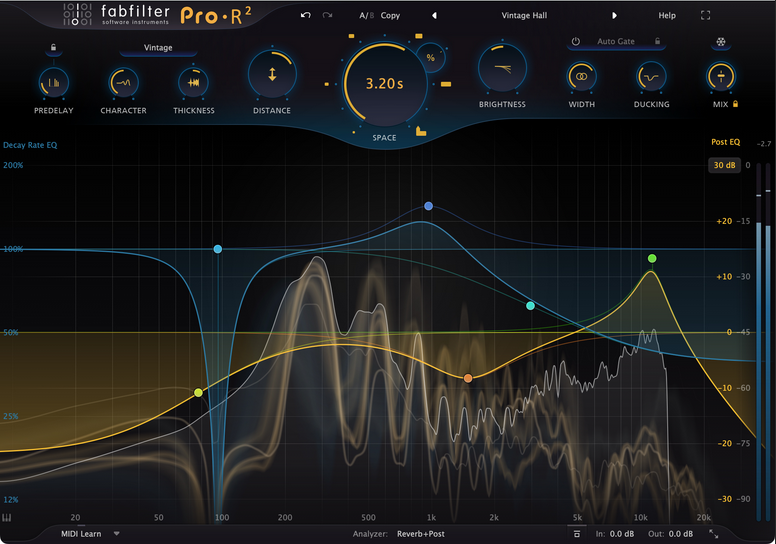
FabFilter Pro-R 2 costs about $180 and delivers exactly what you’d expect from FabFilter: pristine sound quality wrapped in a gorgeous, intuitive interface.
The killer feature here is the Decay Rate EQ. This lets you sculpt the reverb tail by frequency, so you can make the low-end decay faster while keeping the highs shimmering longer. It’s surgical control that’s invaluable during mixing.
The sound is ultra-clean and transparent. If you need a reverb that adds space without adding character or color, Pro-R 2 is your plugin. It’s the scalpel in your reverb toolkit, perfect for precision work where every detail matters.
- Use on vocals that need clarity and presence without muddiness
- Perfect for mixing workflows requiring detailed control over reverb decay
- Excellent for modern pop, electronic, and hip-hop productions
- Great for learning reverb fundamentals thanks to visual feedback
- Not ideal for dramatic, character-rich reverb needs or vintage tones
- Best when you need transparency and precision over vibe
Liquidsonics Verbsuite Classics (The All-Rounder)
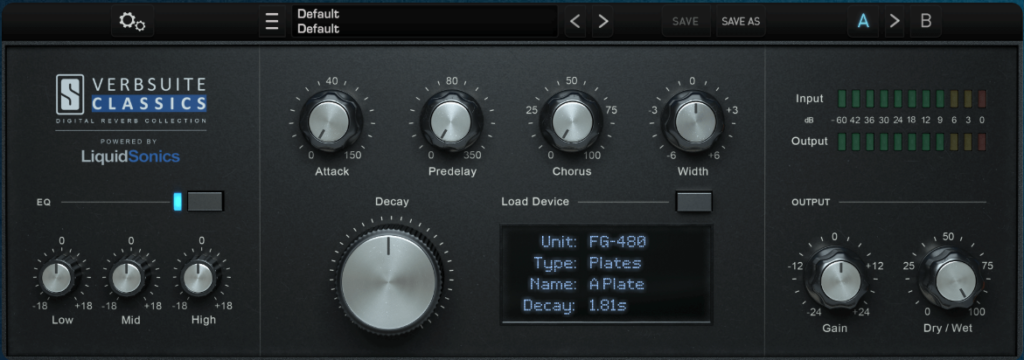
Verbsuite Classics runs $149 standalone or comes included with Slate Digital’s All Access Pass at $15 per month. This convolution reverb emulates classic digital reverb units that shaped countless hit records.
The reason why this plugin stands out is its versatility. You can switch between different classic unit models, completely changing the reverb’s character and tone. This means one plugin can handle almost any reverb task in your mix.
The interface is refreshingly simple with big knobs and no complicated settings. It also includes fantastic presets that serve as great starting points.
I’ve found it particularly shines on drums, adding that professional polish that separates bedroom productions from commercial releases.
The “Gatey 80s Drums” preset deserves special mention. I’ll usually load it up, drop the mix to about 30%, cut some highs, bump the width, and adjust the decay to taste. That combination gives snares and toms an incredibly punchy, present sound.
Valhalla Vintage Verb (The 80s Character Machine)
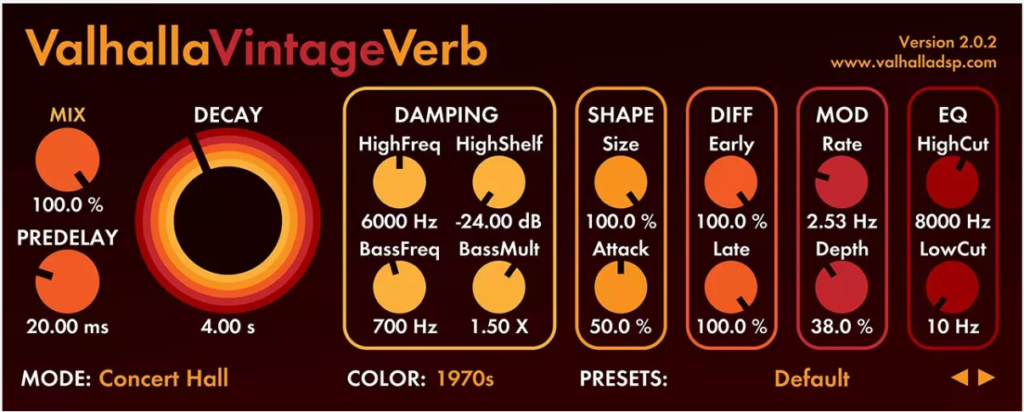
Another $50 gem from Valhalla, Vintage Verb specializes in those big, lush, forward 80s reverb tones that make elements feel massive in your mix.
The question is: do you want your sounds to feel large and exciting? This plugin answers with a resounding yes. It’s capable of more natural tones than Valhalla Room, but it’s most famous for bright, forward reverb that pushes elements to the front of the mix.
Vocals, leads, and drums all benefit from Vintage Verb’s character. It has this way of making things sound expensive and polished, like they belong on a major label release. The psychedelic, colorful interface matches the vibe perfectly while remaining simple to use.
Make sure to use the built-in low-cut options to clean up the low-end of this reverb. It can get muddy in the bass frequencies if you’re not careful, but a little high-pass filtering keeps it sitting beautifully in the mix.
Wave Alchemy Radiance (The Plate Specialist)
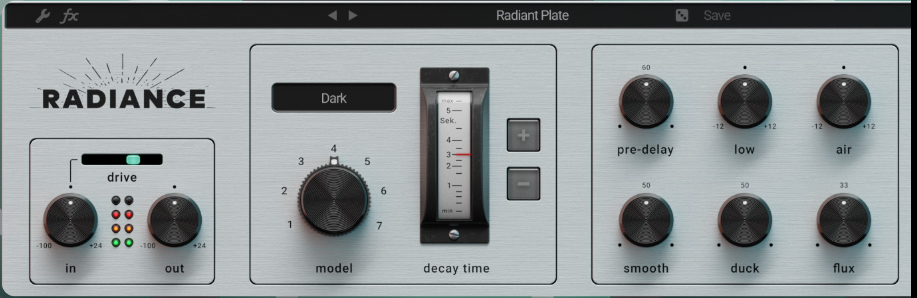
At about $75, Radiance takes the classic EMT-140 plate reverb and supercharges it with seven different vintage plate variations. Each model has its own character, from Dark to Air to Classic.
This fusion of vintage warmth and modern control makes Radiance incredibly flexible. You get mid/side EQ, modulation, ducking, gating, and character modes that let you shape the reverb in ways the original hardware never dreamed of.
It’s particularly excellent for adding depth and polish to vocals. The plate character has that bright, smooth quality that makes vocals sit right up front in the mix while still feeling like they exist in a real space.
The downside is higher CPU usage than simpler reverbs. This definitely suits professional workflows more than entry-level setups. If you’re on an older computer, you might need to freeze tracks using Radiance to avoid performance issues.
Eventide Blackhole (The Creative Spaceship)
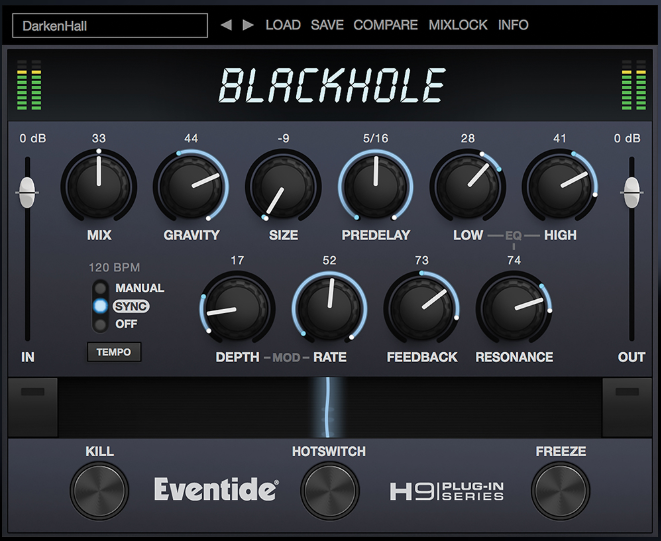
Blackhole costs around $39 and delivers massive, immersive reverb atmospheres unlike anything else. Originally a hardware effect, it’s now a virtual playground for creating otherworldly spaces.
The unique “Gravity” parameter lets you twist reverb tails in creative ways, bending and warping the decay in ways that sound completely alien. It’s perfect for sci-fi soundtracks, cinematic productions, and ambient music.
This isn’t your go-to reverb for natural-sounding mixes. Blackhole is all about creating vast, evolving textures that transport listeners to another dimension. It can easily overpower a mix if you’re not careful, but that’s part of its charm.
I love throwing Blackhole on synth pads and atmospheric elements in film scores. A little automation on the Gravity parameter creates these incredible evolving soundscapes that feel alive and breathing.
Best Free Reverb Plugins You Should Download Today
The best free reverb plugins right now are Valhalla Supermassive, TAL-Reverb-4, Dragonfly Reverb, and OrilRiver.
Valhalla Supermassive delivers huge ambient tails and creative textures. It works well on vocals, guitars, and synths, especially for atmospheric sounds.
TAL-Reverb-4 offers warm plate-style reverb that’s easy to dial in. It’s a solid choice for vocals, snares, and electric guitar.
Dragonfly Reverb provides clean room, hall, and plate options that sound natural and run light on CPU.
OrilRiver focuses on realistic halls and rooms, making it useful for acoustic guitar and full mixes.
These free plugins can compete with paid options if you keep decay times controlled and filter the low end.
Reverb Settings for Different Vocal Styles
Start with these ranges, then adjust by ear:
Pop vocals
Plate or small hall
Decay: 1.2 to 1.8s
Pre-delay: 20 to 40ms
Wet mix: 12 to 18%
Rap vocals
Short room or plate
Decay: under 1s
Pre-delay: 10 to 25ms
Wet mix: 8 to 15%
Rock vocals
Medium plate or hall
Decay: 1.5 to 2.5s
Pre-delay: 30 to 50ms
Wet mix: 15 to 25%
Intimate / bedroom pop
Small room or soft plate
Decay: 0.8 to 1.5s
Pre-delay: 15 to 30ms
Wet mix: 10 to 16%
High-pass the reverb around 200 to 300Hz to avoid muddiness and keep vocals upfront.
Guitar Reverb: Choosing Between Spring, Plate, and Hall
Different reverbs suit different guitar tones.
Spring reverb works best on electric guitars, especially clean or vintage styles. It adds bounce and character.
Plate reverb fits electric and acoustic guitar when you want smooth depth without long tails. Great for rhythm parts and melodic leads.
Hall reverb creates wide, spacious sounds. Use it for ambient electric guitar or lush acoustic parts.
Quick guide:
Electric rhythm: spring or plate
Electric ambient lead: hall or large plate
Acoustic guitar: hall or small room
Match the reverb type to the guitar’s role in the mix, then keep decay tight so the tone stays clear.
Free Options Worth Trying
The good news is that you don’t have to spend money to get decent reverb. Free options have come a long way, and you’d be surprised at how big they sound.
Logic Pro users get ChromaVerb included with their DAW, and it’s genuinely one of the best-sounding reverbs available anywhere. It features a clean interface with visual monitoring through a creative color display, multiple modes, and serious tone-shaping capabilities.
Stock DAW reverbs are improving significantly across the board. What used to be a clear disadvantage is now much less of a gap.
You can absolutely make professional-sounding music with just your stock reverb while learning the fundamentals.
- Logic Pro’s ChromaVerb rivals many premium reverbs
- Ableton’s stock reverb is functional but less impressive
- Download trial versions of premium reverbs to test before buying
- Free reverbs are perfect for learning reverb basics
- Many companies offer limited-time free versions during promotions
- Don’t let lack of premium reverbs stop you from making music
Choosing the Right Reverb for Your Mix
A great way to start is by matching reverb type to instrument. Plate reverbs work brilliantly on front-of-mix elements like vocals and snares because their bright character pushes sounds forward. Hall reverbs do the opposite, creating depth by pushing instruments back in the soundstage.
Room reverbs serve as cohesive glue across your entire mix. Think of them as placing all your elements in the same physical space, making everything feel connected and unified. Spring reverbs remain the classic choice for electric guitars, delivering that bouncy, vintage character.
| Plugin | Price | Best For | Why Choose It |
|---|---|---|---|
| Valhalla Room | $50 | EDM, synths, wide reverbs | Best value, lush sound, versatile |
| iZotope Neoverb | $220 | Vocals, dense mixes | AI assistant, clean, prevents muddiness |
| FabFilter Pro-R 2 | $180 | Precision mixing work | Decay Rate EQ, transparent, surgical |
| Verbsuite Classics | $149 | Drums, all-purpose | Versatile, classic emulations |
| Valhalla Vintage Verb | $50 | Vocals, leads, 80s tones | Forward, bright, makes sounds huge |
| Wave Alchemy Radiance | $75 | Vocals, cinematic depth | Vintage plate warmth, modern control |
| Eventide Blackhole | $39 | Ambient, cinematic, experimental | Massive atmospheres, creative effects |
Take the time to download trial versions before purchasing. Most companies offer 14-30 day trials that let you test the plugin in your actual projects. This is the only way to know if a reverb truly fits your workflow and sound.
Final Thoughts
A reverb sound can make or break your mixes if overdone or just not added.
You’ll often find that certain reverb plugins are great for certain elements in a track. For example, a mastering plugin will not be suitable for an individual beat elements such as snares or hi-hats.
In some cases, all you need is a good free reverb plugin to get the job done. Sometimes, you’ll have to dig deeper to find a plugin that will fit into your overall unique sound.
My best advice is to just download a trial version of a reverb plugin, try it out for a week or so, and then decide from there. Free reverb plugins have come a long way, and you’d be surprised at how big they sound.
FAQs: Best Reverb Plugins
Which reverb is best for vocals?
Wave Alchemy Radiance and iZotope Neoverb are two of the best reverb plugins for vocals. Radiance delivers warm plate-style depth that helps vocals stand out, while Neoverb uses masking and smart EQ to keep mixes clean in busy sessions.
What is the best reverb plugin?
Valhalla Room is the best all-around reverb plugin for most producers, offering lush algorithms at a low price. For detailed control and natural spaces, FabFilter Pro-R 2 is a top pick. The right choice depends on budget and how much mix precision you need.
What is the best free reverb plugin?
Valhalla Supermassive is the best free reverb plugin across all DAWs, known for huge ambient tails and creative textures. TAL-Reverb-4 is another strong option for plate-style warmth. Logic users also get ChromaVerb, which rivals many paid plugins.
How much reverb should I put on my vocals?
Start with a wet mix of 10 to 20%. The vocal should feel spacious without sounding far away. Add 20 to 40 ms of pre-delay so the dry vocal stays clear, then adjust decay based on the song.
What reverb does Billie Eilish use?
Finneas keeps Billie Eilish’s vocals mostly dry, using subtle room or plate reverb for intimacy. He commonly works with Valhalla Room and Logic stock plugins to maintain that close, bedroom-pop sound.
How do you get perfect reverb on vocals?
Use pre-delay to separate the reverb from the vocal, high-pass the reverb around 200 to 300 Hz to prevent low-end buildup, and keep the wet level low. Small moves usually sound better than heavy effects on lead vocals.
What is the best reverb plugin for guitar?
For electric guitar, spring or plate reverbs like Soundtoys Little Plate or amp-based spring models work great. For acoustic guitar, hall or room reverbs such as Valhalla Room add natural space without coloring the tone.
What reverb does John Mayer use?
John Mayer mainly relies on spring reverb from Fender-style amps for his electric tone. In studio recordings, he also uses plate reverbs and the Lexicon 480L on guitars and vocals.