
I’ve lost count of how many concerts I’ve attended where the band was tight, the songs were great, and something still felt off. Then I moved a few sections over during the opening act and suddenly everything clicked.
The vocals sat perfectly. The kick had punch without swallowing the bass. The reverb tails made sense.
That moment taught me something early on as a producer. Live sound is not consistent across a venue. Where you sit at a concert shapes what you hear just as much as who is on stage.
If you run a home studio, mix music, or simply care about sound quality, this guide will save you years of trial and error.
We’ll talk about why certain seats sound amazing, why others fall apart, and how to choose seats the same way a mixing engineer thinks about a room.
Why Does Seat Choice Matter for Your Concert Experience?
Here’s the real reason seating matters. A concert venue is a giant acoustic space with very little treatment compared to a studio.
Sound reflects off walls, ceilings, balconies, and people. Low frequencies pile up. High frequencies get absorbed or blocked. Timing changes depending on distance.
In a studio, we fight early reflections and standing waves. In a venue, those same problems exist, just on a much larger scale.
Now here’s the kicker. The sound system is tuned for a specific listening zone. That zone is not random. It is intentional.
Most professional live mixes are dialed in at Front of House, also called FOH. That position becomes the reference point for balance, tone, and dynamics.
The further you move away from that reference, the more compromises you hear.
This is why two people can attend the same concert and walk away with totally different opinions about how it sounded.
And this is also why it’s best to find out the best time to get to a concert. This way you can choose your seating carefully for a full experience.
How Does Live Sound Work in a Concert Venue?
To understand the best and worst places to sit at a concert, you need a basic mental model of how live sound behaves.
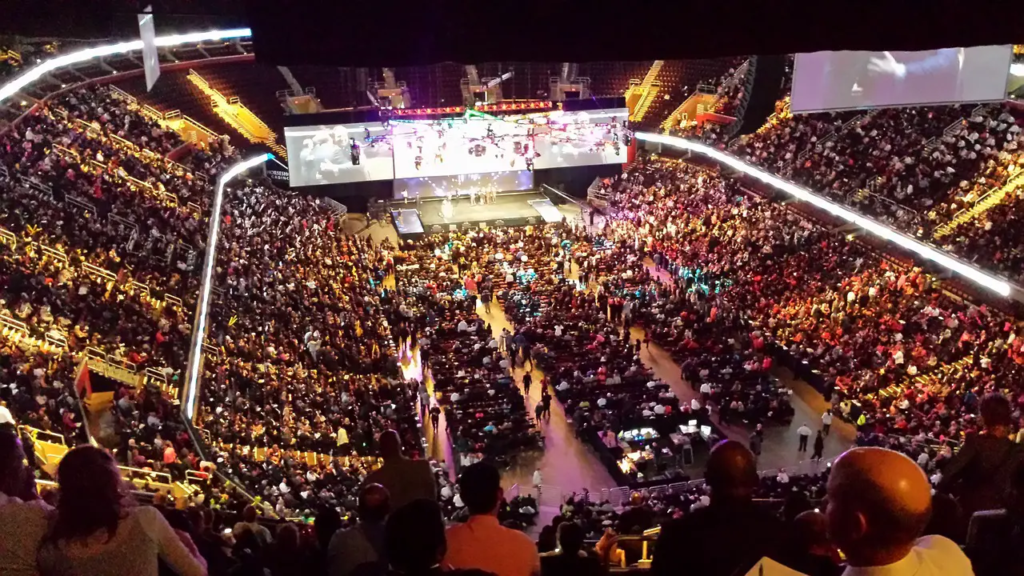
Most modern venues use line array speaker systems.
These are tall vertical stacks of speakers flown on either side of the stage. Each cabinet is angled to cover a specific slice of the audience. The goal is even volume and tone from front to back.
Sounds good on paper. Reality is messier.
Speaker Coverage, Timing, and Reflections
Sound travels at a fixed speed. The further you sit from the speakers, the later the sound arrives. Venues compensate with delay speakers, but those delays only line up correctly in certain zones.
Reflections complicate things further. A hard back wall can throw delayed energy forward. Balconies can trap low mids. Glass and concrete exaggerate harsh frequencies.
As producers, we listen for clarity, separation, and balance. Those qualities depend heavily on where reflections land relative to the direct sound.
Why Bass Is the Hardest Thing to Control Live
Low frequencies are long waves. They wrap around objects, build up in corners, and cancel out in other spots.
You can sit in one seat where the kick drum feels massive, then move ten feet and it disappears. That is not the band playing differently. That is physics.
This is also why many bad concert seats feel boomy yet unclear. Too much low end masks detail in the mids, where vocals and guitars live.
What Are the Best Places to Sit at a Concert for Sound Quality?
If sound quality is your top priority, your goal is simple. Sit where the system was designed to sound right.
Near the Front of House Mixing Position
This is the gold standard.
FOH is where the sound engineer stands or sits while mixing the show. Every level decision, EQ move, and effect send is judged from this position.
Sitting near FOH gives you the most honest version of the mix. Stereo imaging feels natural. Vocals sit where they should. Dynamics translate properly.
Here’s a quick reference:
| Seat Location | What You Hear | Why It Works |
|---|---|---|
| Near FOH | Balanced and clear | System tuned for this area |
| Center sections | Accurate stereo | Even speaker coverage |
| Slightly behind FOH | Still solid | Minimal reflection issues |
Whenever I buy tickets, the first thing I look for is FOH on the seating chart. If I can get close without being dead center of foot traffic, I take it.
Center Sections With Clear Sightlines
Center seating matters more than people realize. Stereo sound only works if both left and right arrays hit your ears evenly.
Extreme side seating collapses the image. You hear more of one speaker stack than the other. Panning decisions lose meaning.
Center sections also reduce phase issues caused by uneven arrival times.
Lower Bowl Sweet Spots
Lower bowl seating, about a third of the way back from the stage, often delivers a great balance of impact and clarity.
You get enough distance for the sound to blend while staying close enough to maintain energy.
These seats often outperform more expensive front row options for actual listening quality.
What Are the Best Seats for the Visual Experience Without Killing the Mix?
Sound matters, but visuals shape how we perceive sound.
Mid-height seating usually wins here. You see lighting cues, stage movement, and crowd interaction without craning your neck.
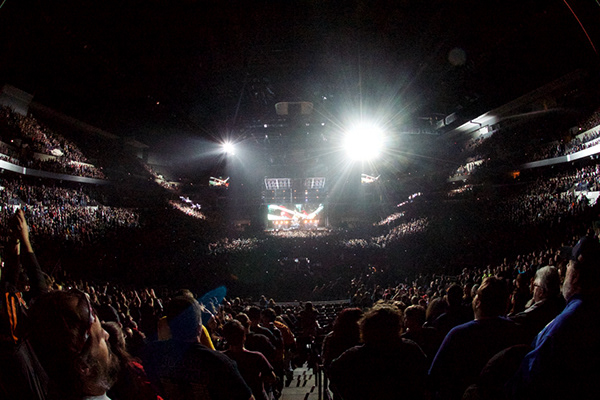
Being too close can actually hurt perception. You lose context, and you see individual performers instead of the whole production.
Distance allows your brain to sync visual rhythm with musical rhythm. That connection makes the performance feel tighter and more emotional.
Worst Places to Sit at a Concert for Sound
Now, let’s talk about seats I actively avoid. It’s also a good idea to find out how long a concert lasts so you can plan accordingly.
Under Balcony Seating
Under-balcony seats are notorious for bad sound. High frequencies get absorbed or blocked by the balcony above. Bass collects underneath, creating a muddy low end.
Everything sounds dull yet boomy at the same time. Vocals struggle. Cymbals lose air.
If you care about mix clarity, skip these seats entirely.
Extreme Side Sections Near the Stage
These seats look great on social media. Sonically, they are a mess.
You are too close to one speaker array. Stereo collapses. Certain instruments dominate while others vanish.
Here’s a quick breakdown:
| Problem Area | Common Issues |
|---|---|
| Under balcony | Boxy tone, weak highs |
| Side stage seats | Poor stereo balance |
| Back corners | Echo and delayed reflections |
Seats Right Next to the PA Stack
Loud does not equal good. Sitting too close to a speaker stack overwhelms your ears and destroys balance.
You hear raw output, not the blended system.
What Are the Worst Seats for Sightlines at a Concert?
Sound aside, bad visuals affect how you feel about the music.
Obstructed view seats are obvious offenders. Railings, lighting trusses, camera rigs, and support beams break immersion.
Flat seating angles are another issue. When the stage is level with your eye line, depth disappears. Everything feels compressed visually.
Standing Floor vs Seated Areas
You might be wondering which is better.
Standing floor areas deliver energy. Crowd movement, shared excitement, and physical impact make shows memorable.
Sound quality on the floor depends heavily on position and crowd density. Every person absorbs high frequencies. As the room fills, the mix changes.
Seated areas offer consistency. Once you sit, your listening position stays fixed. For producers who like analyzing balance and arrangement, seating wins.
My personal rule is simple. If I want to feel the show, I stand. If I want to hear the mix, I sit.
How Does Music Genre Change the Best Seats at a Concert?
Genre matters more than most people think.
Rock and metal shows benefit from some distance. Guitars need space to blend. Drums sound fuller when reflections support them.
EDM and bass-heavy performances often sound better further back, where low frequencies have room to develop.
Jazz, acoustic, and vocal-driven shows reward center seating with good acoustics. Clarity matters more than volume.
Hip-hop shows benefit from strong midrange response. Seats that preserve vocal presence make a huge difference.
Small Venues vs Large Arenas
In small clubs, most seats work. The room is intimate. Distance is limited.
Theaters and mid-size venues are often the best-designed spaces for sound. They were built with acoustics in mind.
Large arenas and stadiums are the hardest. Sound has to travel far. Delay systems help, but sweet spots are narrower.
The bigger the venue, the more strategic you need to be.
How I Choose My Seat as a Music Producer
My approach to choosing a concert seat changed completely once I started mixing music seriously. Early on, I chased front row excitement. Over time, I realized I was hearing a very skewed version of the mix.
Now, I listen like I would in a studio. I want to hear how the vocals sit in the track, how the low end translates, and whether the overall balance feels intentional or forced.
The first thing I look for is FOH. That position tells me where the engineer is making decisions. Sitting close to that area gives me the best chance of hearing what the show is supposed to sound like.
I also pay attention to room shape. Wide rooms behave differently than deep ones. Low ceilings exaggerate low mids. Tall ceilings help sound breathe.
Mistakes taught me more than anything. I have sat in seats that looked perfect on a map but ended up being bass traps or reflection zones. After enough shows, you start trusting your instincts.
Now, my rule is simple. If I would not mix a song from that position in my studio, I probably do not want to hear a live show from there either.
Practical Tips for Picking Better Concert Seats
Choosing better concert seats gets easier once you start thinking like a sound engineer instead of a ticket buyer. The goal is not closeness or price. The goal is balance, consistency, and minimal acoustic problems.
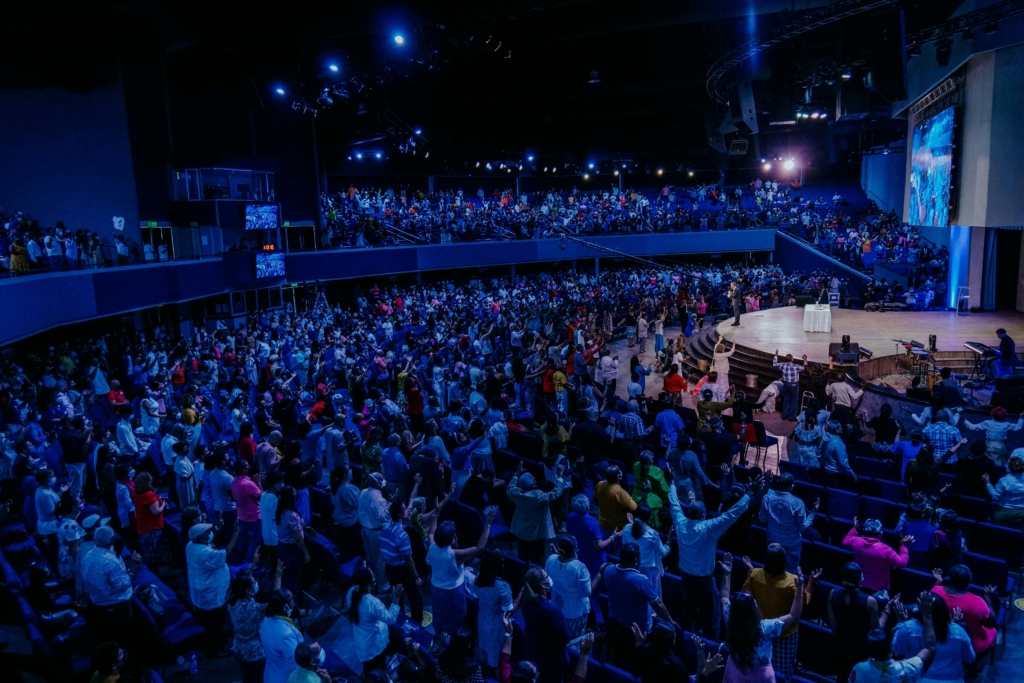
I always start by looking at the venue seating chart and asking one simple question. Where is the sound likely being mixed from?
That usually tells me where the system is tuned to sound right. From there, I work outward and avoid obvious problem zones like deep corners and under-balcony sections.
Another thing people underestimate is how much crowd density changes the sound. A packed standing floor absorbs highs fast.
Seated areas change less over time, which means the mix you hear during the opener is closer to what you hear during the headliner.
Here are the practical checks I run through almost every time:
- Look for the Front of House mixing position and aim to sit near it or in line with it
- Prioritize center alignment over closeness to the stage
- Avoid seats directly under balconies or overhangs
- Be cautious with extreme side sections, even if they look close
- Check real audience photos taken from the seat area, not promo images
- Remember that cheaper mid-range seats often beat premium side seats for sound
Once you start using this process, you will notice patterns. Certain sections consistently sound better in the same venue, regardless of the artist.
Wrapping Up
Choosing the best and worst places to sit at a concert is not about chasing hype or price tags. It is about understanding how sound behaves in large spaces and placing yourself where that behavior works in your favor.
Once you start thinking like a producer, concerts stop being a gamble. You hear cleaner mixes, notice better balance, and walk away feeling like you actually experienced the show the way it was meant to be heard.
Trust your ears, learn your venues, and remember that the right seat can make a good performance unforgettable.
FAQ: Best & Worst Places to Sit at a Concert
What is the best place to sit at a concert for sound?
Near the Front of House mixing position or center seating slightly back from the stage.
Are front row seats good for sound quality?
Usually not. They favor visuals over balanced audio.
Do cheap seats always sound worse?
No. Some mid-range seats sound better than expensive side seats.
Is standing better than sitting for sound?
Standing offers energy. Sitting offers consistency and clarity.
Does venue size affect where I should sit?
Yes. Larger venues require more distance for sound to blend properly.
Choosing the right seat is not luck. It is understanding how sound behaves in a room. Once you start listening like a producer, concerts become a whole new experience.