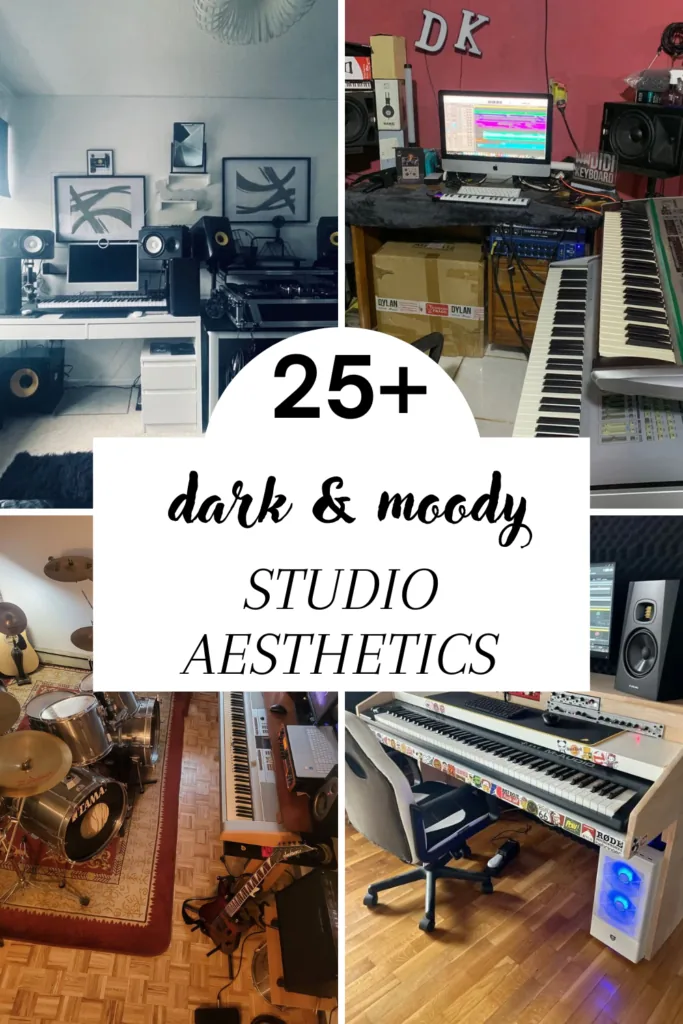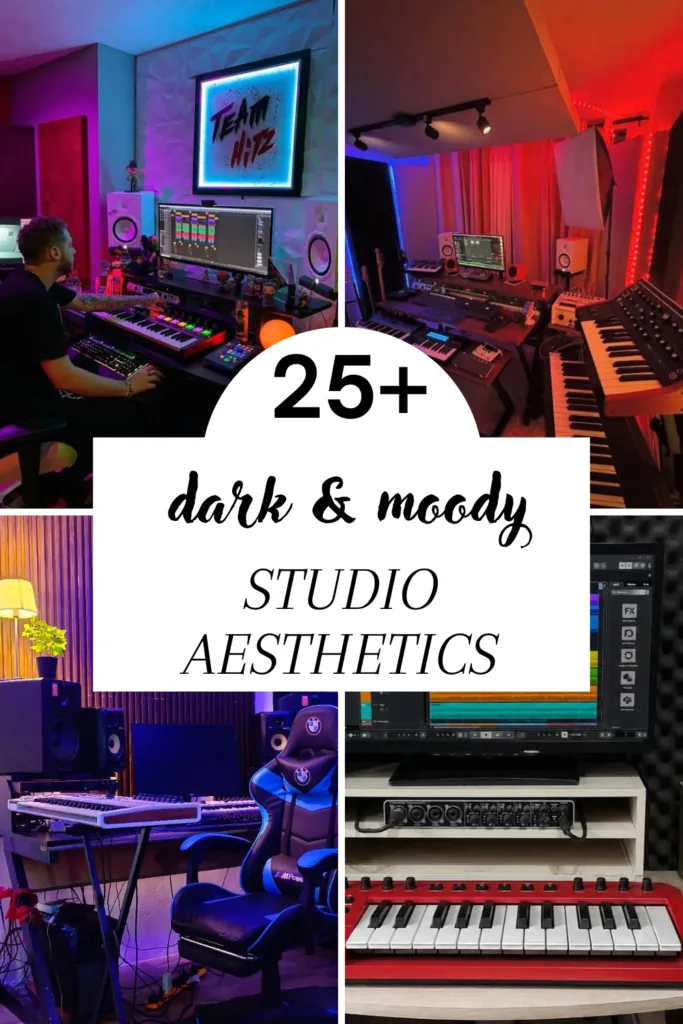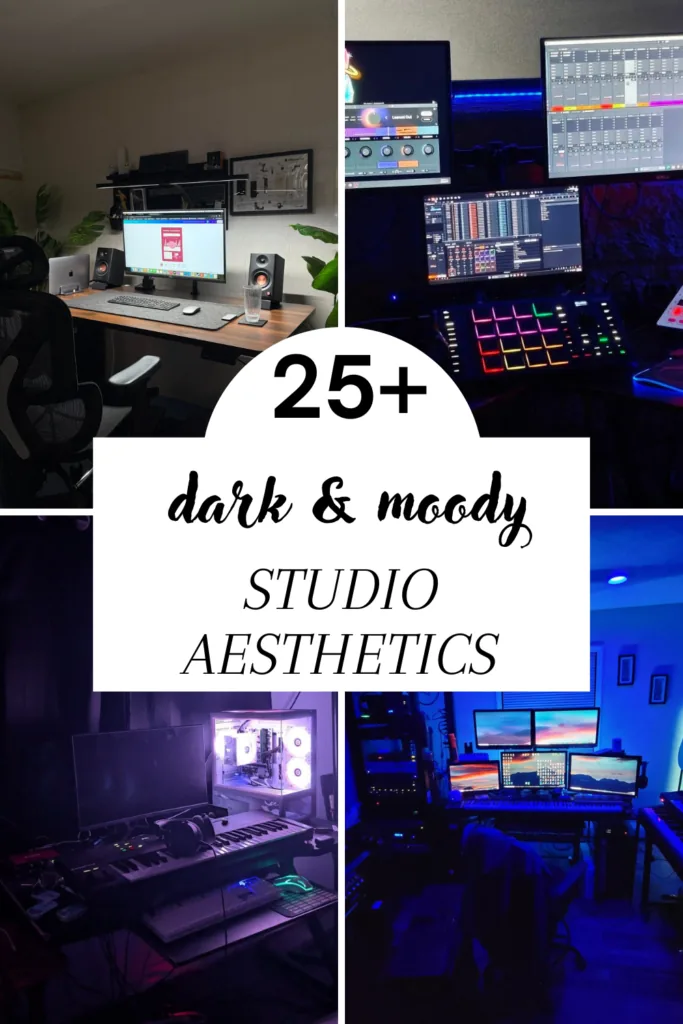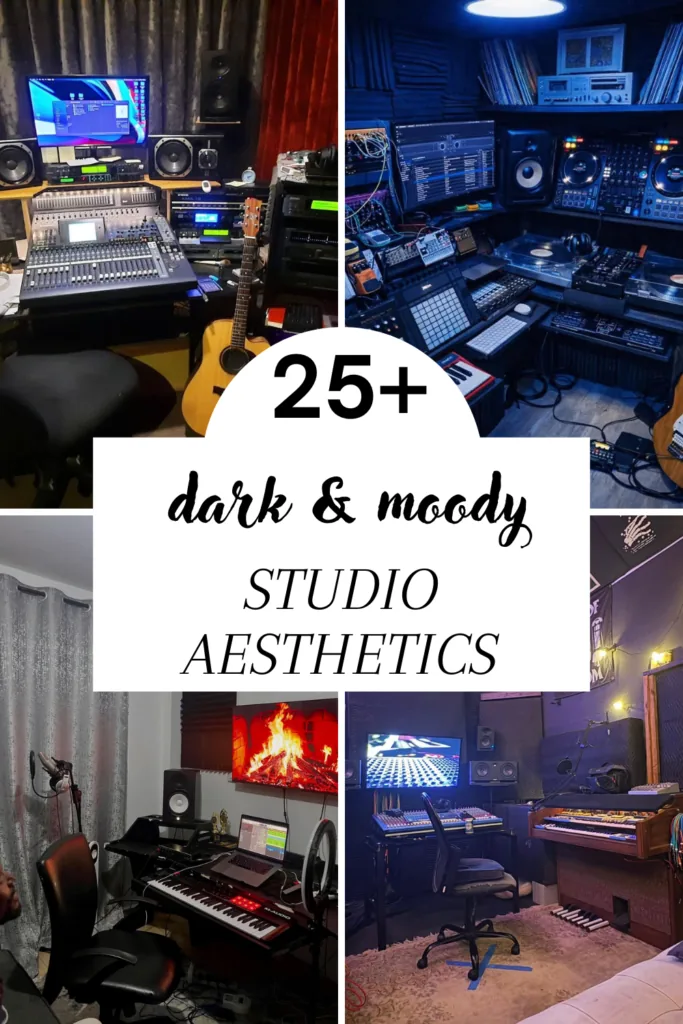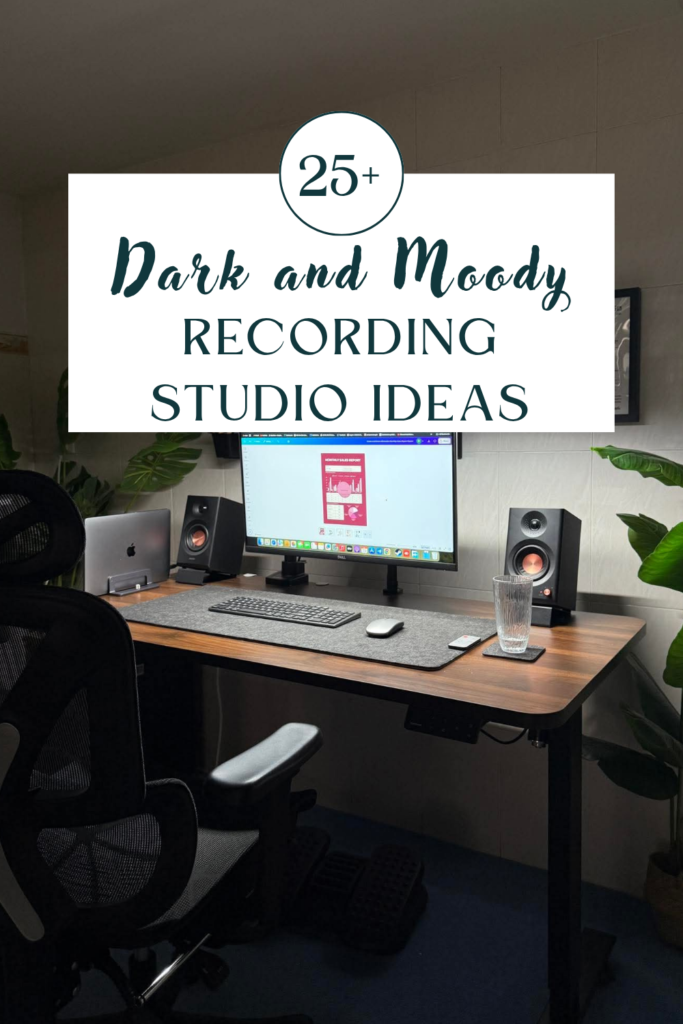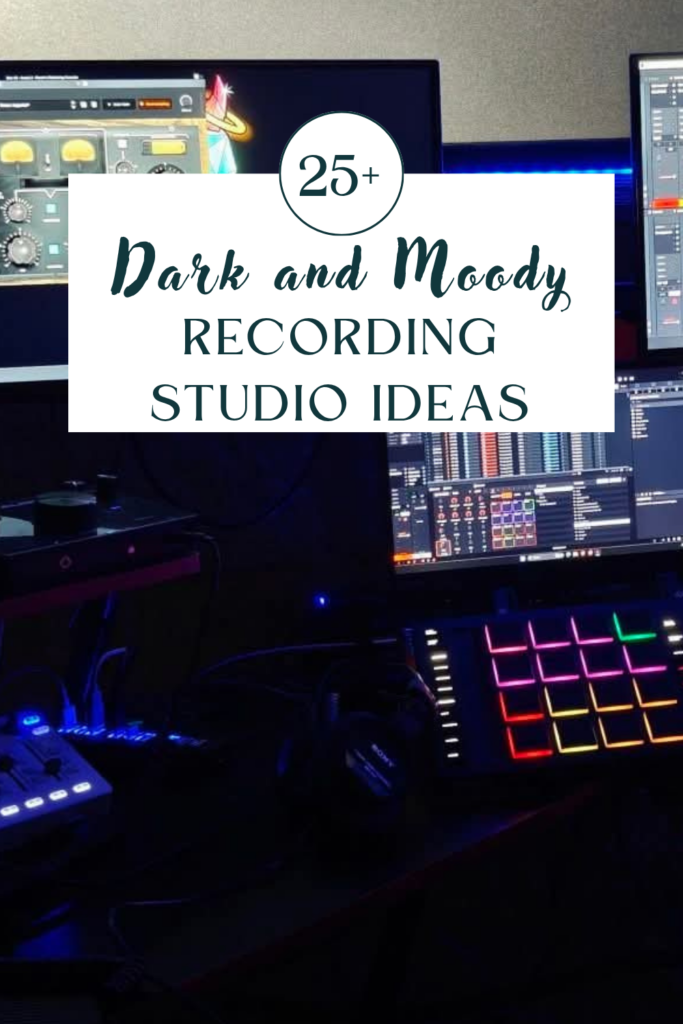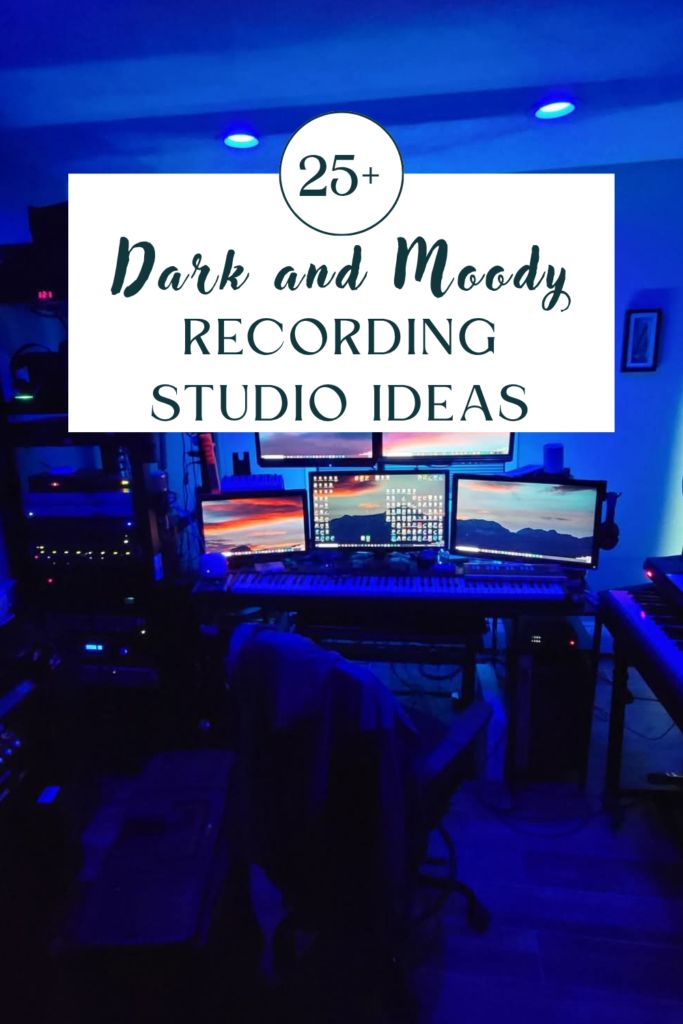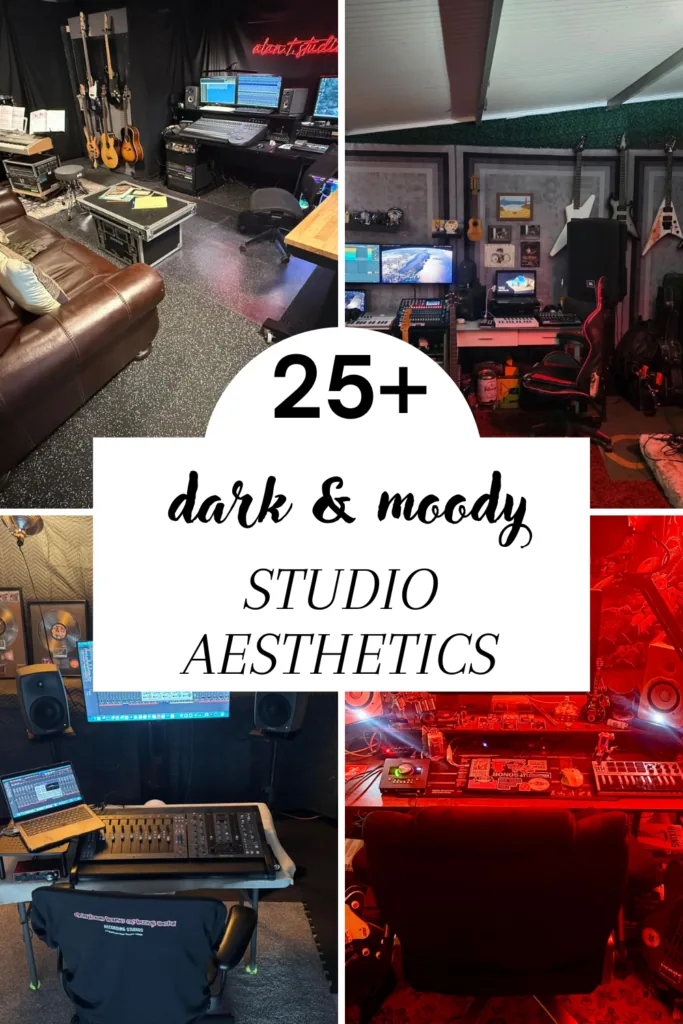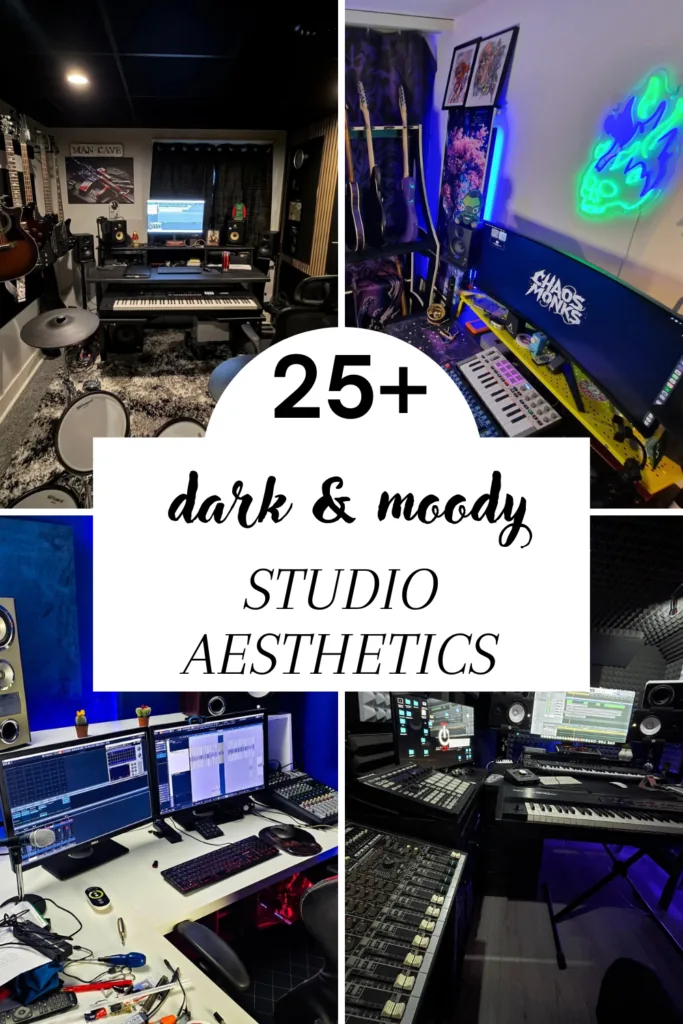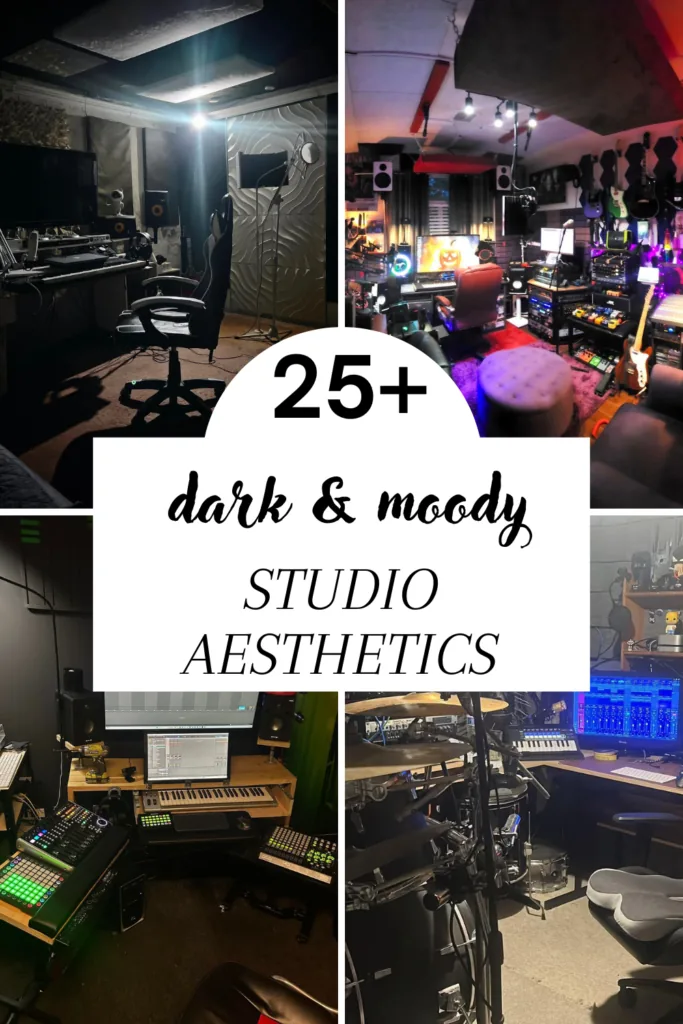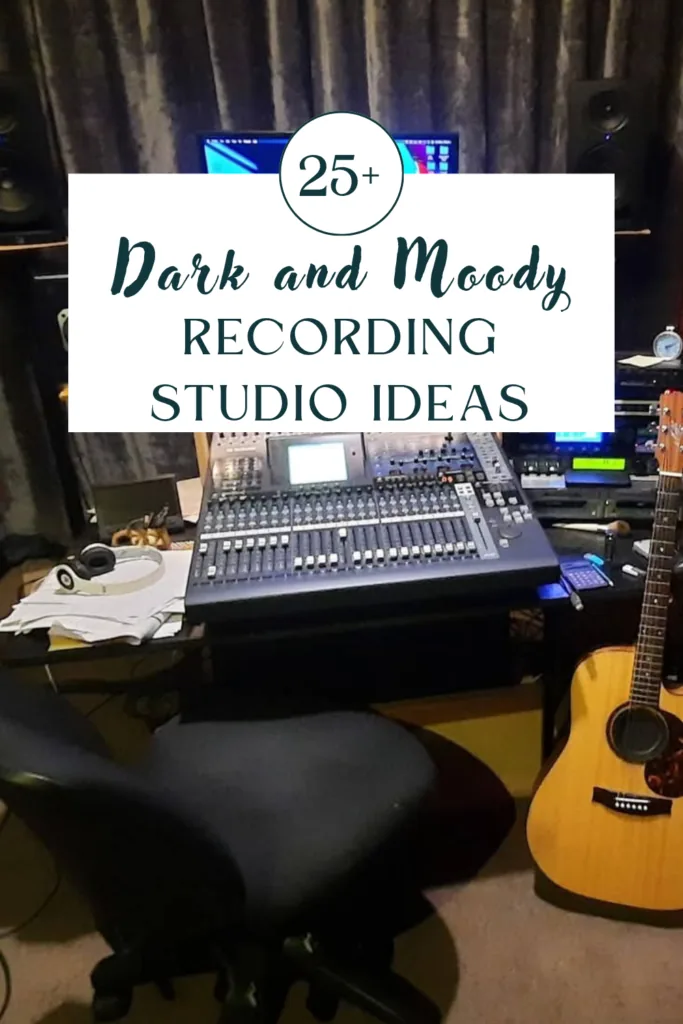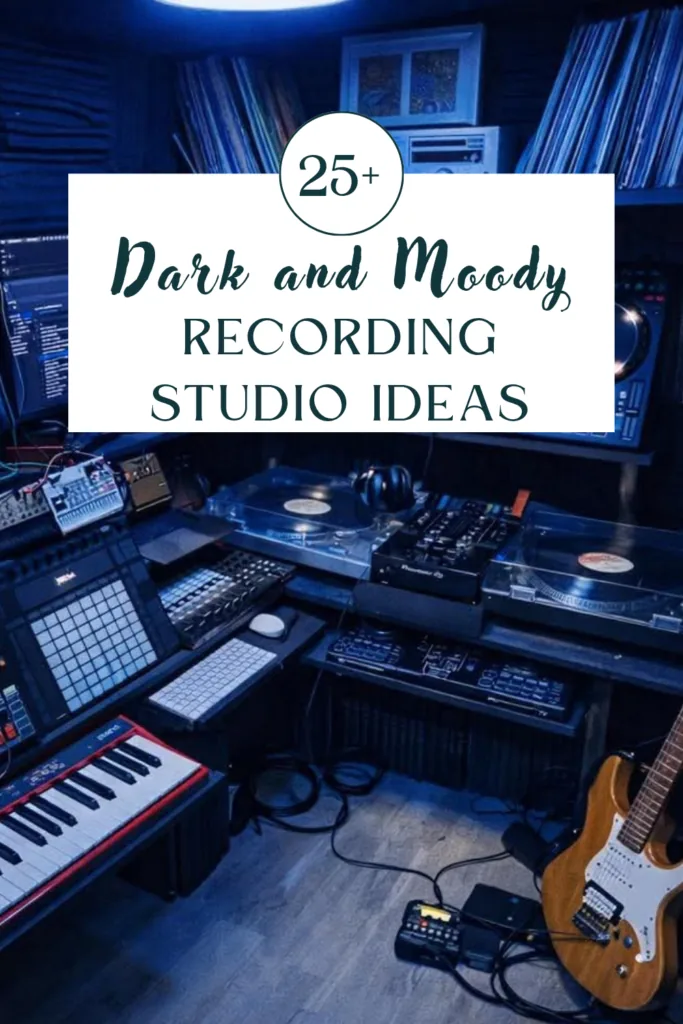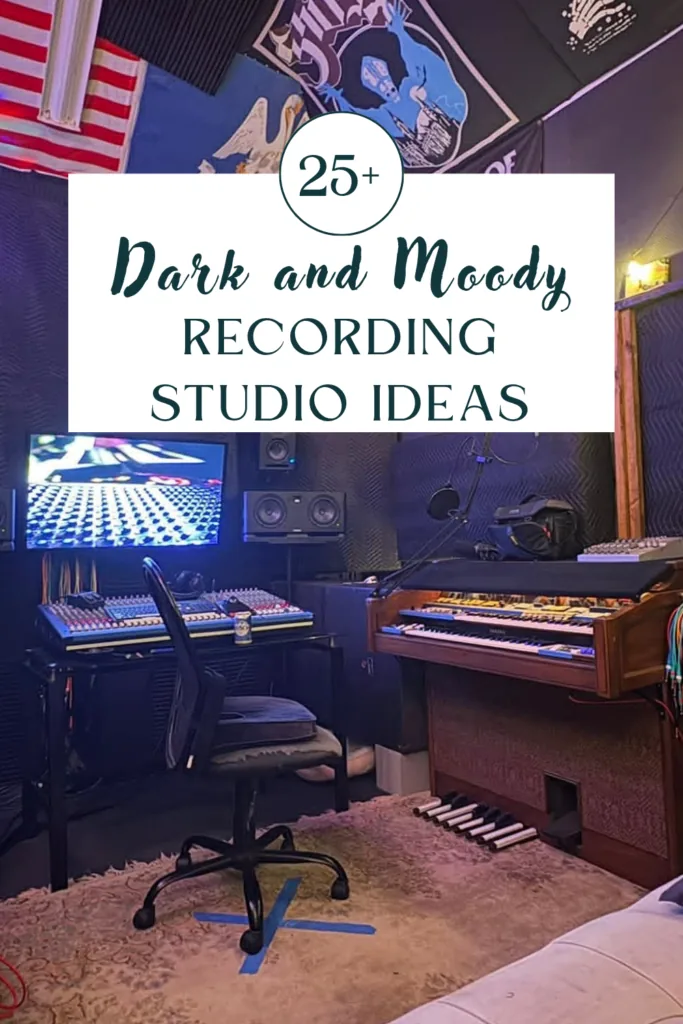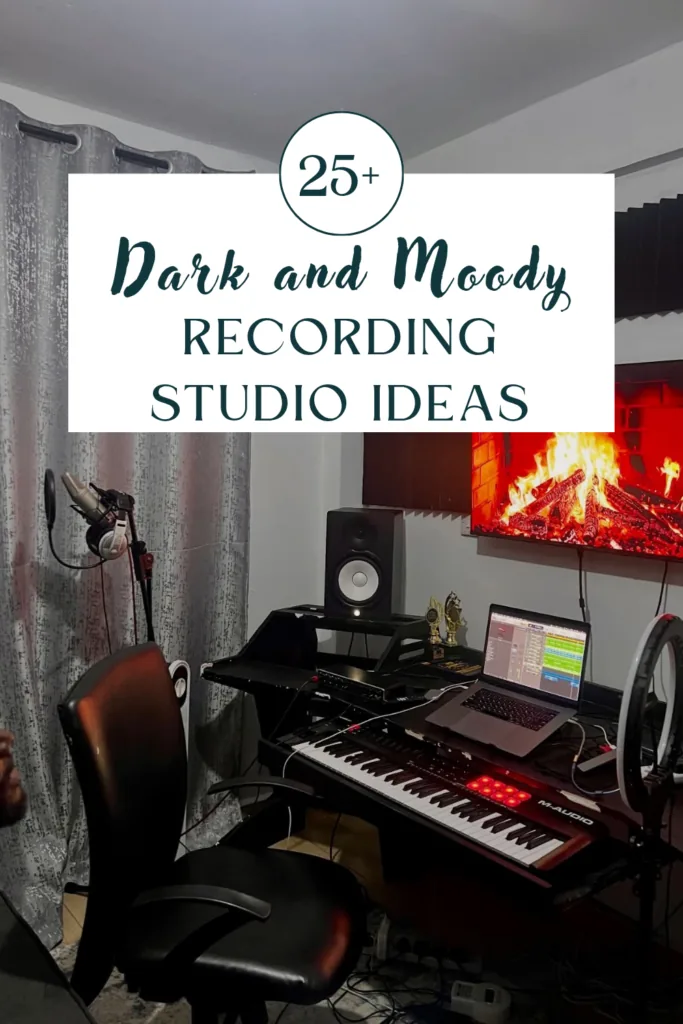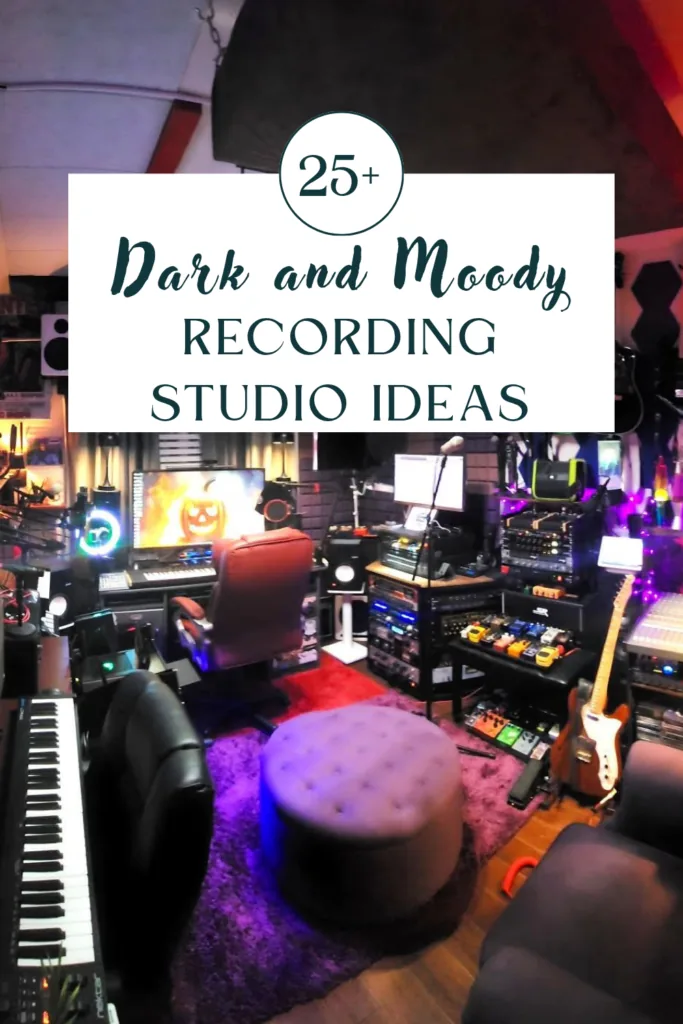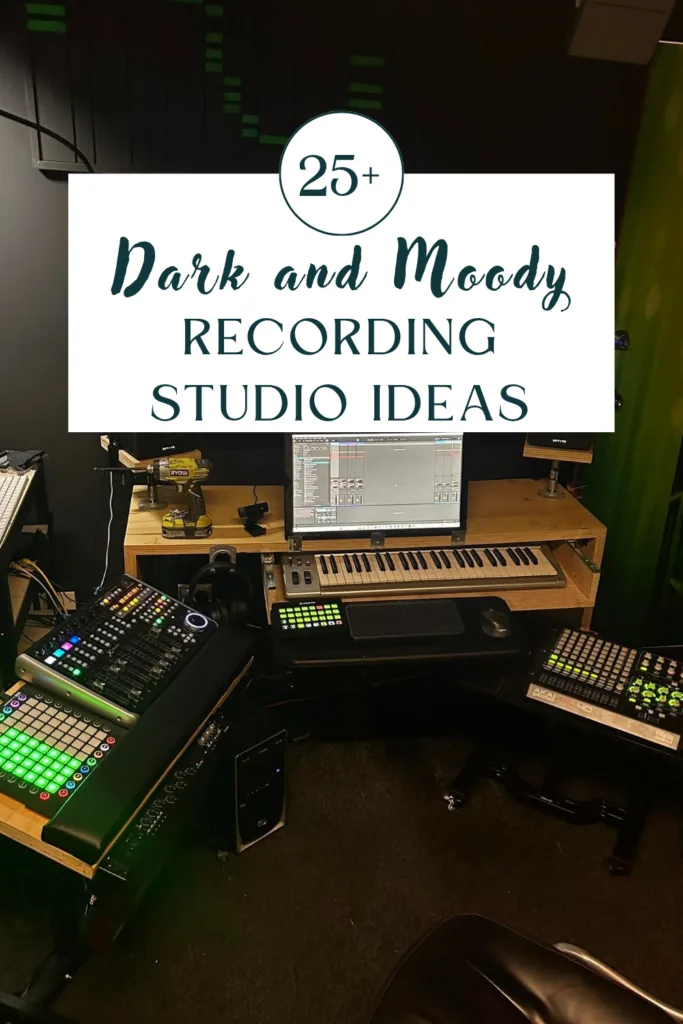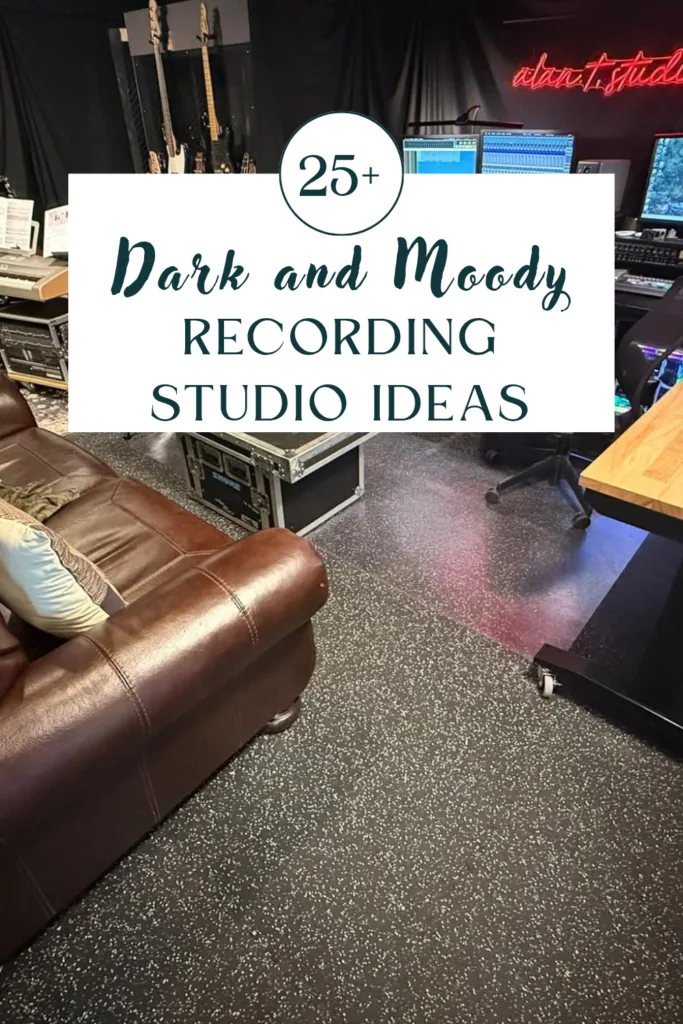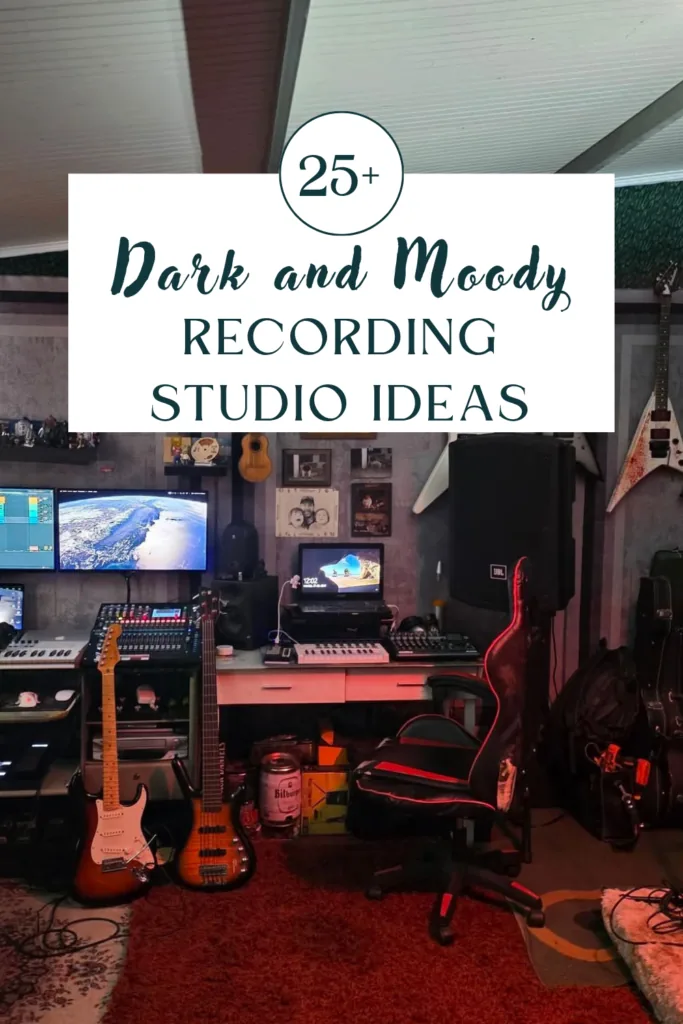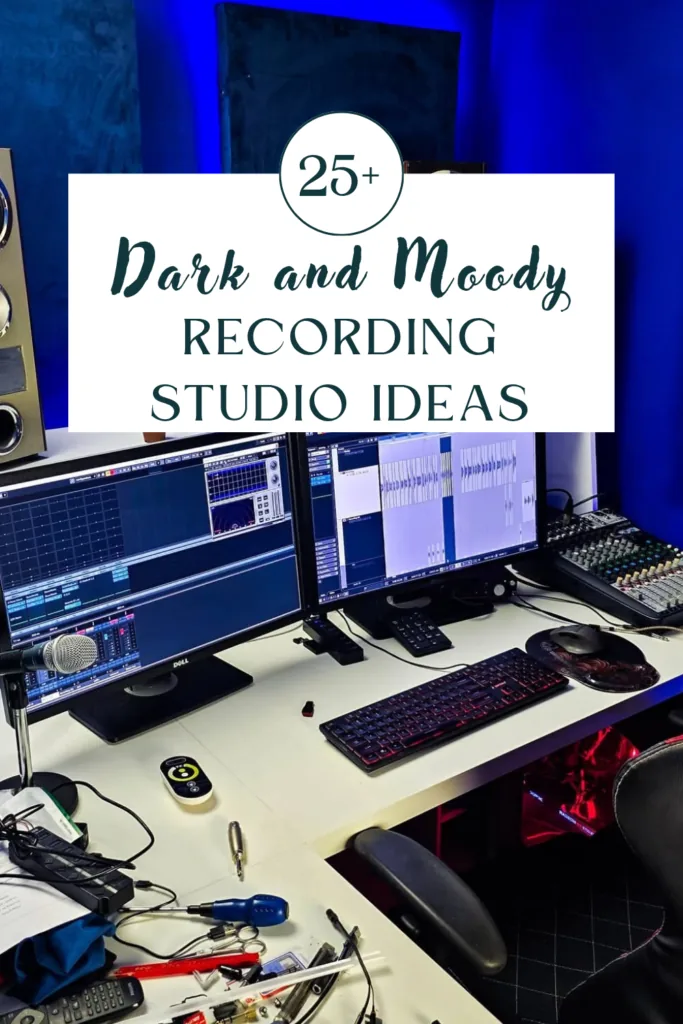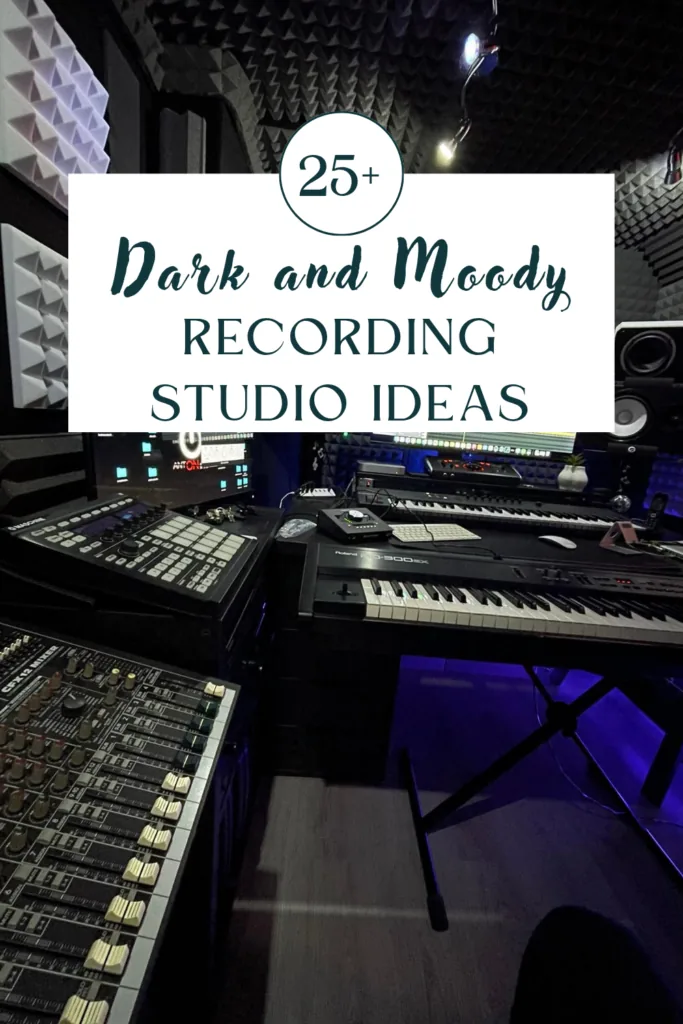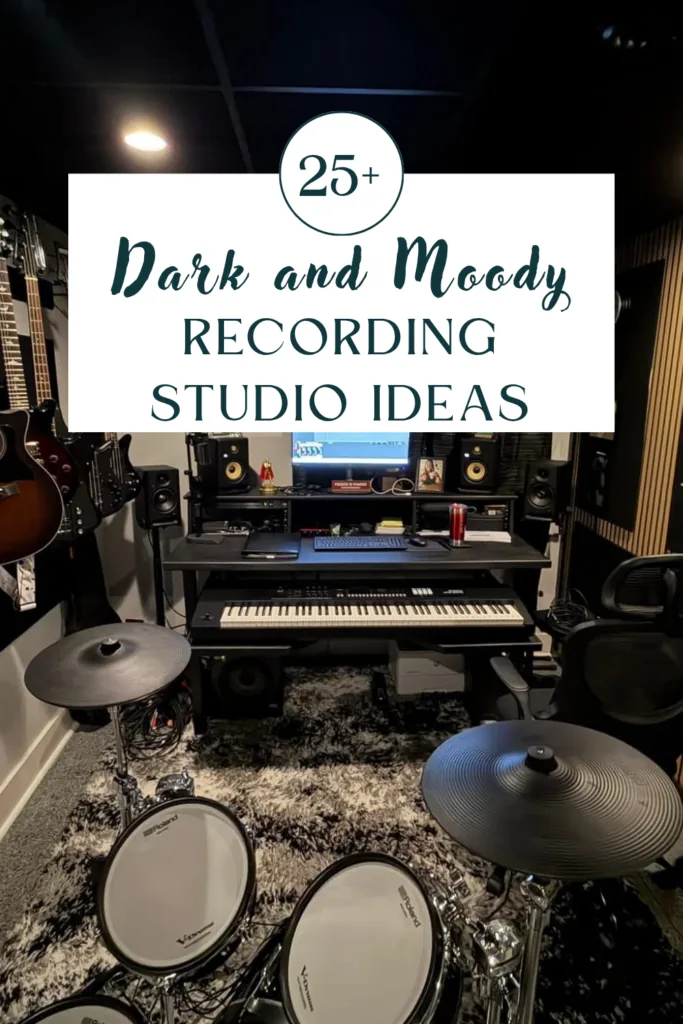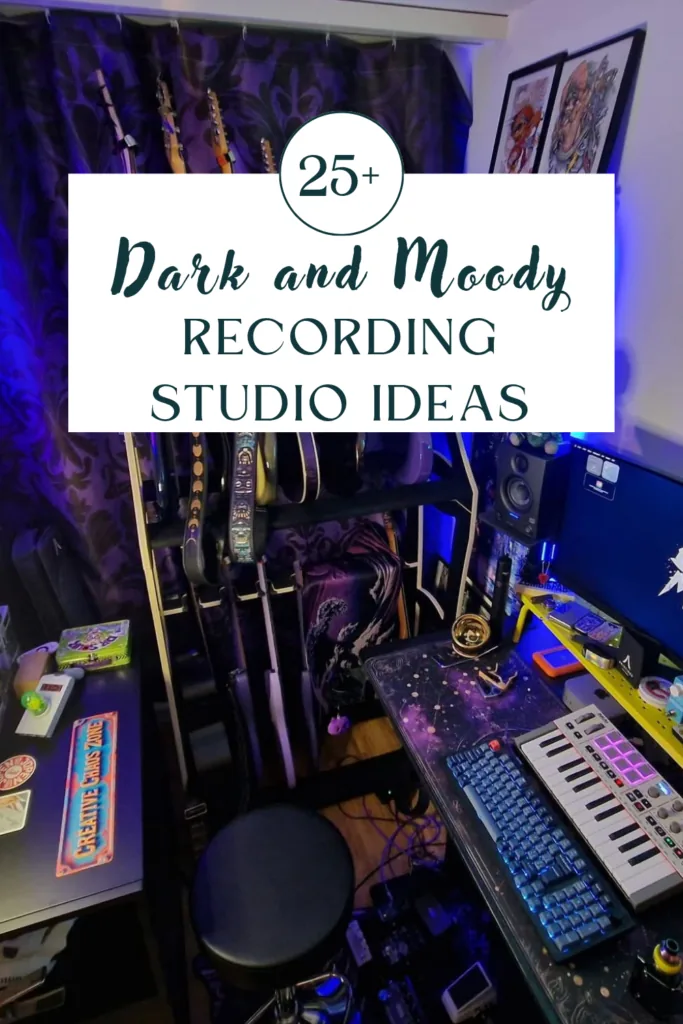

Home studios do not have to look like a dentist’s office. The dark aesthetic has taken over Pinterest for good reason: it works for music.
Dim lighting, deep tones, and a focused environment can actually change how you approach a session. Here are more ways to pull it off in a real space, not a magazine set.
Dark Home Studio for Small Rooms
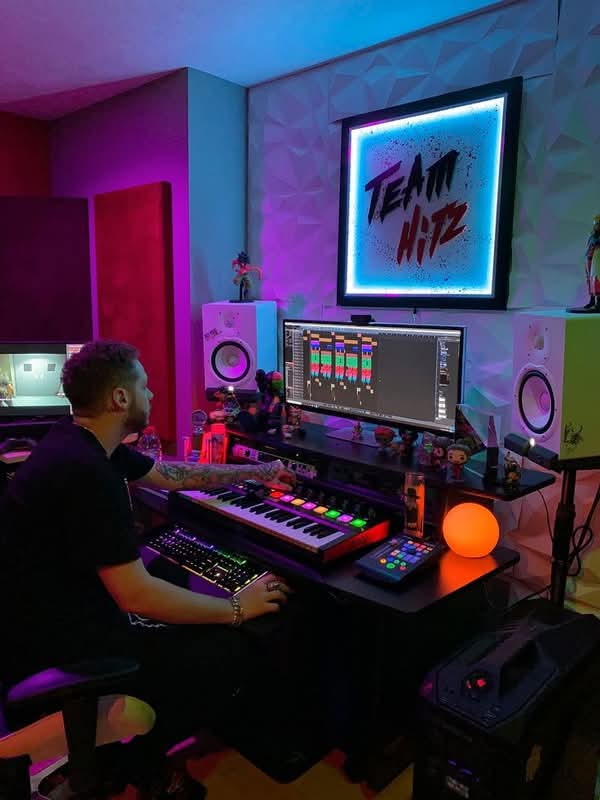
Small rooms do not need to be bright to feel open. A dark color palette can actually make a small space feel more intentional rather than cramped.
If your room is under 10 square meters, this approach is worth trying before you decide it is hopeless.
Moody Recording Space on a Budget
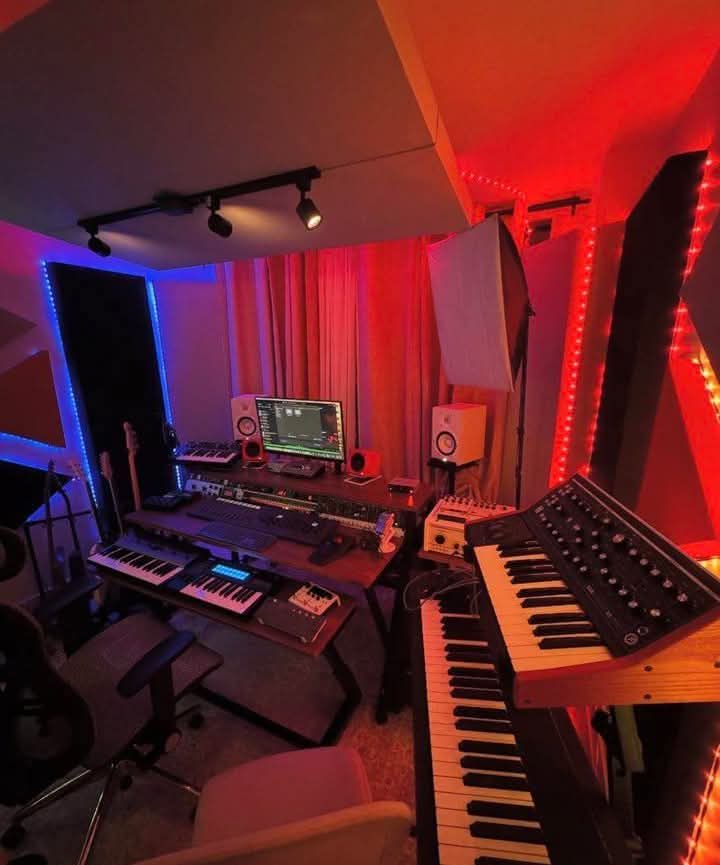
Getting the aesthetic right does not require spending much. Most of the darkroom feel comes from removing things, not adding them: overhead lights off, clutter cleared, tones matched.
Producers on a tight budget often pull this off better than people who overspend on gear they do not need yet.
Minimal Dark Studio Setup
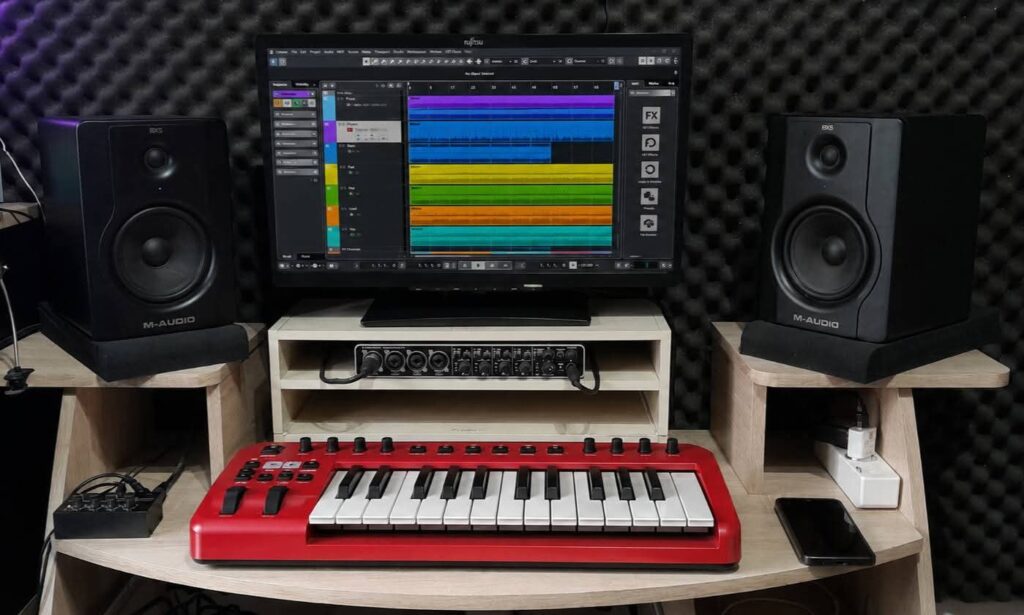
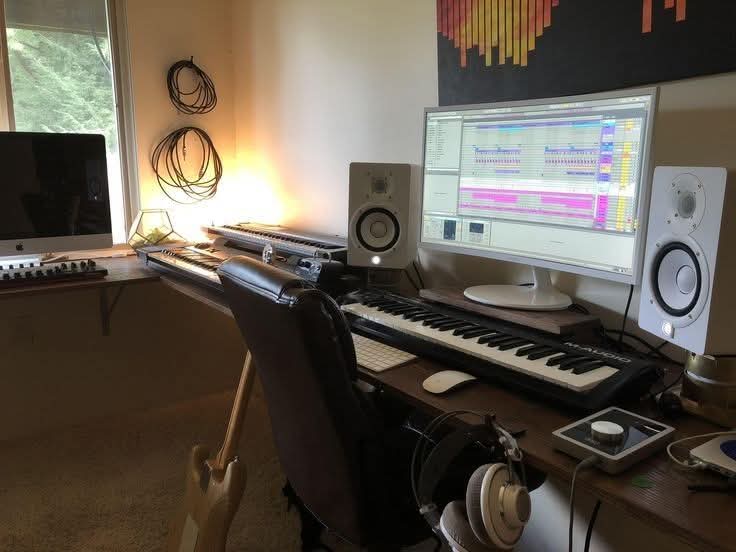
Less on the desk usually means a cleaner final product. This kind of setup suits someone who has learned that more gear just means more decisions at the wrong time.
The visual restraint and the creative restraint tend to go hand in hand.
Black and Gold Home Studio Aesthetic
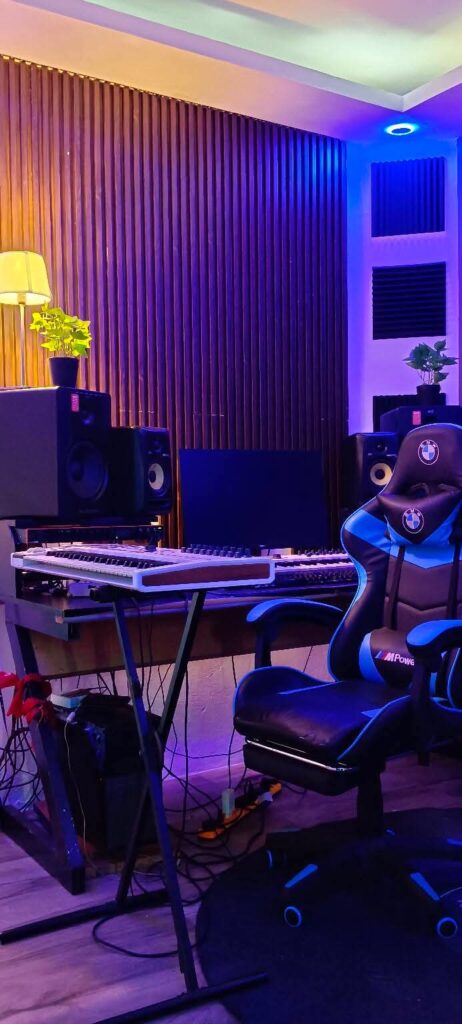
The combination has a reason it keeps showing up: it reads as serious without feeling cold. Gold accents against dark surfaces give a space weight without adding noise.
Works well for artists who record and mix in the same room.
Dark Moody Studio for Bedroom Producers
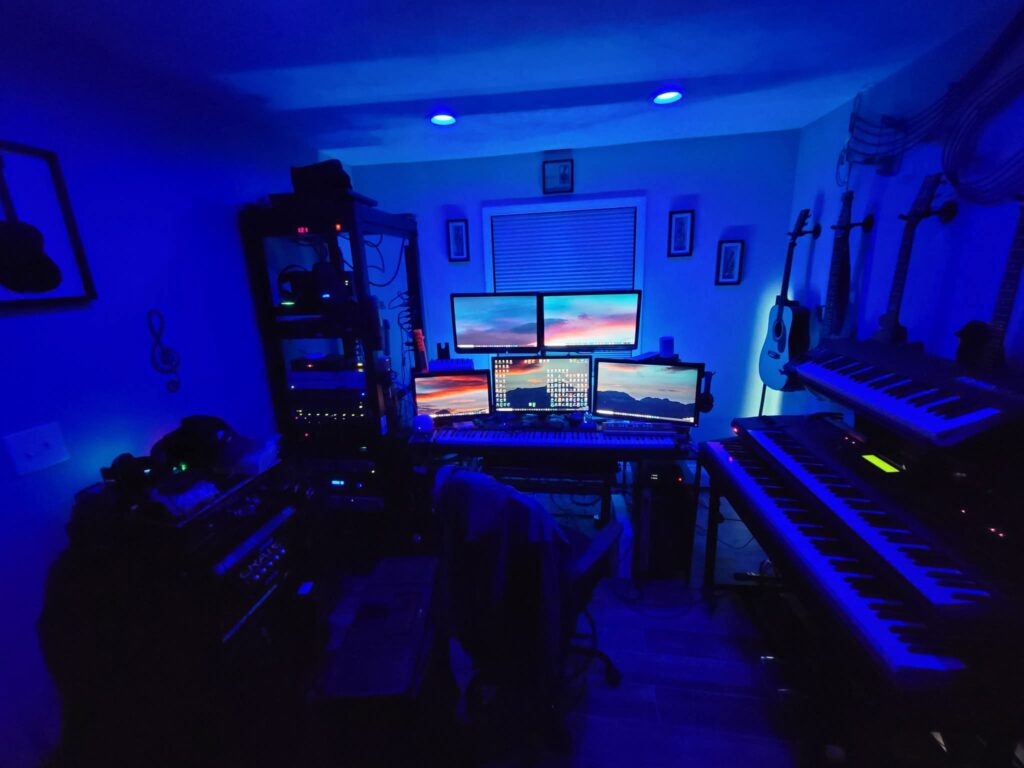
Bedroom studios get a bad reputation they do not deserve. A bedroom with the right treatment and the right visual setup is indistinguishable from a dedicated room in a lot of recordings.
The dark aesthetic helps, because it signals to your brain that this corner is for work, not sleep.
Atmospheric Studio Lighting Ideas
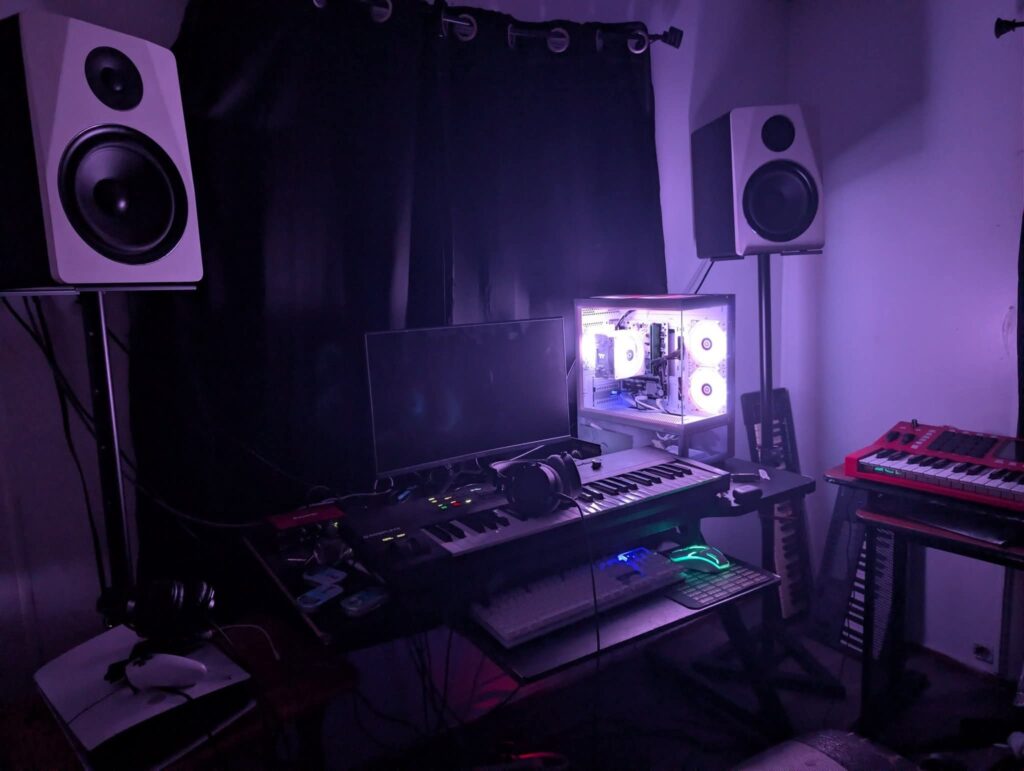
Lighting is the cheapest thing you can change and has the biggest return. A room that felt uninspiring at noon can feel completely different at 9pm with the right light sources.
This is not about ambience for the sake of it. It changes how long you actually stay in the room working.
Dark Music Production Room for Apartments
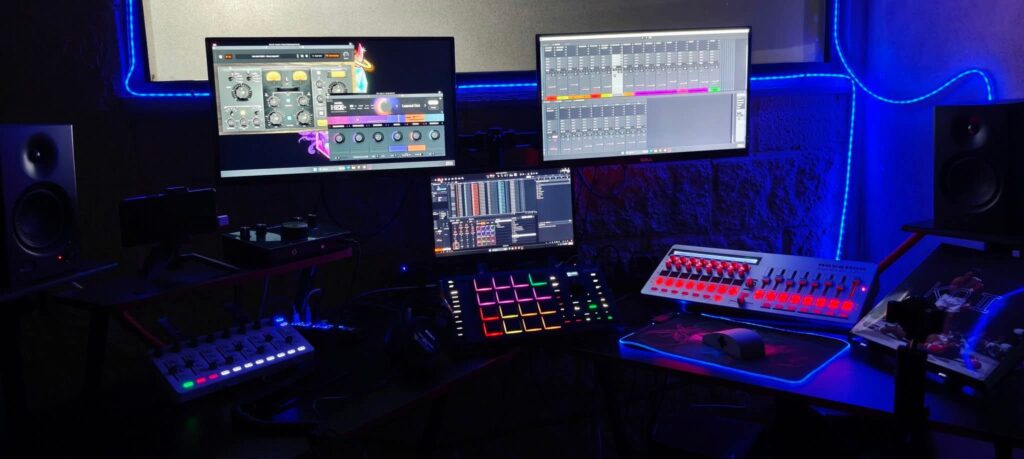
Apartment studios force you to work smarter. You cannot treat walls the way you would in a dedicated space, and your neighbors have opinions about your kick drum.
The dark aesthetic works for apartments because it narrows focus, which is exactly what you need when your room is pulling double duty.
Moody Soundproofed Home Studio
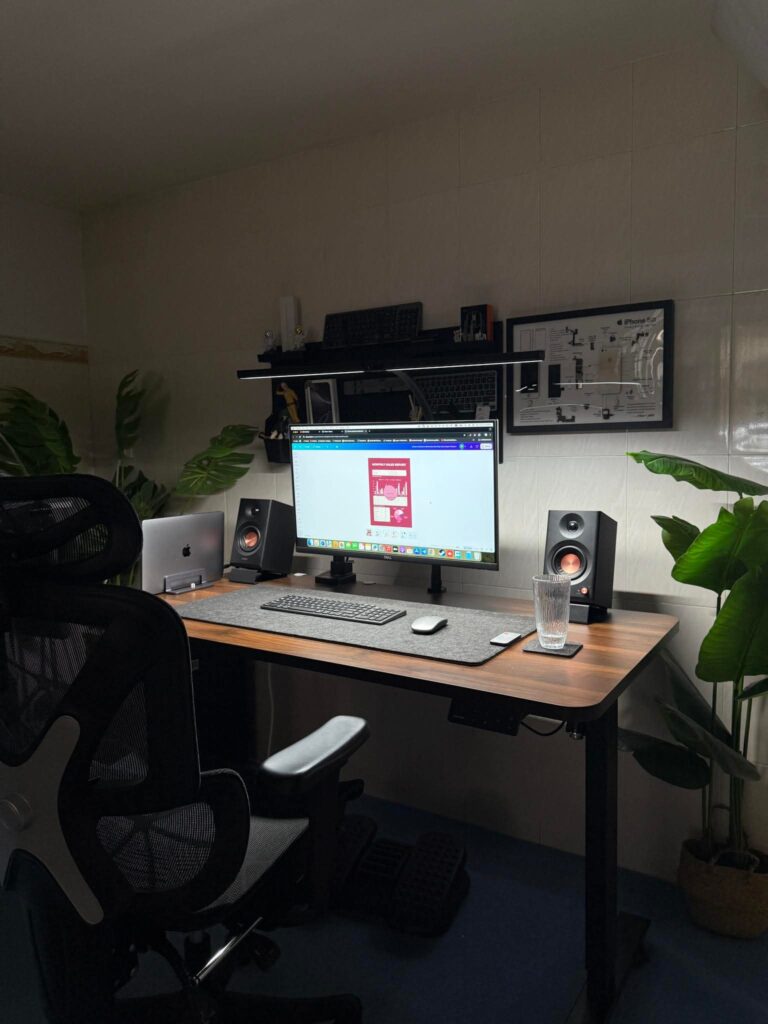
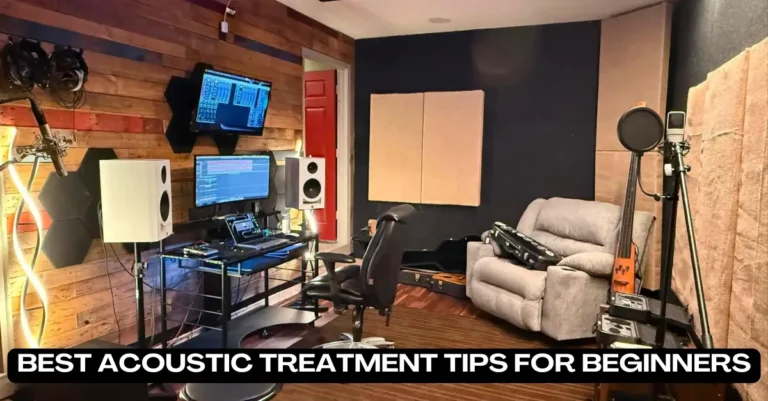
Soundproofing and dark aesthetics tend to pair naturally, because the materials overlap. Heavy panels, thick curtains, and layered surfaces all absorb sound and create that closed-in studio feel.
If you are already treating the room acoustically, the look usually follows.
Dark Studio for Lo-Fi Music Producers
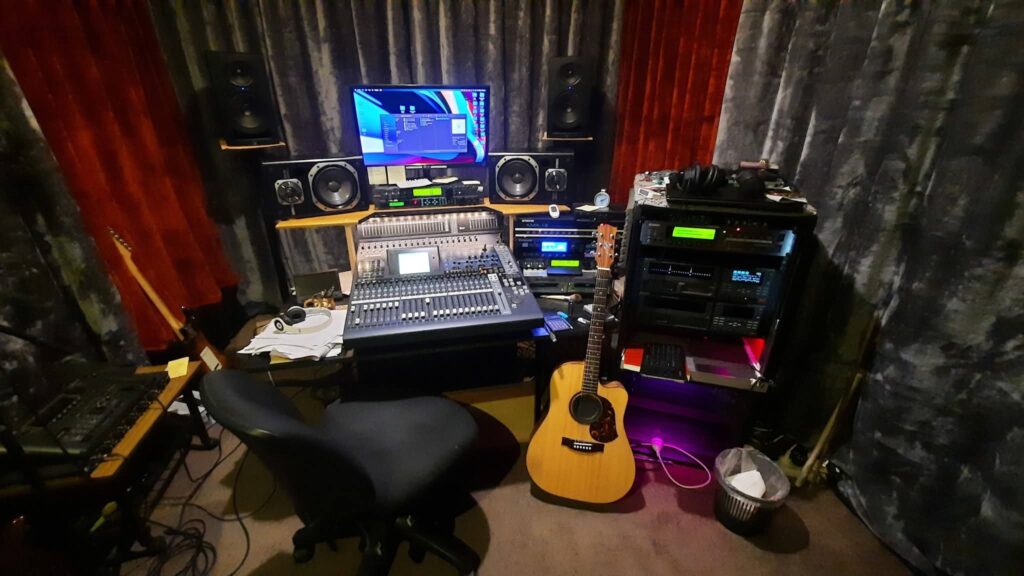
Lo-fi as a genre has always been more about atmosphere than fidelity, and the workspace tends to reflect that.
A dim, worn-in space with character in every corner suits someone who is making music that sounds like it was recorded at 2am. Because it probably was.
Black Walls Recording Studio Aesthetic
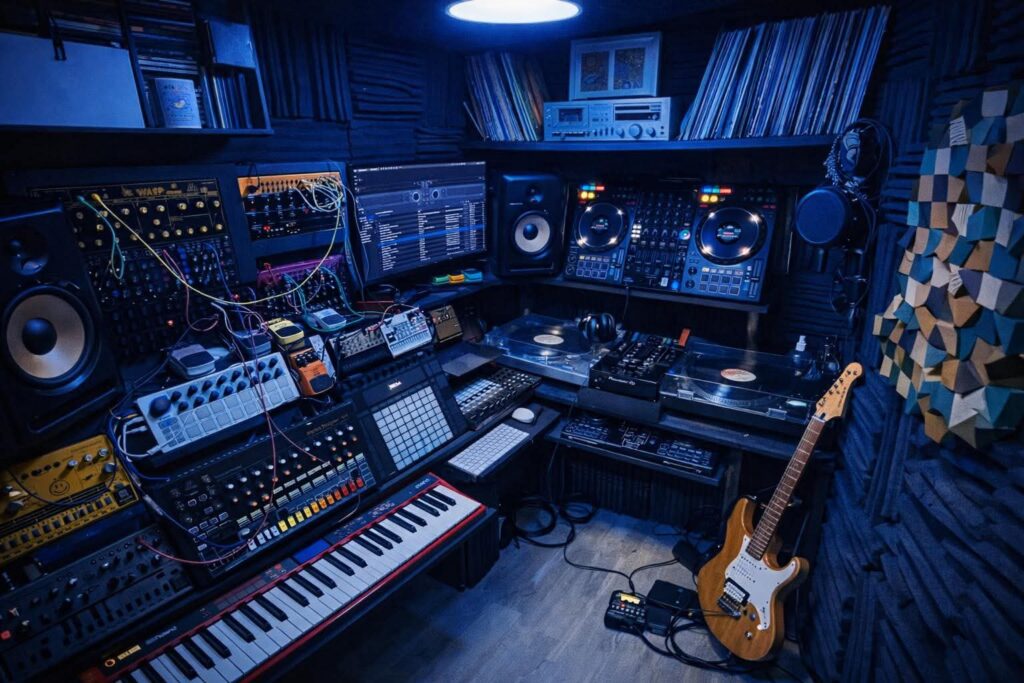
Black walls are divisive and that is exactly why they show up on Pinterest so often. They polarize people, but producers who have them tend to keep them.
The room becomes about the music rather than about the room.
Cozy Dark Recording Setup
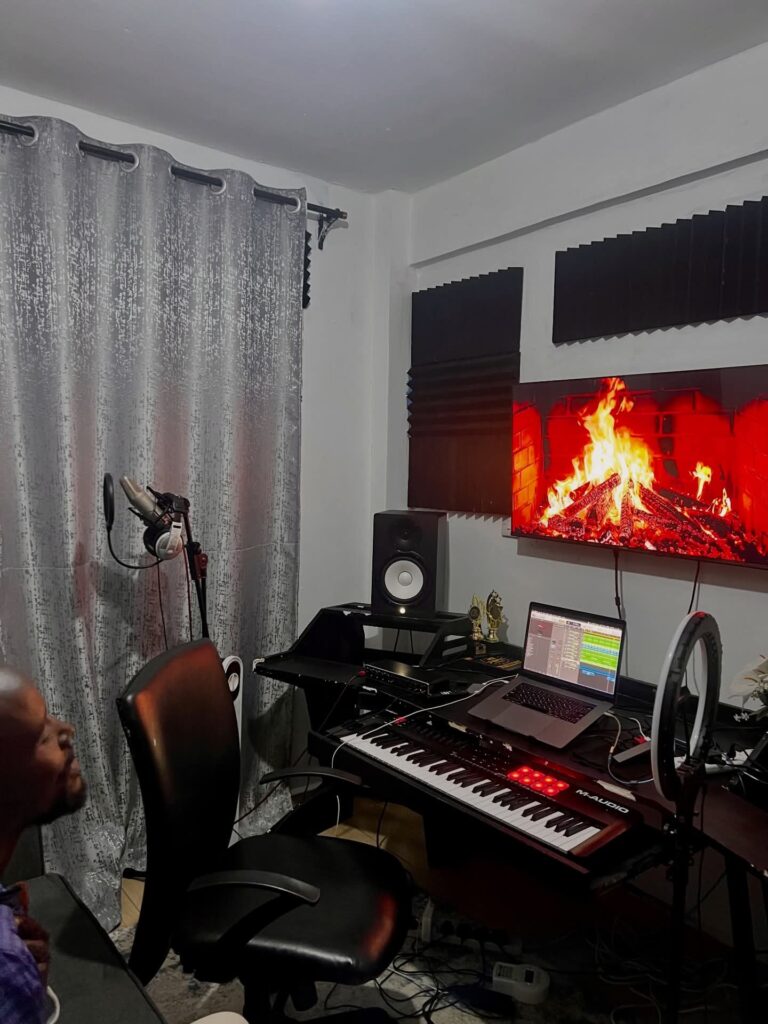
Cozy and professional are not opposites, even though the audio world sometimes treats them that way.
A setup that feels good to sit in for six hours is more valuable than one that looks impressive in photos. Comfort is a production tool.
Dark Studio Aesthetic for Hip Hop Producers
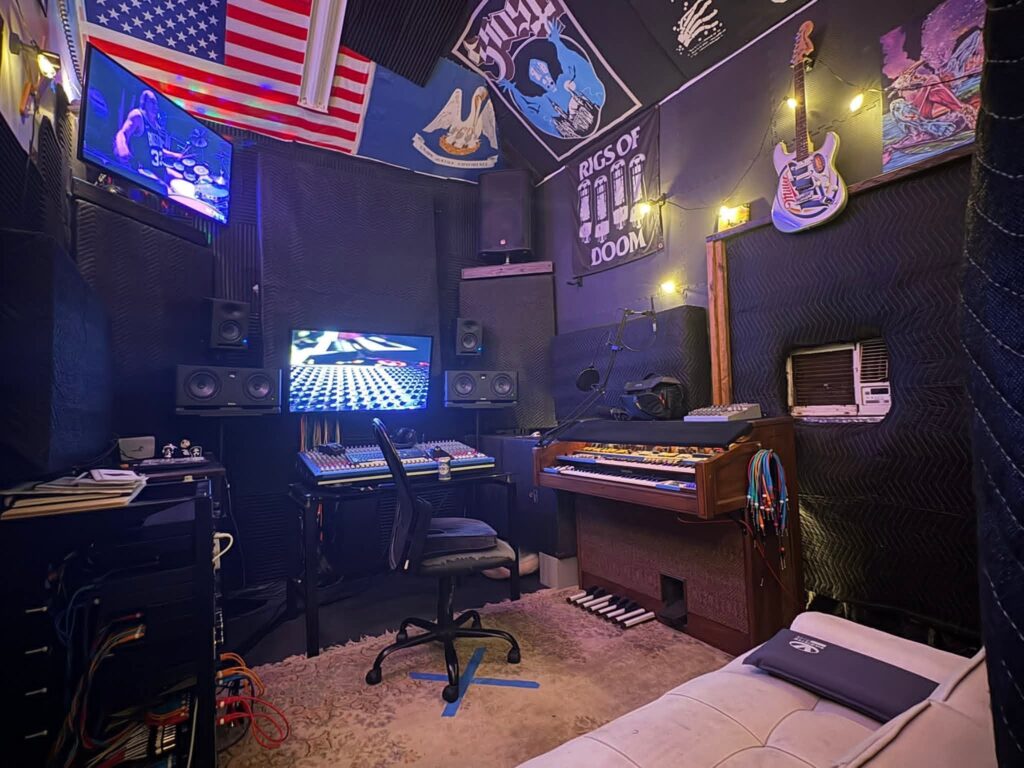
Hip hop production culture has always had a strong visual identity, and the studio is part of that. Dark tones and intentional design communicate to collaborators and artists that this is a real space.
That matters more than most people admit.
Moody Home Studio With Natural Wood Accents
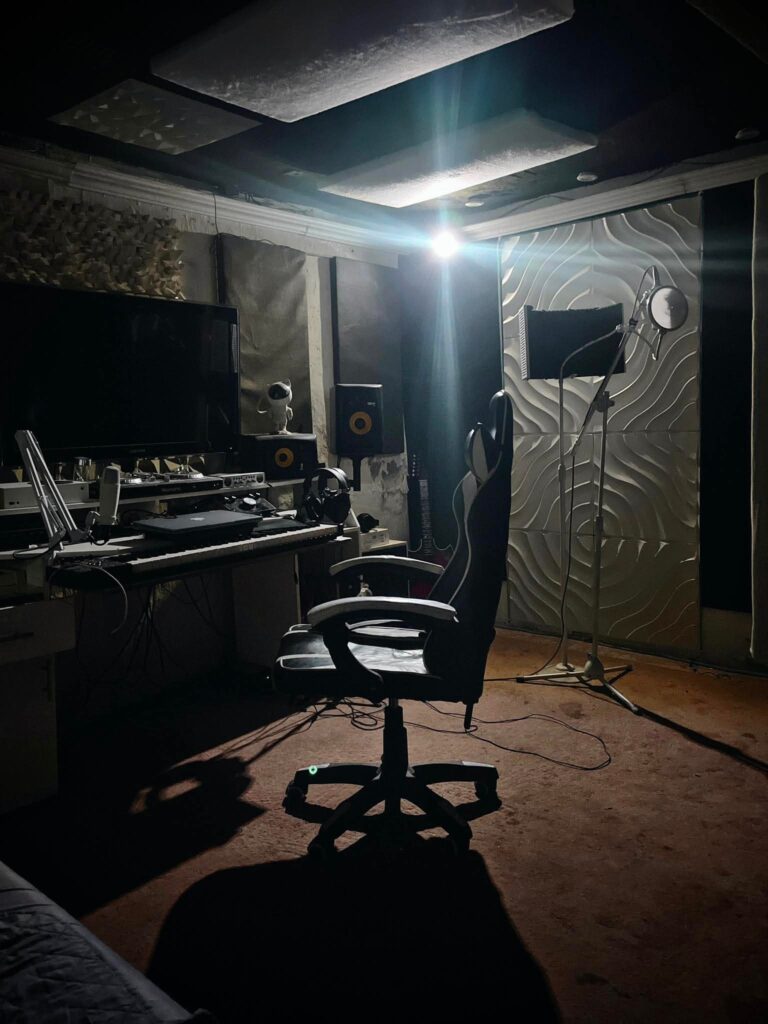
Wood tones against dark walls is a combination that does not age. It softens the look without breaking the mood, which is useful if you spend long sessions in the same room.
The natural texture keeps the space from feeling like a cave.
Dark Guitarist Home Studio For Music Production
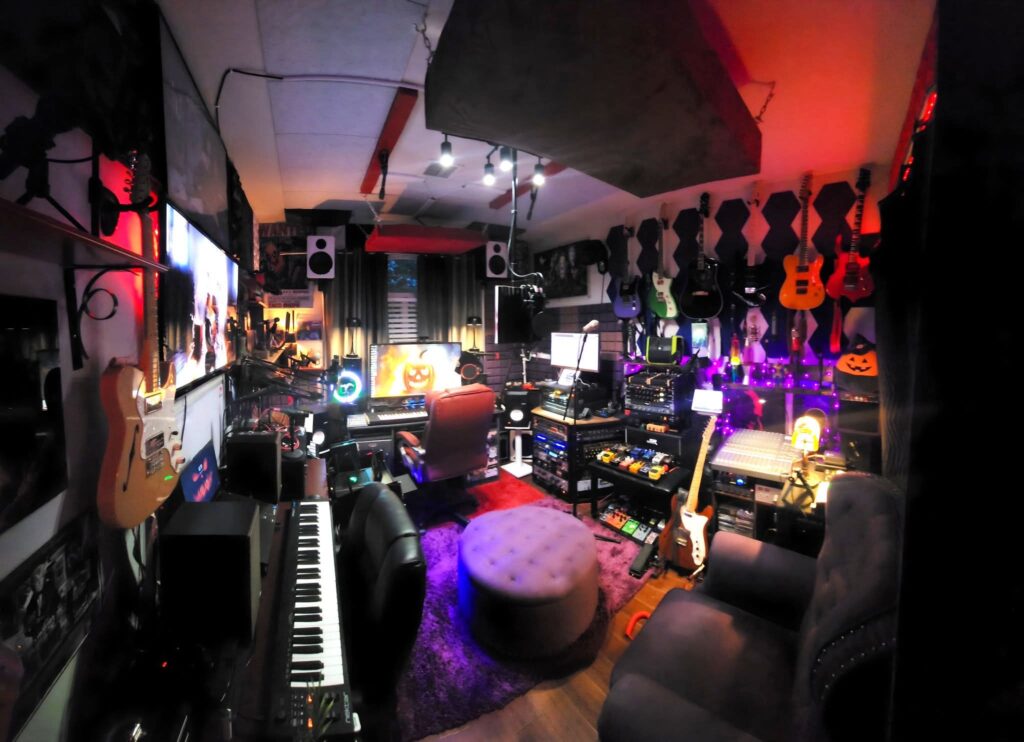
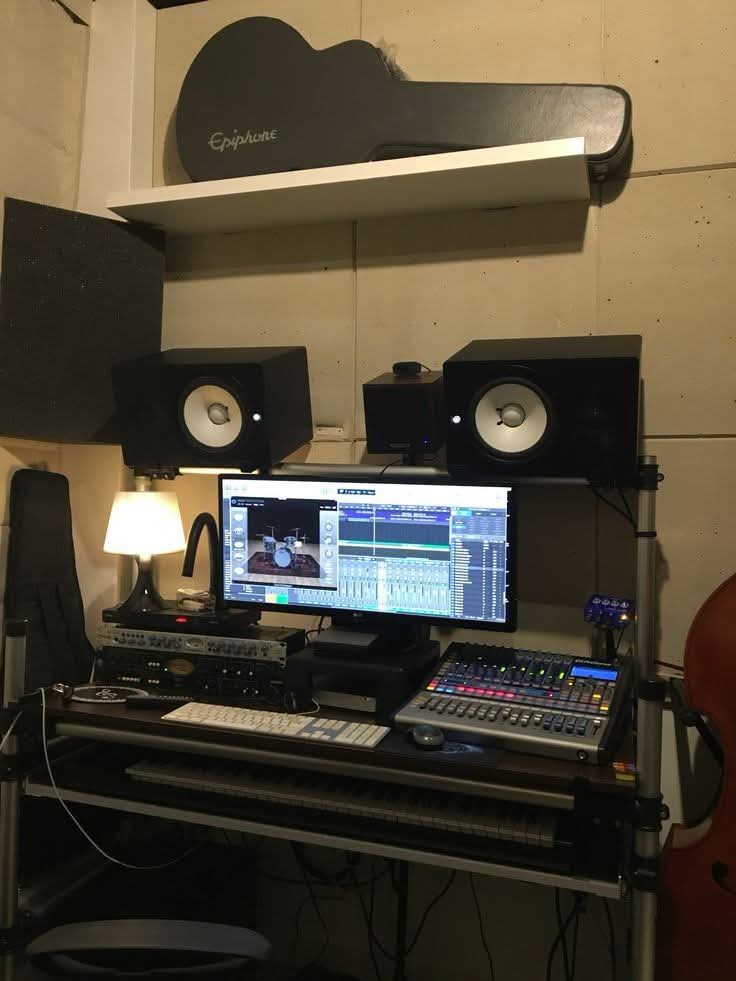
An industrial aesthetic suits spaces that are not conventionally shaped: garages, basement corners, and concrete rooms.
If you are working in a space that was never meant to be a studio, leaning into the rawness rather than fighting it is often the right call.
Gothic Home Studio Aesthetic
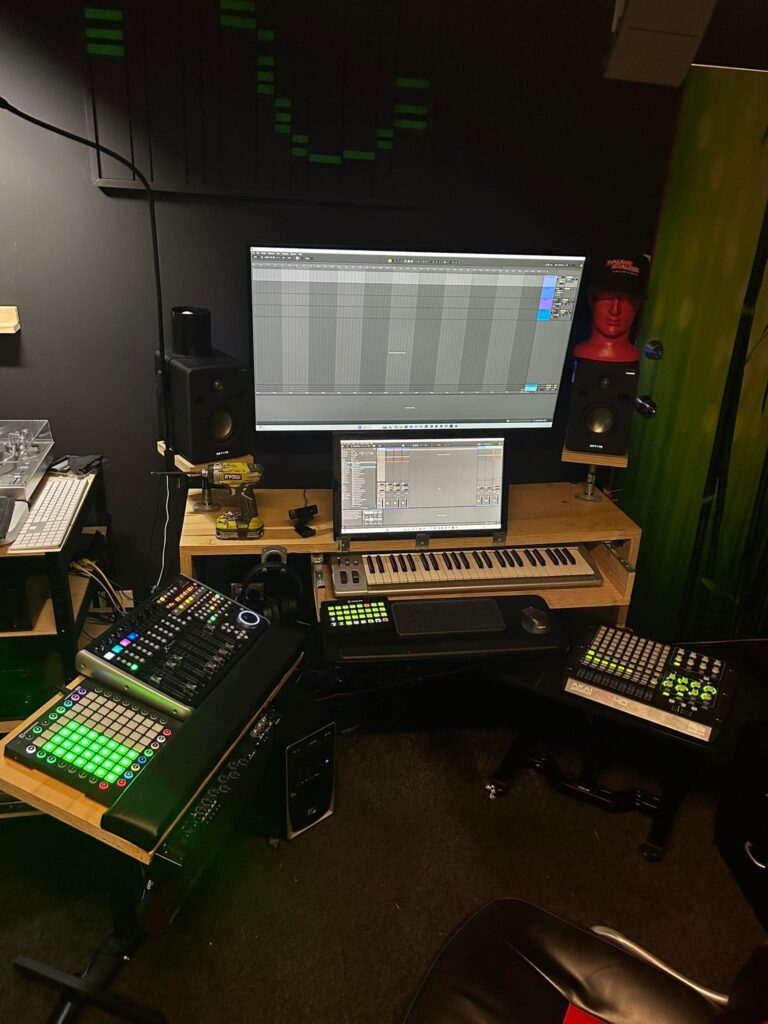
This one is more specific than it looks. The gothic aesthetic appeals to producers working in darker genres, and the workspace can reinforce the headspace that the music needs.
It is not for everyone, but for the right person it removes a layer of friction.
Warm Dark Studio for Singer-Songwriters
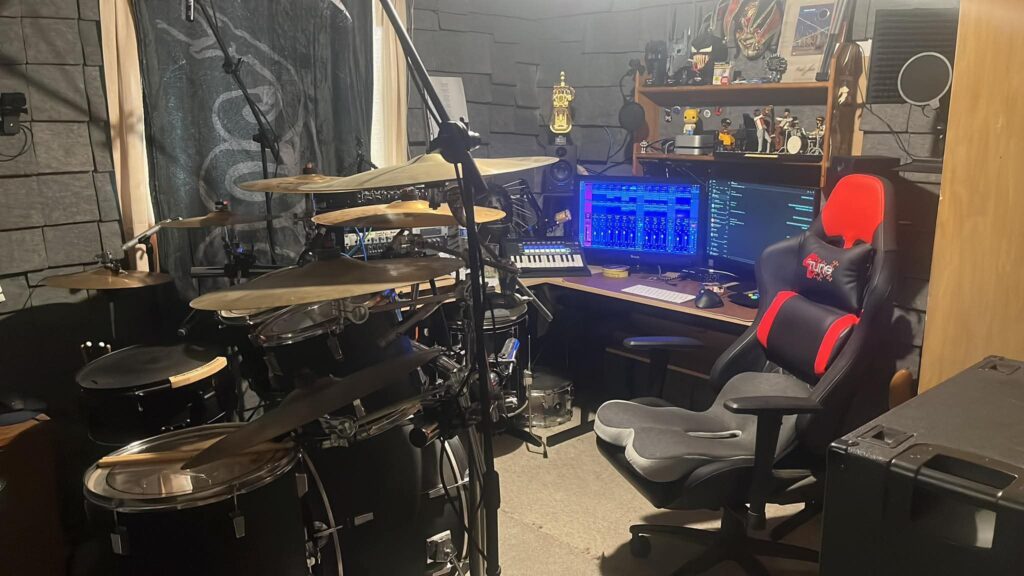
A warm dark space suits solo recording better than a cold one. Singer-songwriters tend to work differently than beatmakers.
The room needs to feel private, a little removed from the rest of the house, and the right lighting does most of that work.
Dark Vintage Studio Setup
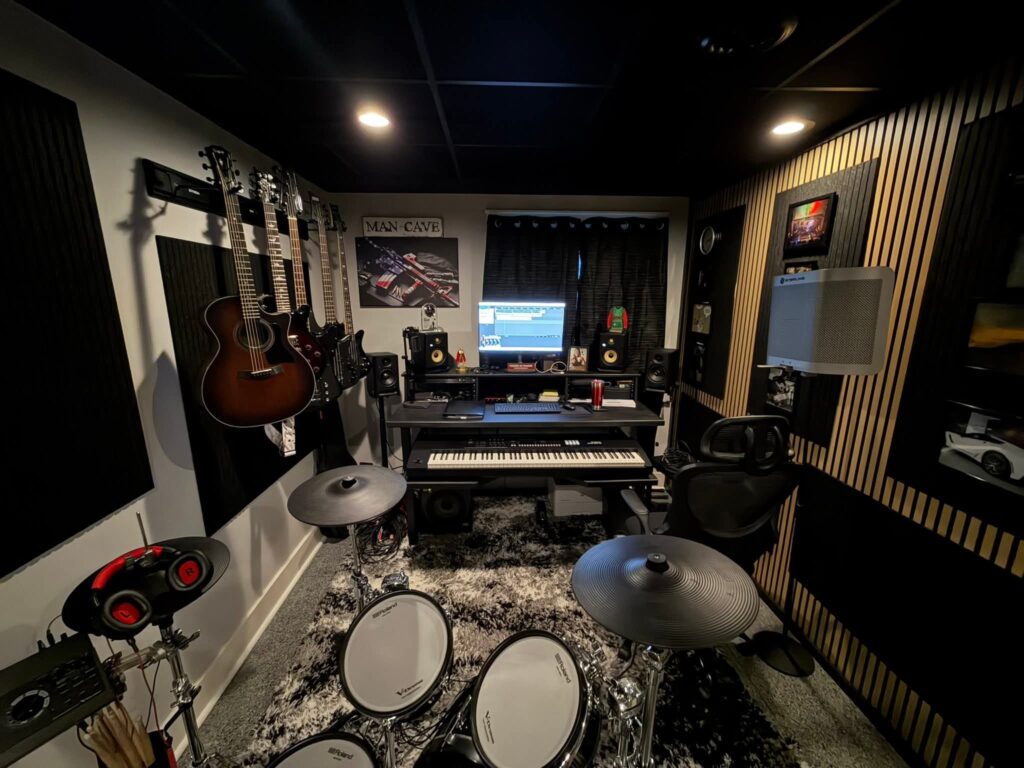
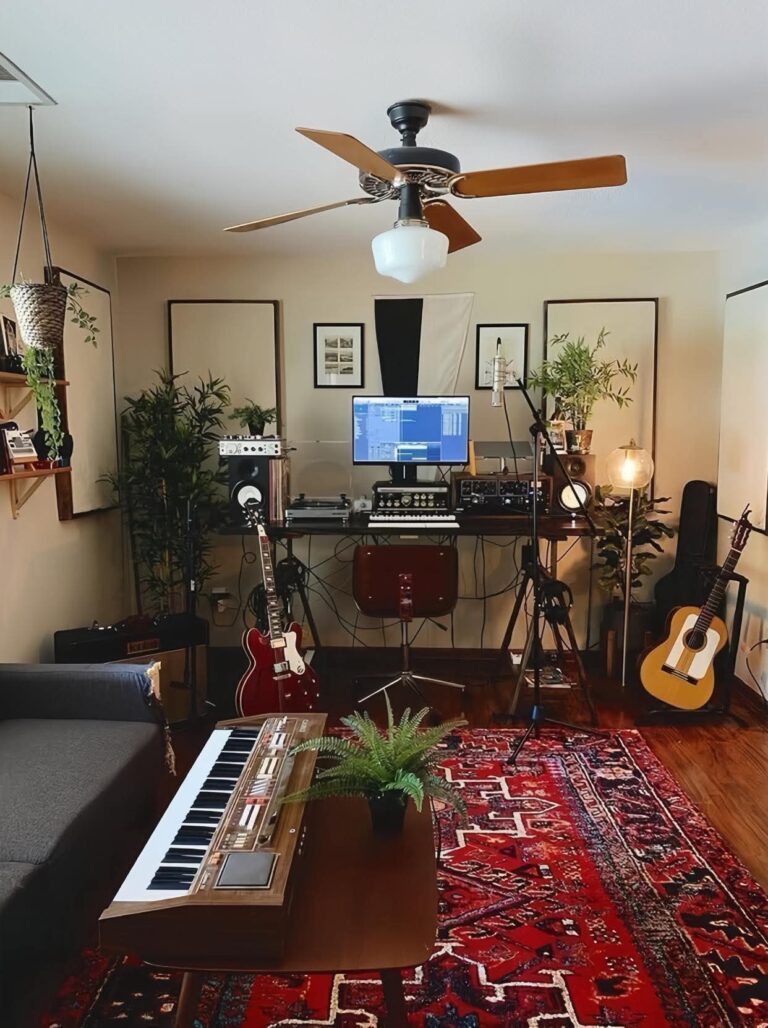
Vintage does not mean old gear. It means an environment that feels like it has been used, that has some history to it.
A dark vintage aesthetic suits producers who want their space to feel earned rather than assembled last month.
Moody Home Studio for Podcasters and Voice Artists
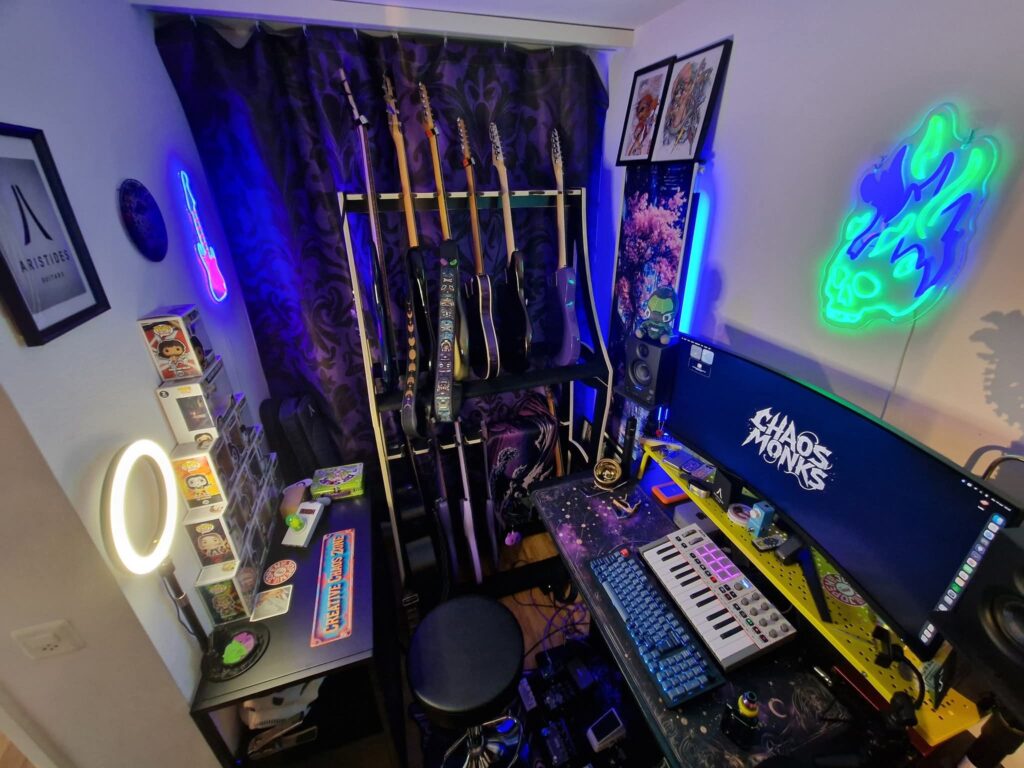
Voice work needs a quiet, contained space, and the dark aesthetic tends to produce exactly that kind of environment.
Heavy materials that absorb sound also create a visual mood that helps with performance.
A podcaster who looks forward to sitting in their setup tends to publish more consistently than one who does not.
Dramatic Lighting Home Studio Ideas
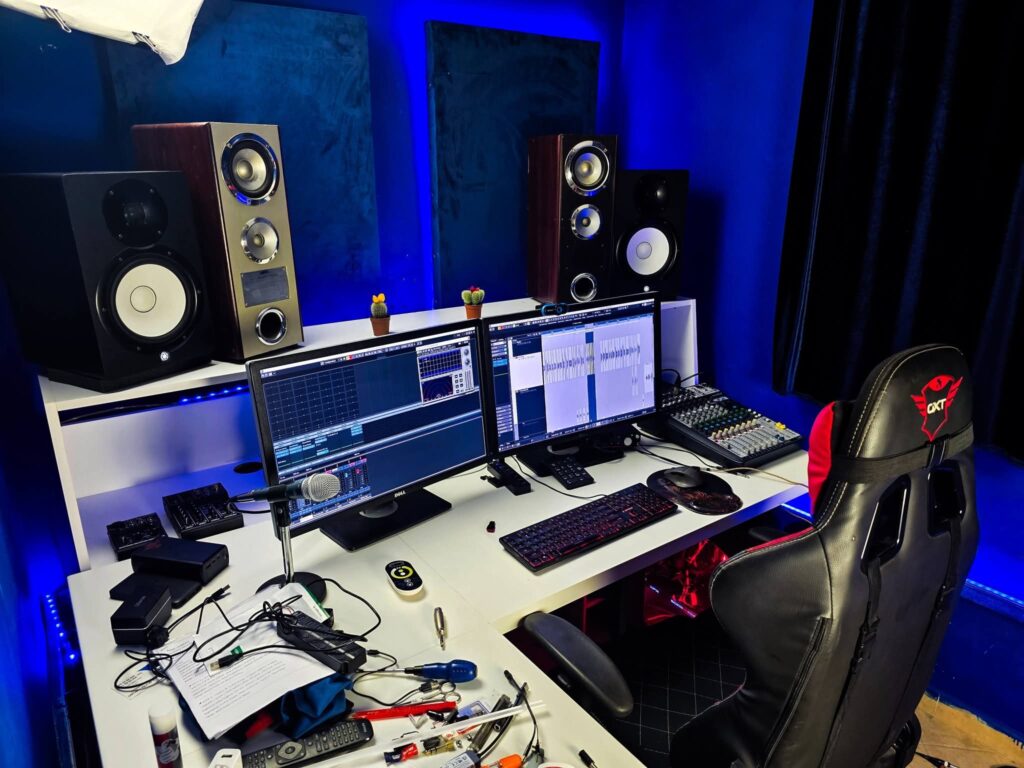
Dramatic lighting is not just for photographs. It changes how you hear a session. There is something about working in low, directional light that makes you listen more carefully.
That sounds made-up but most producers who have tried it notice it immediately.
Dark Purple and Black Studio Aesthetic
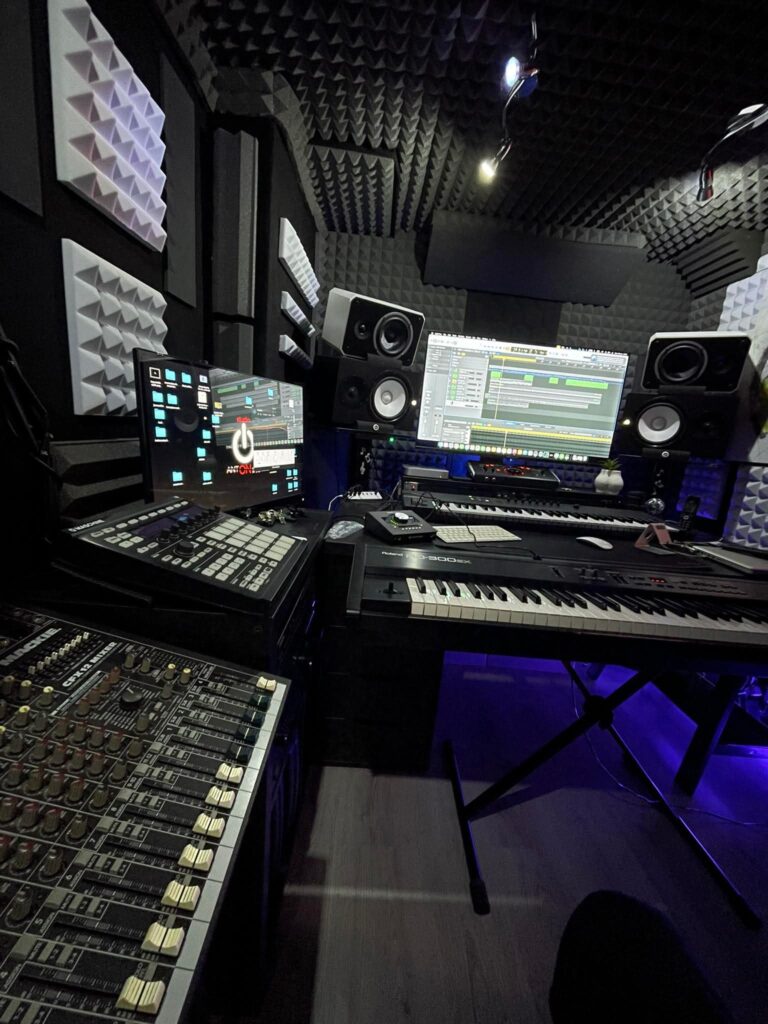
Purple is underused in studio design. It adds depth without the starkness of pure black and reads differently from blue or green in photographs.
For Pinterest boards especially, it stands out in a feed full of grey and silver setups.
Moody Studio for Electronic Music Producers
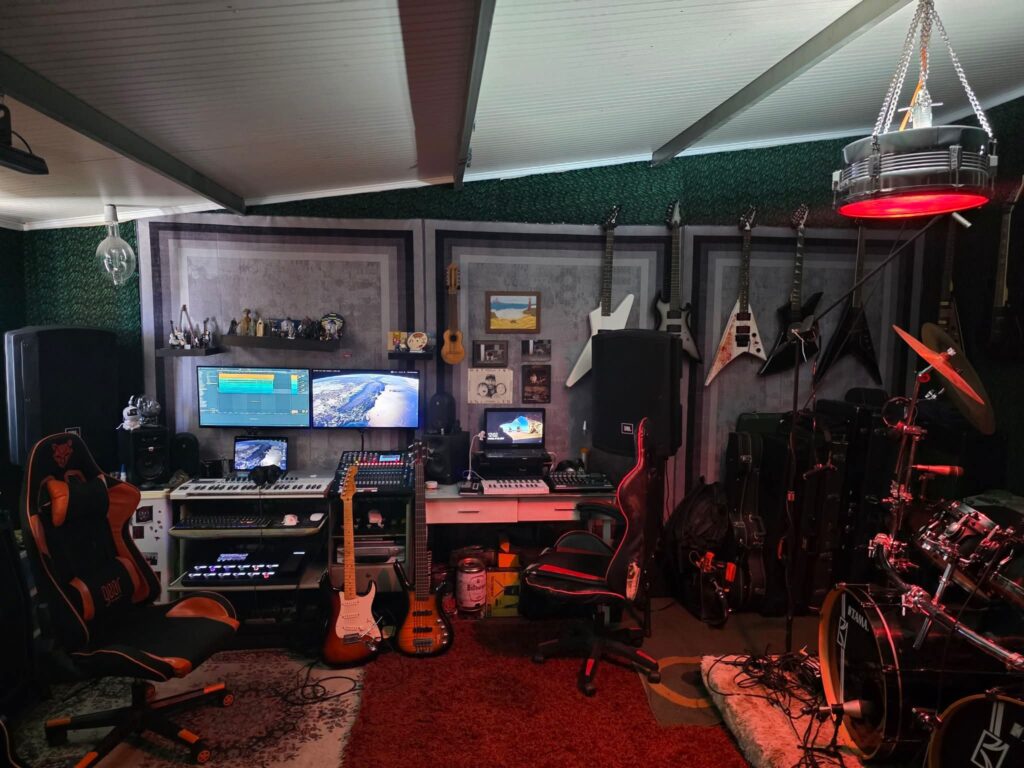
Electronic music production has a long association with low-light environments, partly because the screens become the light source.
A setup that leans into this rather than fighting it with overhead lighting tends to feel more natural for long sessions.
Dark Masculine Home Studio
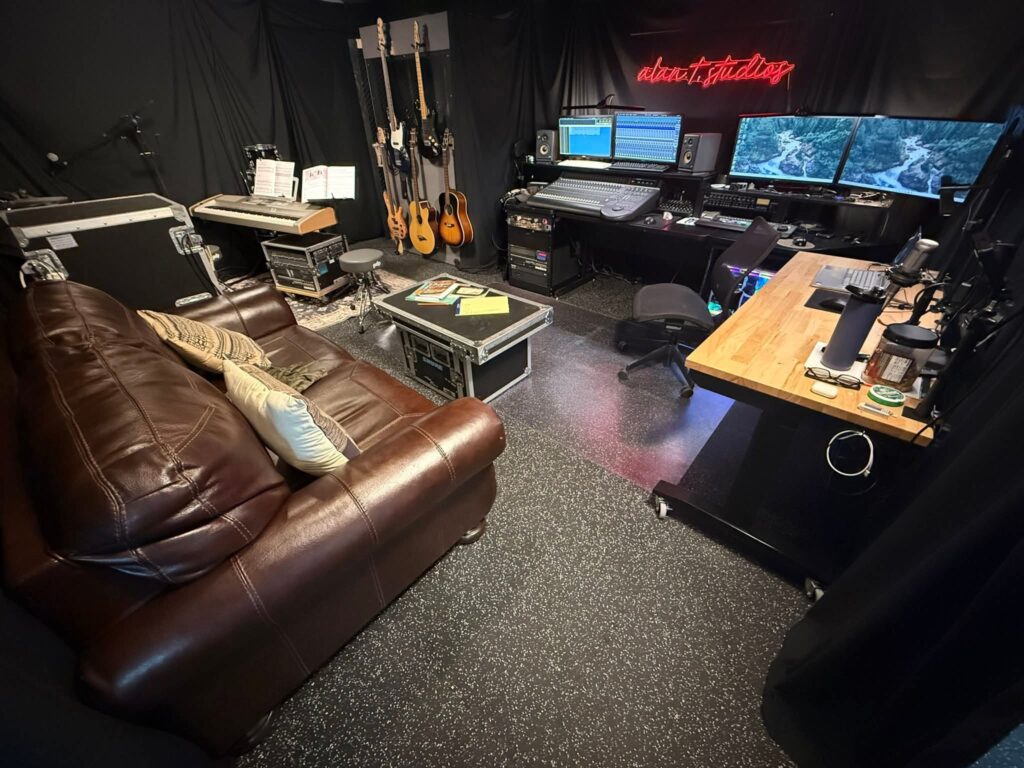
The phrase gets used a lot on Pinterest, and it means something specific: clean lines, no clutter, controlled color palette, nothing decorative that does not serve a purpose.
It appeals to producers who want a space that takes itself seriously without being cold.
Minimalist Dark Studio for Mixing
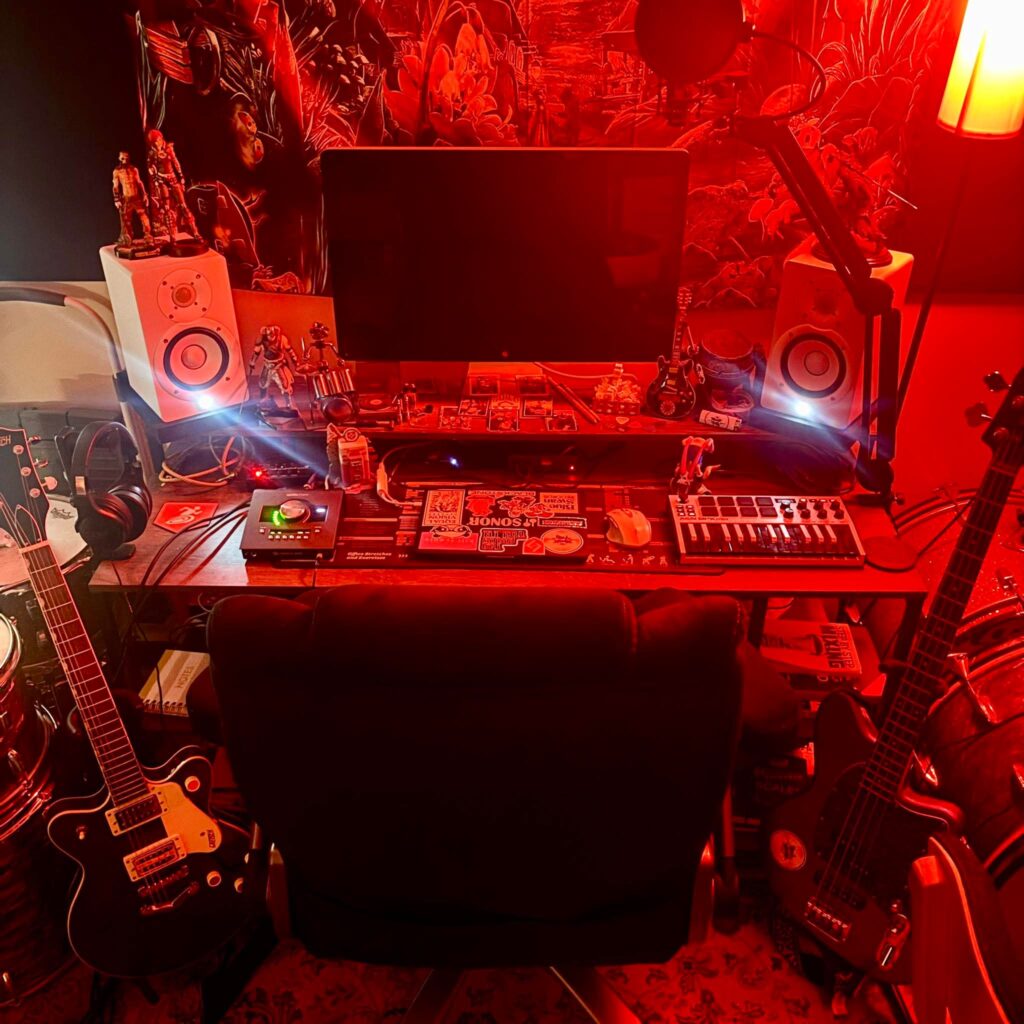
Mixing requires more focus than most production tasks. A visually quiet room helps. Dark tones reduce distraction, and a minimal setup means fewer decisions about where to look.
Some engineers swear by working with almost no light at all, which is extreme, but the principle holds.
Dark Aesthetic Home Studio Under Stairs
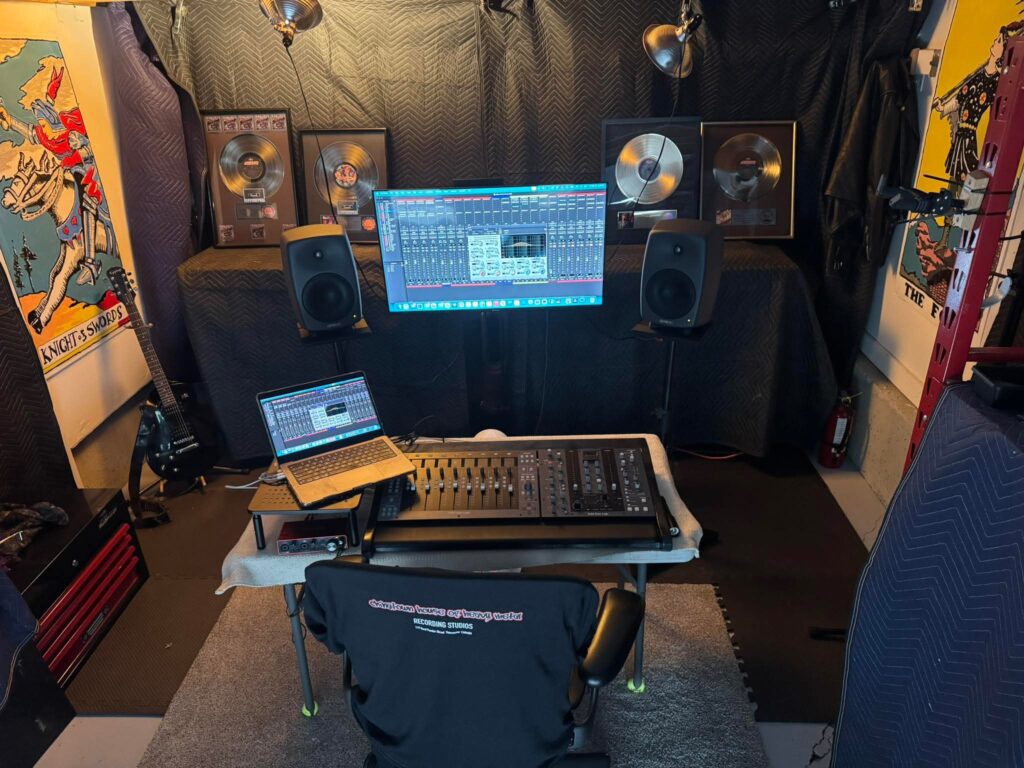
Under-stair spaces get used for studios more often than you would think, and they suit the dark aesthetic well because the enclosed shape already does most of the work.
The ceiling angles add character that a standard rectangular room cannot easily replicate.
Moody Music Room With String Lights
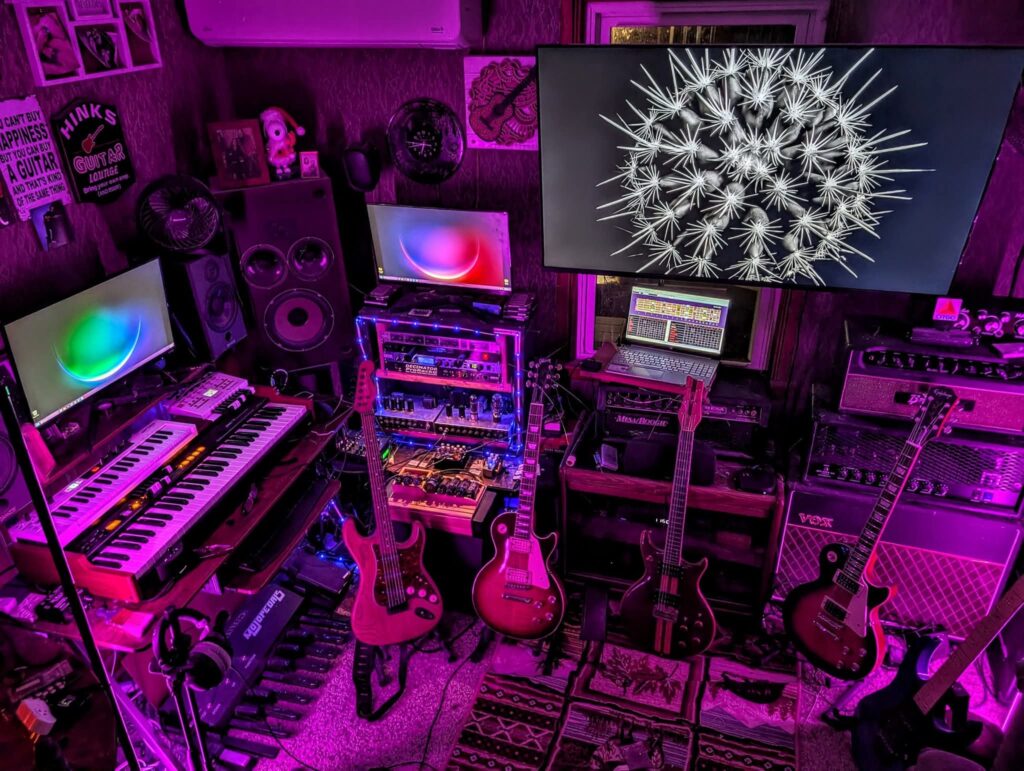
String lights show up in this category because they solve a specific problem: they add light without brightness.
A dark room that is also completely dark cannot function as a workspace. String lights are the easiest way to hold both requirements at once.
Dark Caledoscope and Black Studio Aesthetic
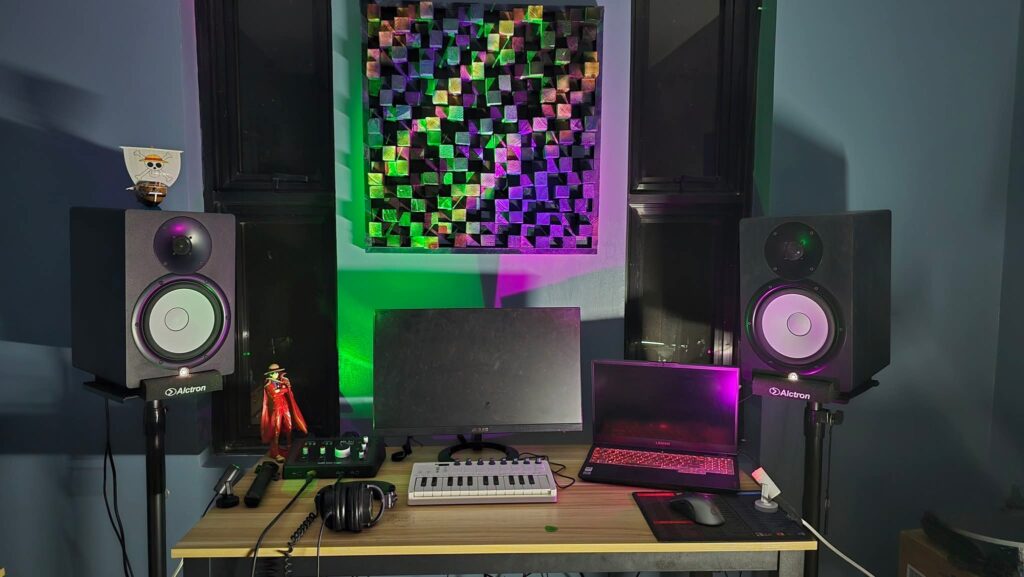
Dark green has had a moment in interior design and it translates to studios in a way that olive and forest tones tend to do well: they feel calm without feeling cold.
For producers who find black walls too stark, this is the next logical step.
Moody Home Studio for Late Night Sessions
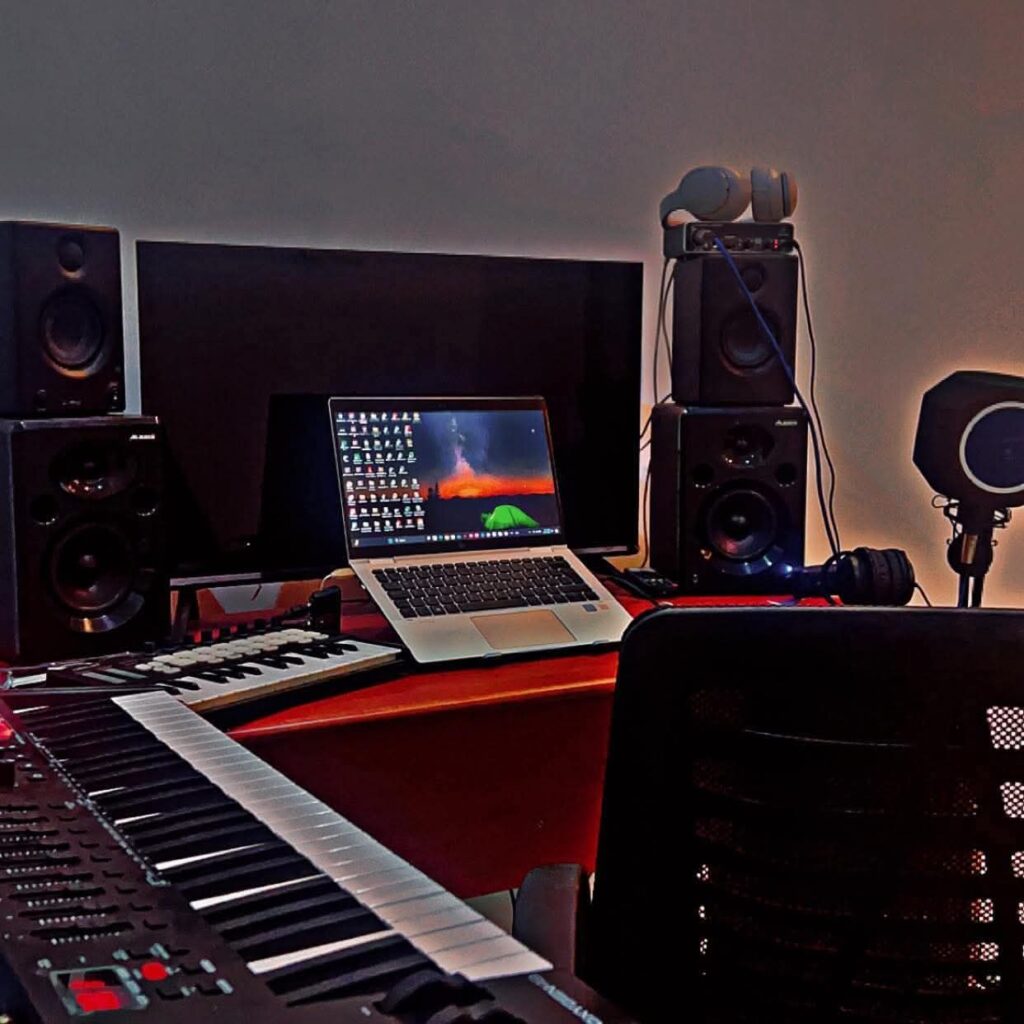
Some people make their best work after midnight. The rest of the world is quiet, the pressure of the day is off, and the dark studio becomes the only lit space in the house.
Setting up a space that suits this kind of workflow is worth doing deliberately rather than by accident.
That’s a Wrap
Dark and moody studio aesthetics work because they narrow focus. They remove the visual noise that breaks concentration, and they make the room feel like it belongs to the music.
None of these ideas requires a major renovation.
Most of them start with changing the light and removing what does not need to be there.
For Pinterest Lovers: