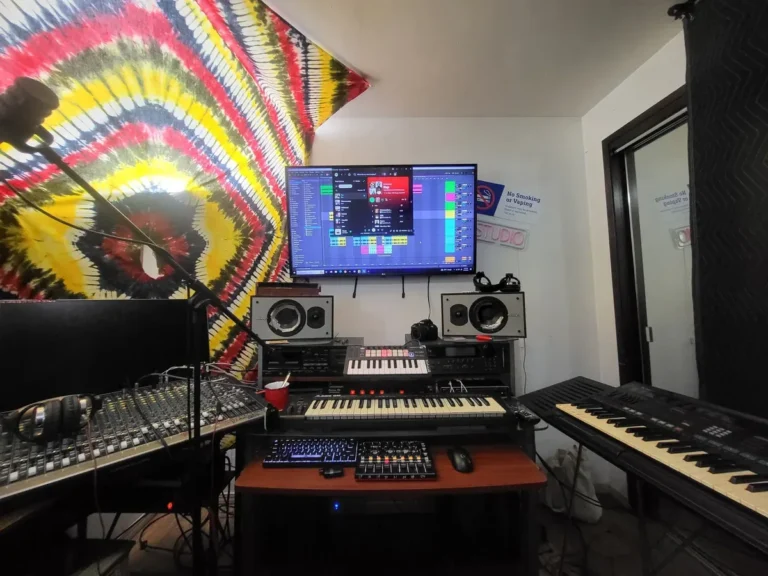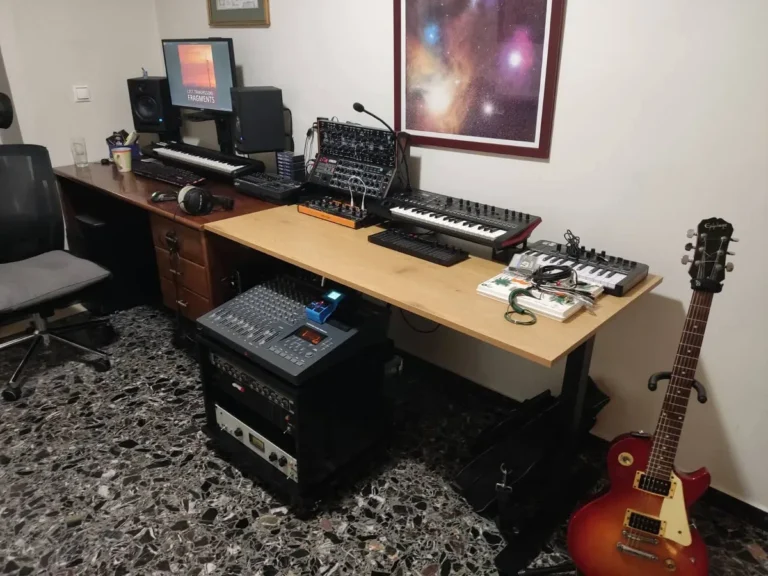

A spare closet is one of the most overlooked starting points for a home recording setup. Most producers assume the space is too small to be useful, but that assumption tends to fall apart once you actually try it.
A closet conversion can give you isolation and focus that a shared room rarely will.
Closet Recording Studio Conversion Ideas
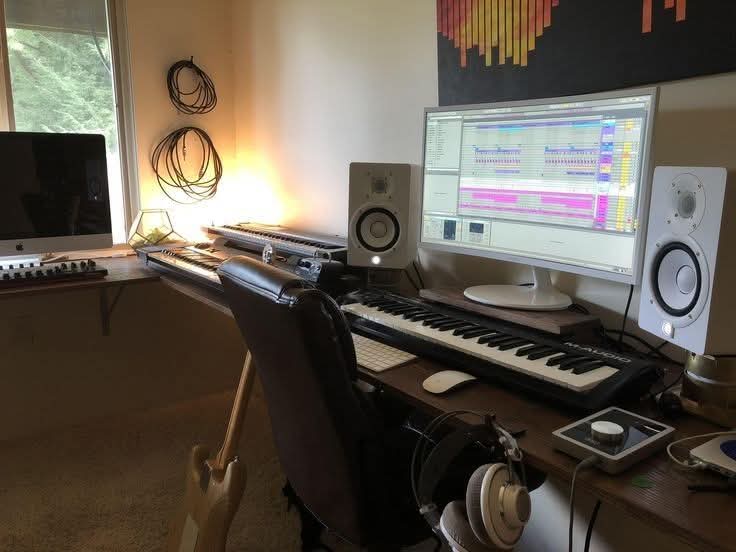
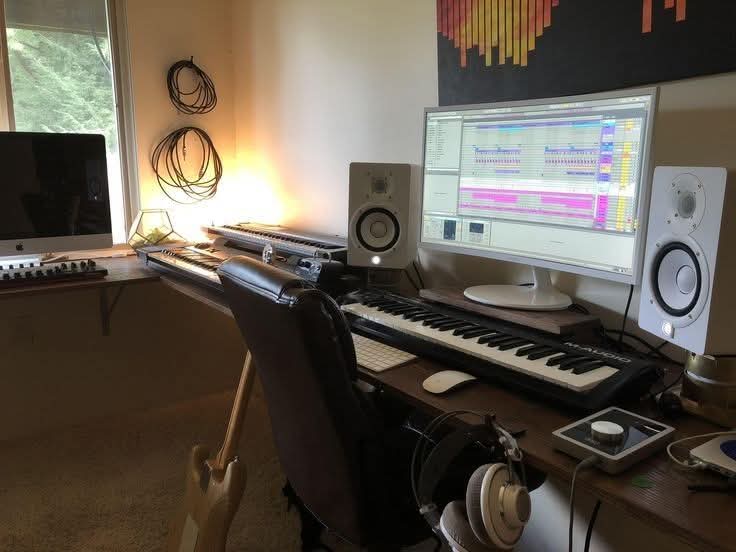
This one pairs white monitors with a wide keyboard tray under a window. The cable coil on the wall says the owner works here often.
Converting a closet works because you’re starting with a contained space and a door you can shut. That containment does more for your recordings than most producers expect.
The switch also changes how you work. It becomes easier to sit down and focus when the studio feels like its own room, not a corner of somewhere else. There are more home studio setup ideas worth browsing if you are still deciding on a layout.
Small Closet Music Studio Setup for Producers
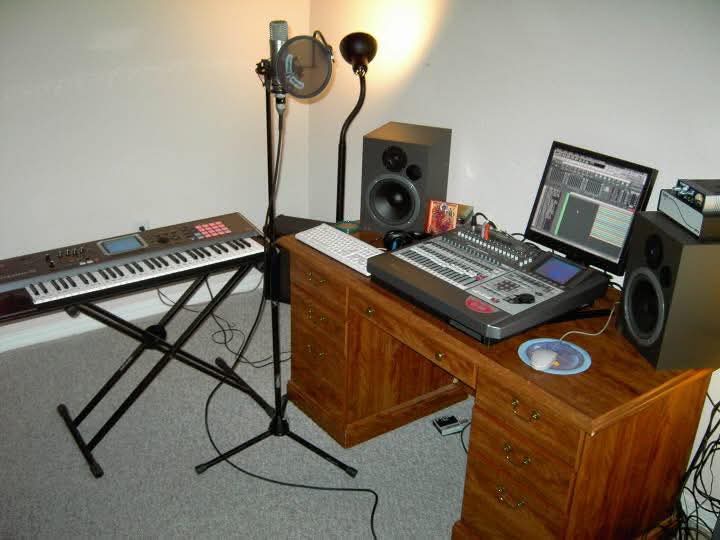
A wooden writing desk carries the whole setup here. A pop filter sits on a boom stand, with the keyboard on its own X-frame beside it.
Working in a tighter footprint forces decisions you’d otherwise delay. Gear you don’t use has nowhere to live, and a messy layout becomes a daily inconvenience.
That pressure tends to clean up workflows faster than any productivity system will.
Closet Home Recording Space on a Budget
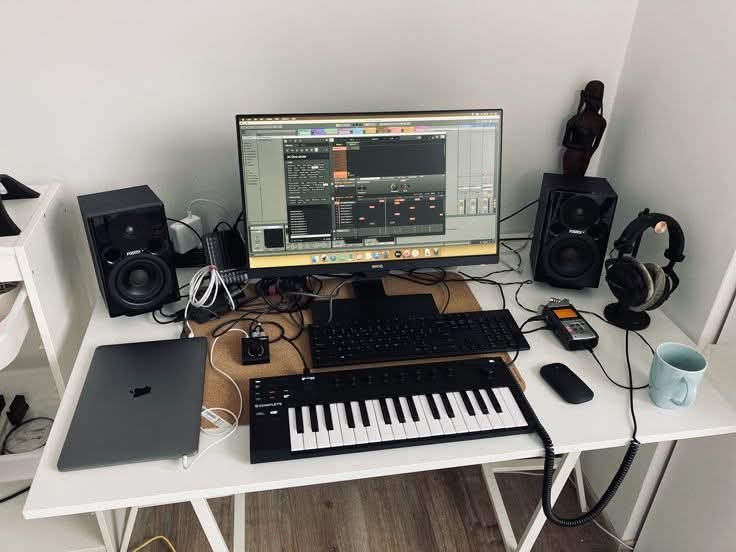
White trestle legs and a laptop parked flat on the desk keep this one light, with a mug and headphones within arm’s reach.
Costs stay lower here than in most other setups. The room itself handles a lot of the acoustic work, which means less money spent fixing problems after the fact.
If budget is a real constraint, a closet is one of the smarter places to start. Plenty of other budget home studio setups follow the same thinking.
Budget Closet Music Production Studio Ideas
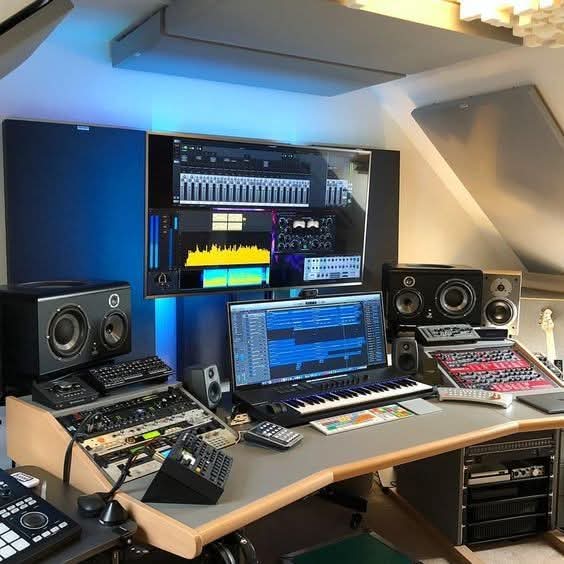
Blue cove lighting and a curved wooden desk give this one a built-in look. A rack tucks into the end, with screens stacked two high.
A small, enclosed space is naturally better for recording than a larger untreated room. You’re not starting from zero acoustically, which gives your budget more room to go toward things that matter.
Producers who start here often find they need less than they thought.
Tight Space Closet Studio Design
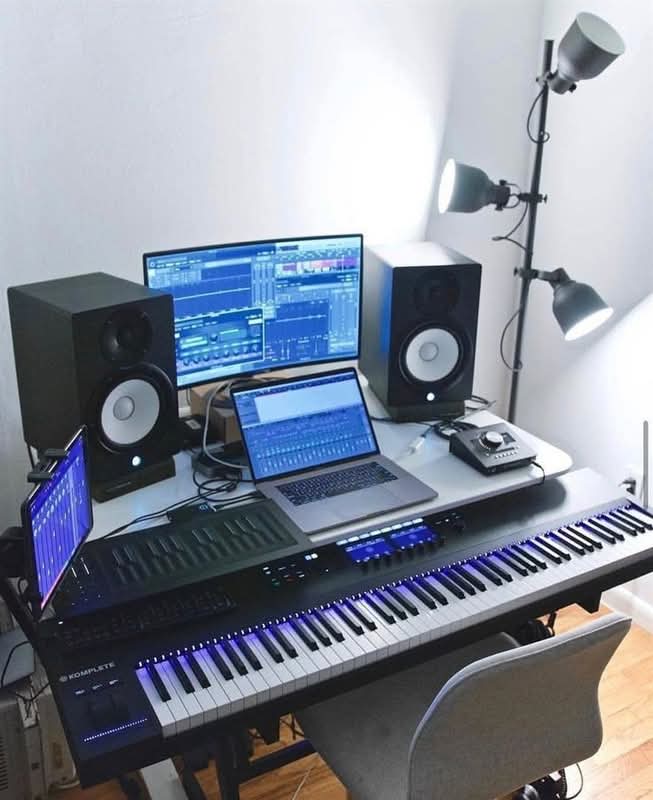
Two clip-on lamps on a floor stand do the lighting here, above an 88-key controller and a laptop propped between the monitors.
Tight rooms are not a compromise. The walls and ceiling work in your favor in ways a bigger room won’t.
Plenty of producers have turned out serious work from spaces this size. The focus a closed-off room provides is hard to match anywhere else in a home.
DIY Closet Recording Studio That Works
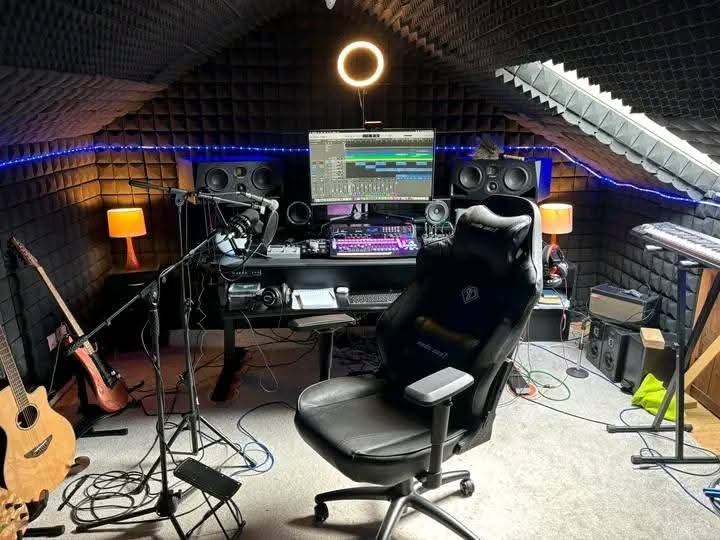
Grey foam wedges cover the sloped ceiling in this one, and a ring light sits above the screens with guitars on stands to the left.
Most of what makes a closet studio functional doesn’t require professional installation. The approach matters more than the materials.
Producers who treat it as a real build rather than a temporary fix tend to get results they stick with long-term.
Closet Studio Setup for Apartment Producers
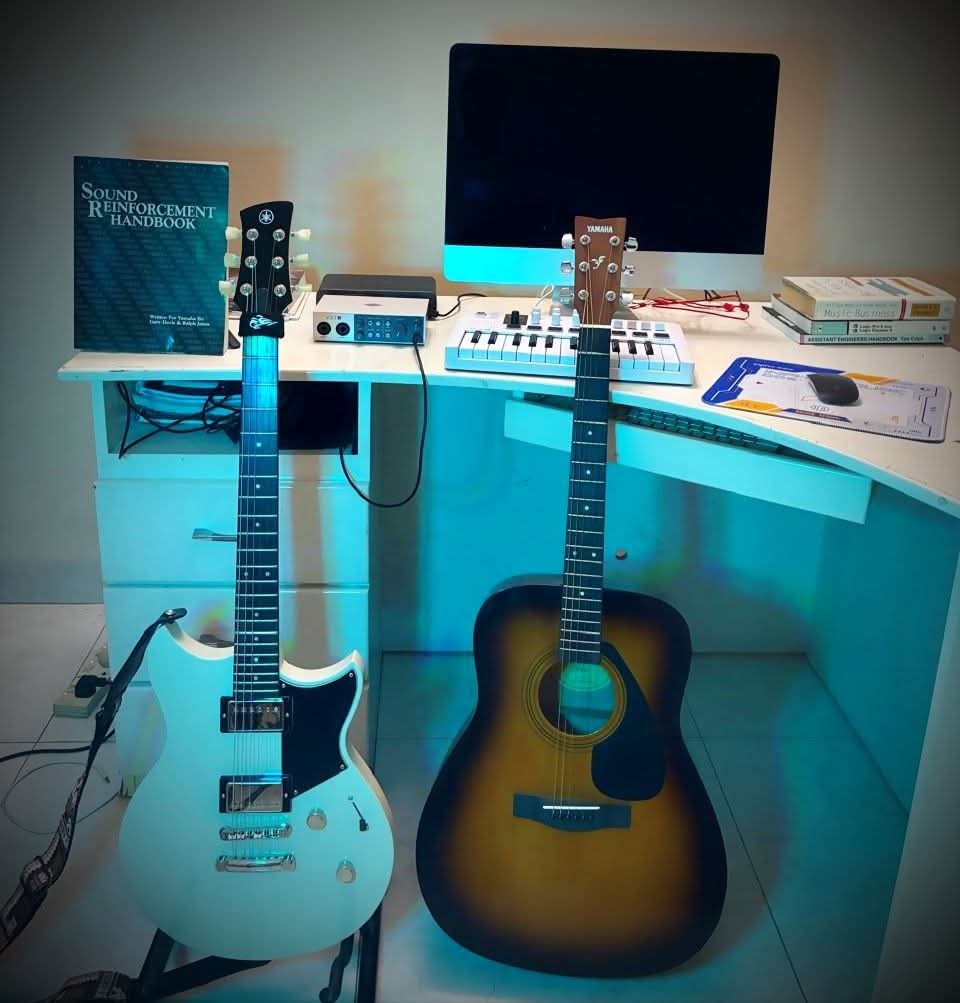
Teal light washes across a white desk here, with an electric and an acoustic leaning against it and a reference book propped up top.
Apartment living limits your options, and a closet is often the one space where you can close a door without taking over shared areas. It keeps the studio separate from the rest of your living space, which helps both your recordings and your focus.
For renters especially, it’s a setup that doesn’t require any permanent changes. Browse more small space studio setups for other renter-friendly options.
Walk-In Closet Home Recording Studio

Two keyboard tiers and a small mixer fill a bare corner in this one, with a wooden chair pulled up as the seat.
More floor space changes what’s possible, but the principles stay the same. A walk-in gives you room to move and organize without giving up the containment that makes closet studios work.
If you’ve got one available, it’s worth converting before looking at larger rooms.
Closet Music Production Space for Beginners
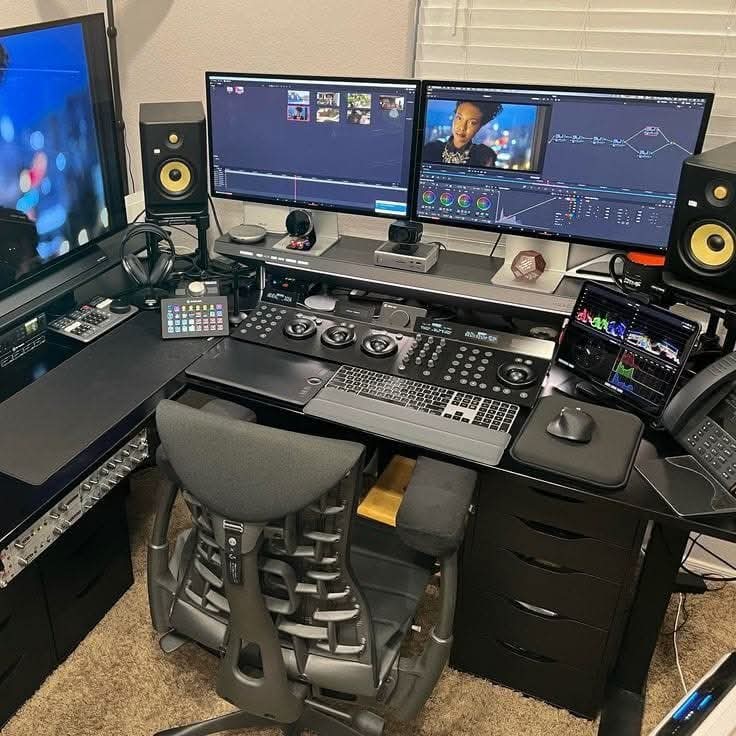
This is the busiest of the bunch, with three screens, a control surface, yellow-coned monitors and a mesh chair on a rolling base.
Starting out doesn’t mean you need a purpose-built room. A closet gives you a controlled environment that’s forgiving to learn in, without the cost or commitment of a larger build.
Most of what you need to understand about recording translates directly from a small space like this. Our other beginner home studio guides cover the same ground in bigger rooms.
Minimal Closet Recording Studio Layout

Red LED strip and a sticker-covered wall set the tone here, with a laptop, a mini keyboard and a mic on a low shelf.
Restraint is the point, not a limitation. A stripped-down setup forces you to get good at what you have rather than chasing the next piece of gear.
Producers who build minimal tend to finish more.
Closet Home Studio Conversion Idea
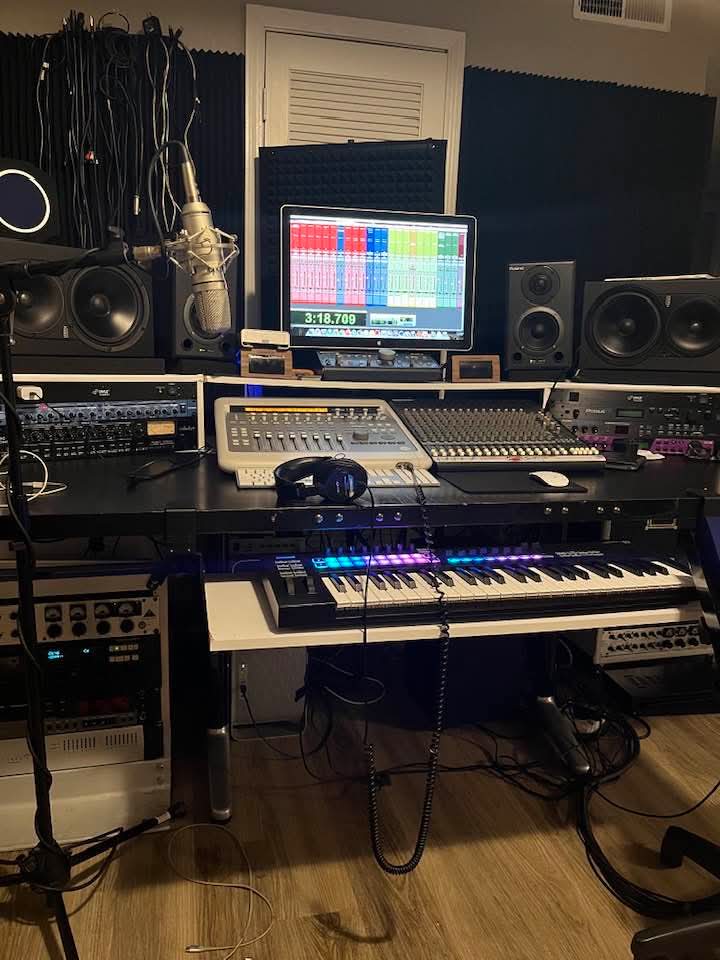
Navy blue acoustic panels frame this one, and a large-diaphragm mic on a boom sits front and centre over a mixer and keyboard.
The conversion process is usually simpler than people expect. Most of the work is deciding what the space needs and leaving out what it doesn’t.
That editing process alone puts a lot of closet studios ahead of larger, more complicated builds.
Affordable Closet Recording Space Setup
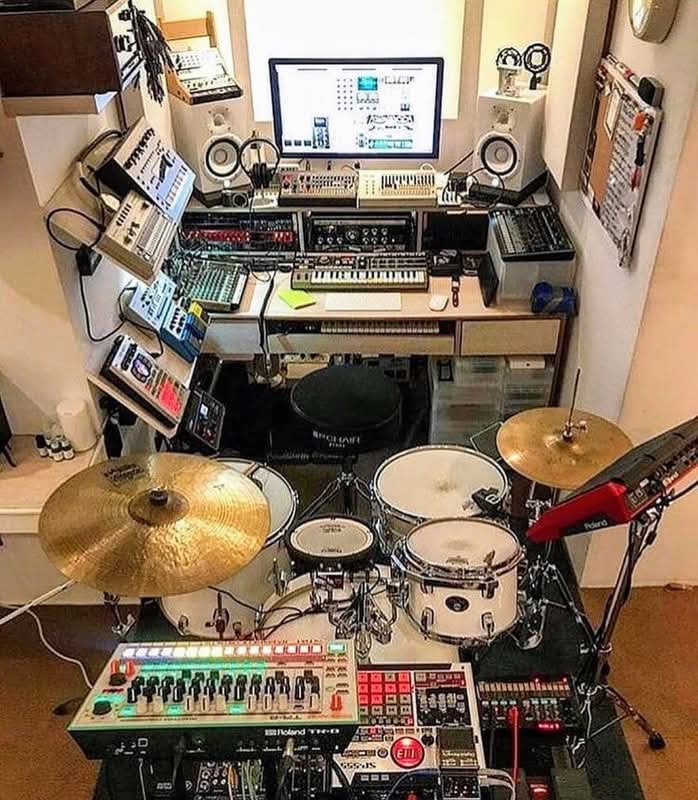
A full drum kit shares the corner with a synth rack in this one, showing how far a small footprint can stretch.
You don’t need much to get a closet studio functional. The space itself does a lot of the work, and the lower footprint means lower costs across the board.
It’s one of the few home studio builds where the gap between affordable and professional-sounding is actually small.
Closet Music Studio Idea for Renters

Bare concrete and a red rope light behind the desk here, with a laptop, a condenser mic and mismatched monitors on either side.
Renting puts limits on what you can do to a space. A closet build typically works within those limits without requiring anything permanent.
It’s also easier to reverse than most other studio setups if you need to move.
Reach-In Closet Recording Studio Design

A plain trestle table holds two screens in this one, with a snare visible to the left and a patterned curtain doing duty as treatment.
A reach-in is tighter than a walk-in, but the constraints are manageable. You’re focused on what’s directly in front of you, which cuts out a lot of visual distraction.
Some producers find that limitation actually helps them stay on task.
Closet Studio for Solo Music Producers

Shot in near darkness, this one leans on screen glow, with a keyboard sliding under the desk and headphones hanging off the edge.
Working alone means you don’t need to accommodate anyone else’s preferences or workflow. A solo setup in a closet can be built exactly around how you work, with nothing wasted on space or gear you wouldn’t use anyway.
That specificity tends to make the studio feel more like yours.
Quiet Closet Recording Space at Home

Two curved monitors on a riser sit under a staircase here, with a mint chair and a soft white desk keeping it tidy.
A closed door makes a bigger difference than most people account for before they try it. Even without any additional treatment, a closet cuts out ambient noise that open rooms let in constantly.
For home producers dealing with household noise, that alone is worth the conversion.
Closet Home Recording Studio for Small Rooms

White monitors flank a single screen in this one, with a graphics tablet where a keyboard would usually go.
When the whole place is small, a closet build stops you from giving up a full room you need for living. The studio stays contained, and the rest of the space stays usable.
It’s a practical trade-off that a lot of apartment producers land on eventually. There are more apartment studio layouts if space is your main limit.
Low-Cost Closet Music Production Studio

A wall-mounted screen and a plain wooden table in this one, with flight cases stacked underneath and a guitar in the corner.
Low cost doesn’t mean low quality here. The enclosed nature of a closet gives you a head start acoustically, and starting simple means you only add what you actually need.
Some of the most efficient home studios are also the cheapest.
Closet Recording Studio Idea for Beginners

A rolling stand holds a laptop, a sampler and a small mixer here, with the whole rig sitting on castors.
If you’re not sure yet how serious you are about building a full studio, a closet is a low-risk starting point. You can test what works without committing significant money or space.
Most producers who start here end up staying longer than they planned.
No-Frills Closet Home Studio Setup

Cardboard, a hung blanket and a wall flag make up the treatment in this one. The build does not need to look pretty to work.
Fewer variables means fewer things to troubleshoot. A no-frills build gets you recording faster and teaches you more about what you actually need than a complicated setup will.
The frills tend to come later once you know what’s missing.
Closet Music Studio Layout That Actually Works

A full-size control surface sits under a single wide screen here, with outboard gear racked on the shelf below.
Layout decisions matter more in a small space than in a large one. A well-thought-out closet studio feels bigger than its dimensions suggest.
Producers who take the layout seriously from the start usually don’t feel the need to move to a larger space as quickly.
Compact Closet Recording Space Design

Everything sits on one white tabletop in this one, with a red interface, orange-banded headphones and two pad controllers side by side.
Compact doesn’t have to mean cramped. Good planning creates a workspace that feels intentional rather than squeezed.
A lot of producers are surprised by how comfortable a well-designed small studio actually is to spend time in.
Closet Home Studio Idea for Apartment Living

About as stripped back as it gets, this one puts a laptop on a riser on a plain table with one monitor on a stand.
Apartments weren’t designed with home studios in mind, and a closet build is usually the most practical response to that problem. It creates a dedicated space without taking over the apartment.
For urban producers especially, that separation is worth a lot.
Soundproofed Closet Music Production Space

Black foam tiles and framed art behind the desk here, with an ultrawide screen and a keyboard on a marbled surface.
Soundproofing in a closet build is more achievable than in most rooms because the surface area is smaller. Less surface area means your effort goes further and costs less.
Even partial treatment in a closet tends to outperform a larger untreated room.
Closet Recording Studio Concept for Tight Spaces

Warm wood and an all-white keyboard give this one a calmer feel, with two pad controllers lined up to the left.
Tight spaces ask you to be specific about every decision, which is not a bad habit to build early.
The producers who do well in a small studio tend to carry that efficiency with them even when they eventually move to a bigger space.
Dedicated Closet Home Music Studio Setup

A dark wall behind the screen makes the setup pop in this one, with a piano on a lower shelf and monitors up on stands.
Having a dedicated spot, even a small one, changes how often you actually record. A space that’s always set up and ready removes the friction that stops a lot of sessions from starting.
That consistency adds up over time.
Closet Studio Conversion for Music Producers

Four monitors of different sizes crowd the shelf here, with foam laid flat along the desk edge and green walls behind.
The conversion itself is the first project, and it teaches you a lot about what you need. Going through the process of building and refining a small studio gives you a clearer idea of what a larger build would actually require.
Most producers come out of it with a better sense of what matters.
Simple Closet Recording Studio Idea

Blue underglow and a bright yellow wall in this one, with the keyboard on the desktop and a full-size board on the tray below.
Simple setups are underrated. They’re easier to troubleshoot, easier to keep tidy, and easier to actually use on a regular basis.
Complexity in a home studio is often a symptom of avoiding the work, not a path toward better results.
Closet Music Production Corner Setup

A mustard wall and a woodland wallpaper set the mood here, with a Rode boom arm swinging in from the left.
A corner within a closet can be one of the most acoustically controlled spots in a home without any modification at all. Starting in a space like that gives you a baseline most open rooms can’t match.
Build from there and the results usually follow.
Basic Closet Home Recording Space

An acoustic blanket pinned floor to ceiling creates the whole booth in this one, with a laptop and keyboard on a small folding table.
Basic is a fine place to start. The goal at the beginning is to learn what you need, not to build the final version of your studio.
A basic closet setup gives you that without locking you into decisions you’ll regret later.
Closet Studio Design for Home Music Producers

Shot looking down, this one rings the room with synths on stands, a patterned rug and a single stool in the middle.
A well-designed closet studio doesn’t look temporary. It looks like a decision someone made and followed through on.
That follow-through, more than the size or the gear, is what usually determines how much work actually gets done in the space.
That’s a Wrap
A closet is not a fallback studio. For a lot of home producers, it’s the best option available and a smart one at that.
The space rewards intentional building and punishes overthinking. Start simple, refine as you go, and don’t let the square footage convince you the work can’t be serious. Keep going with more home studio design ideas.