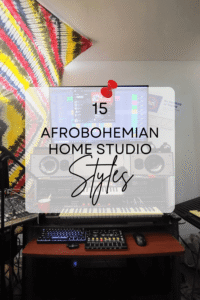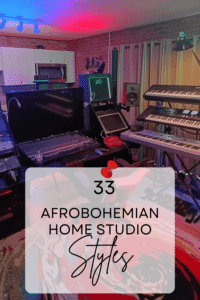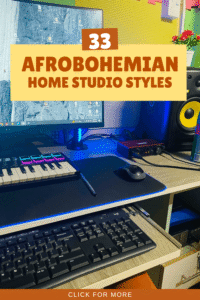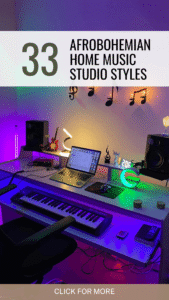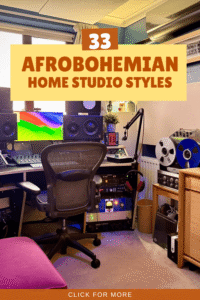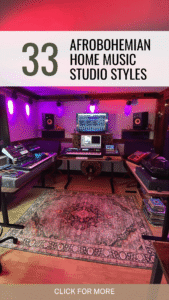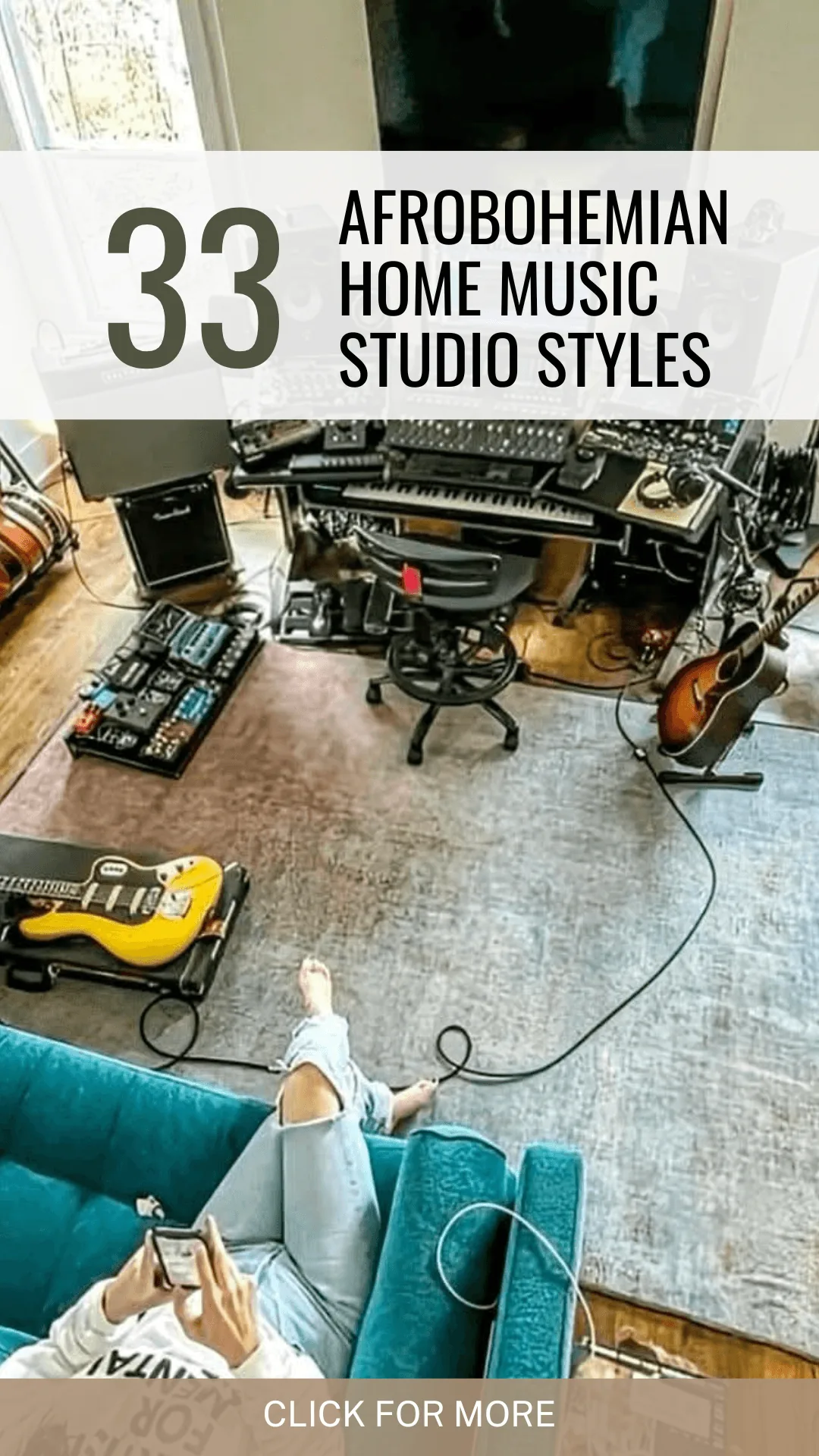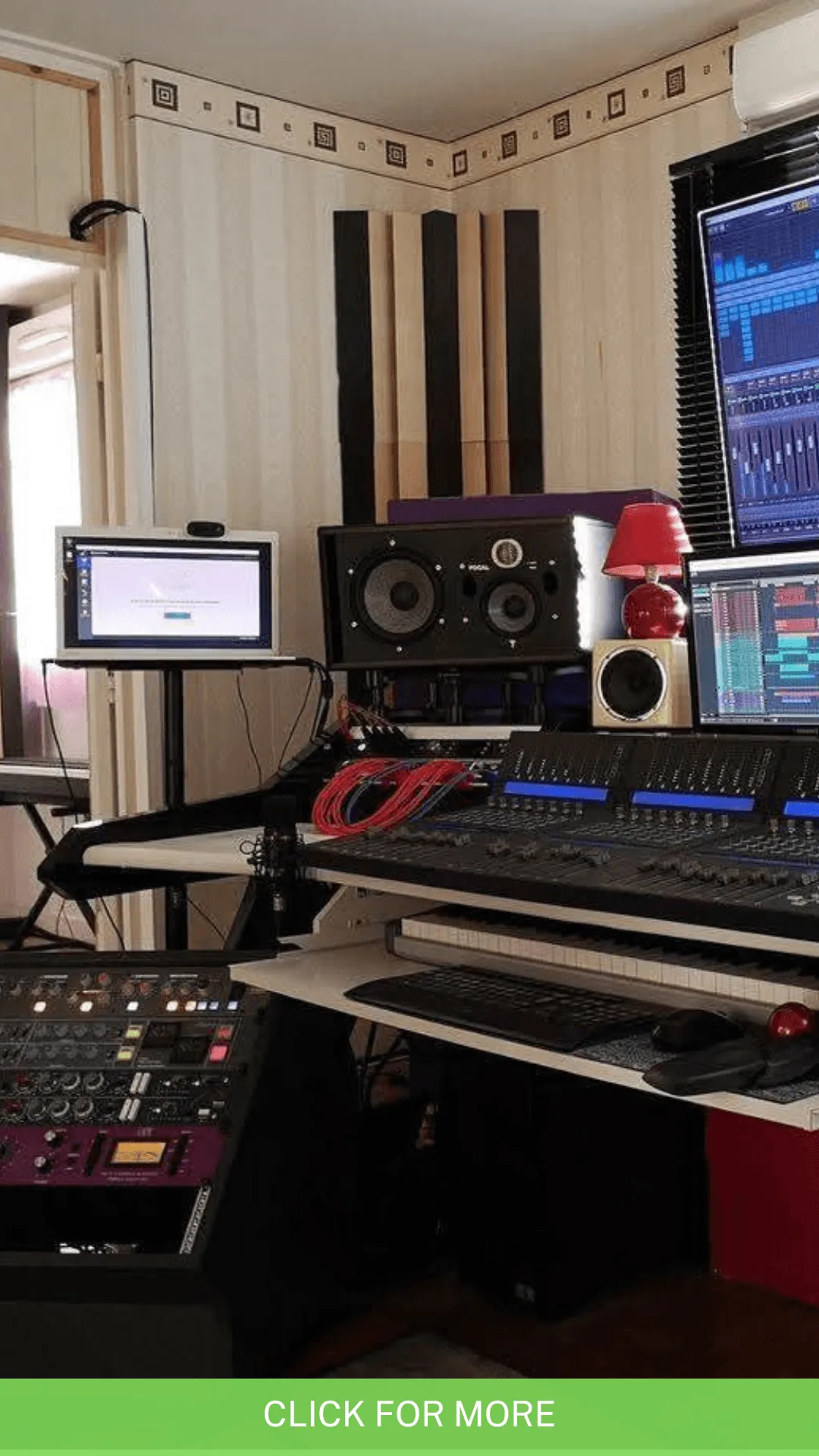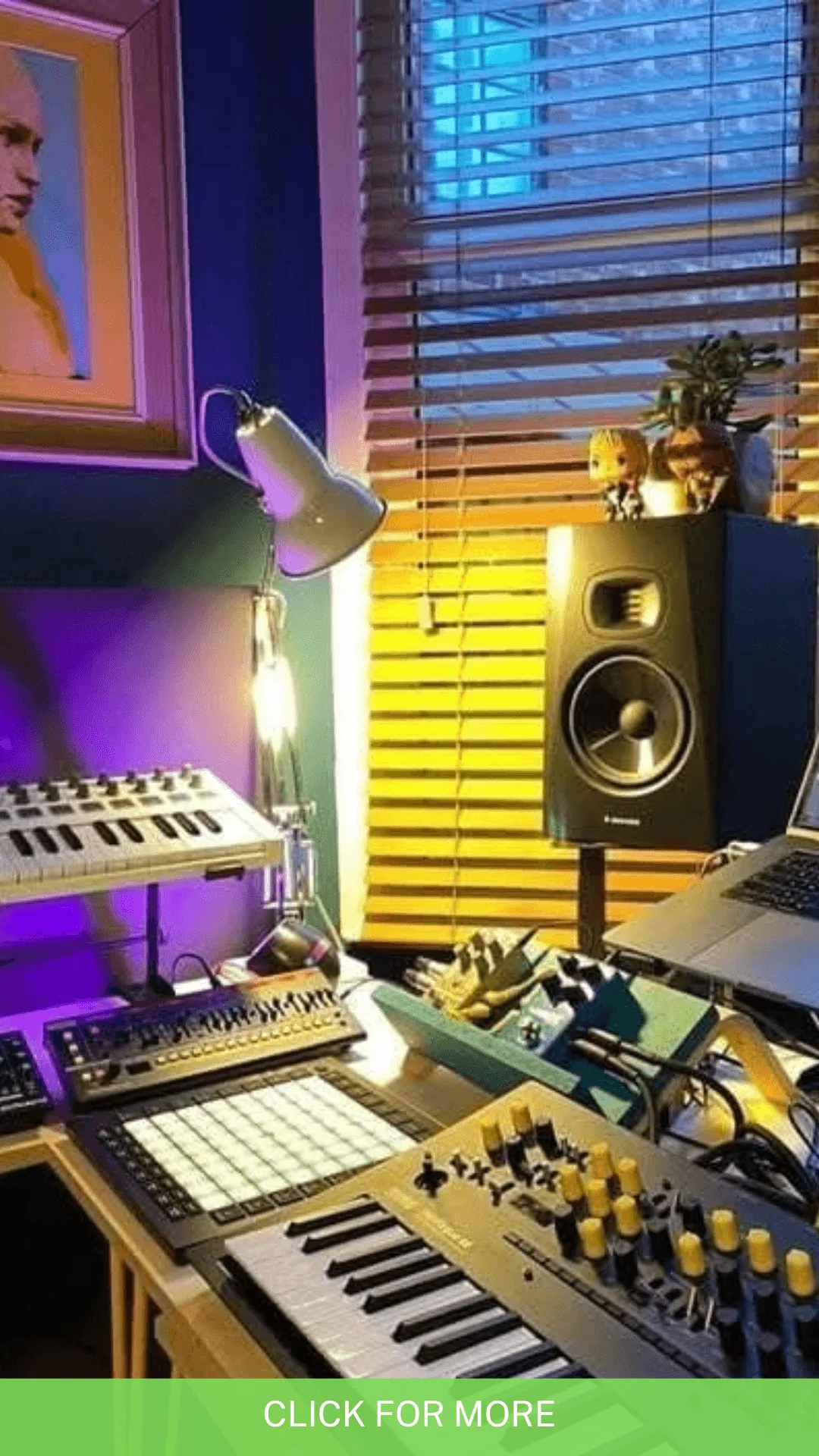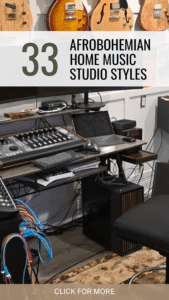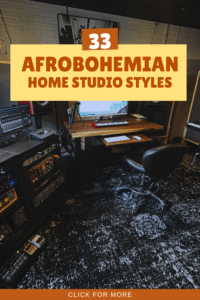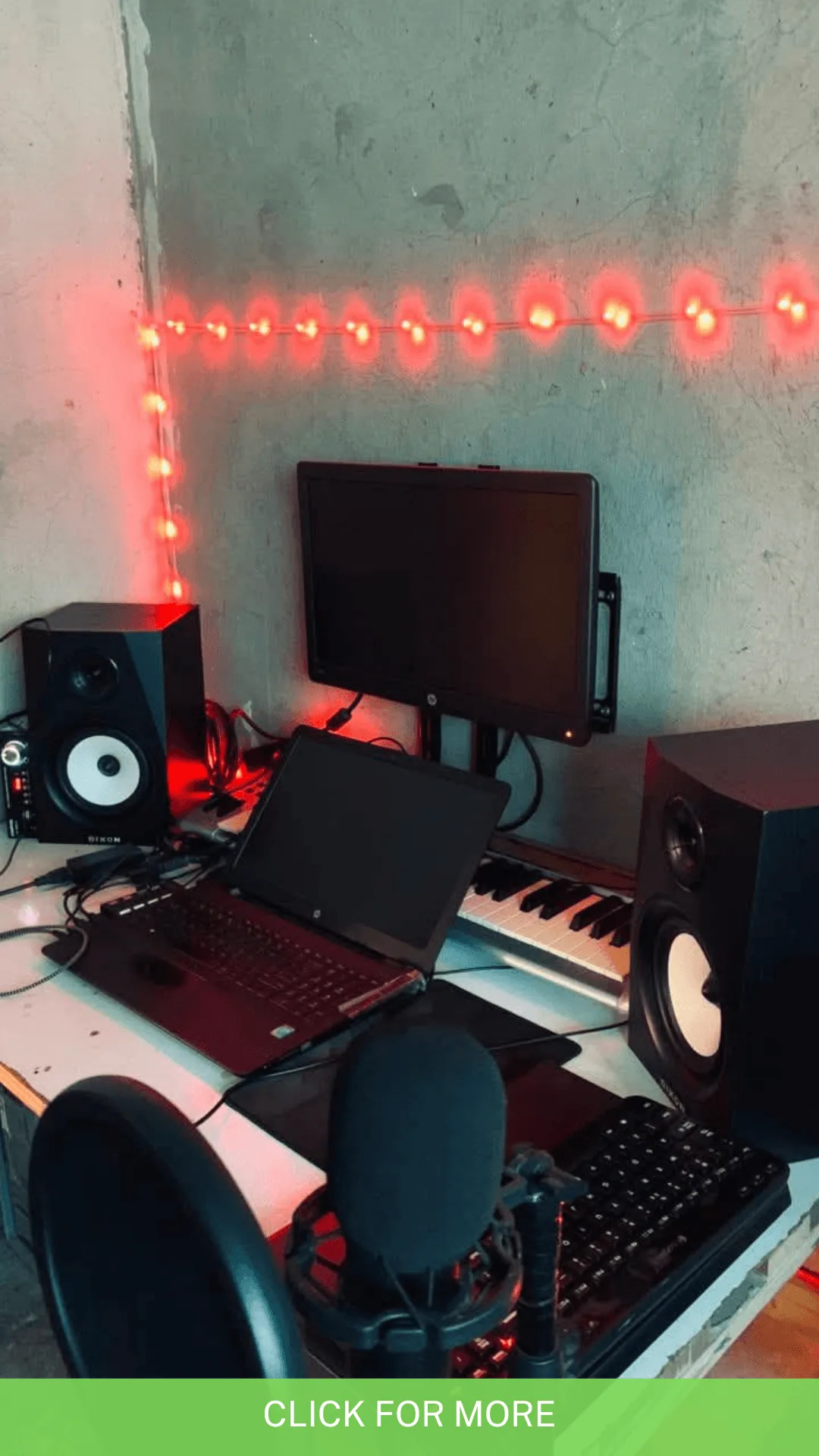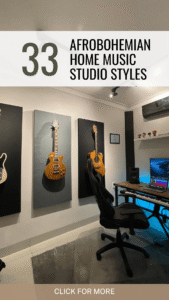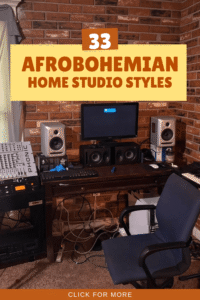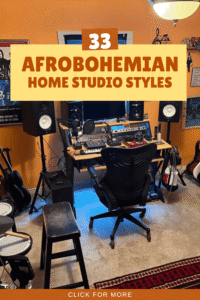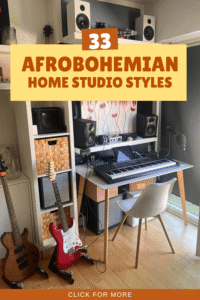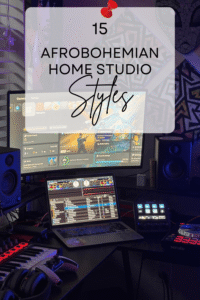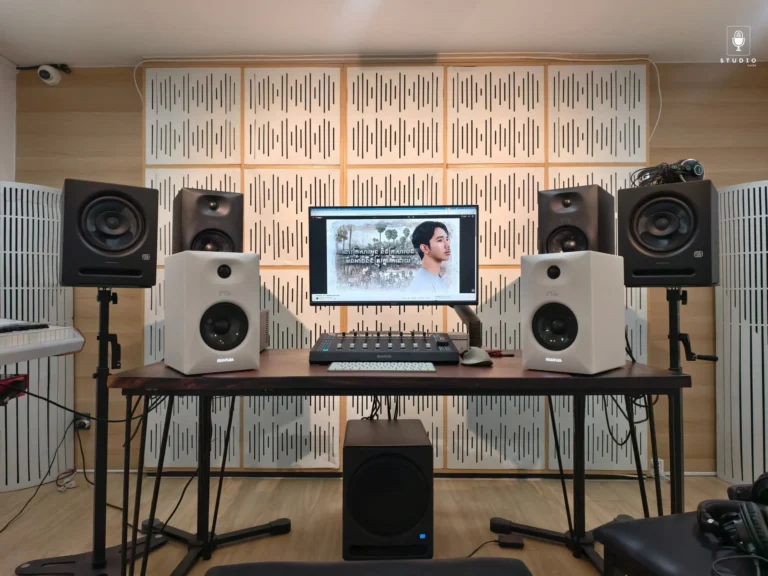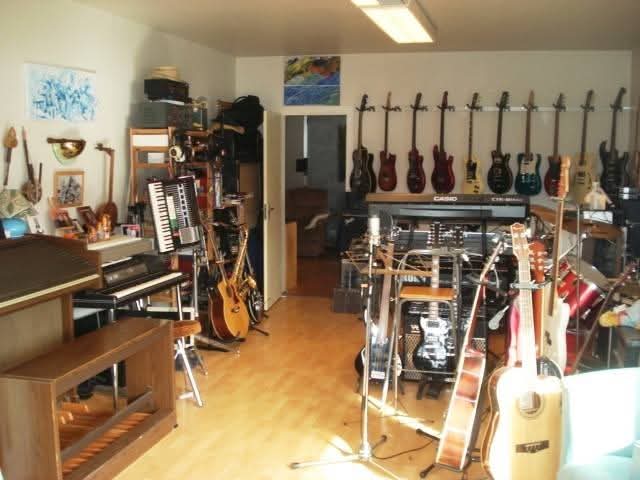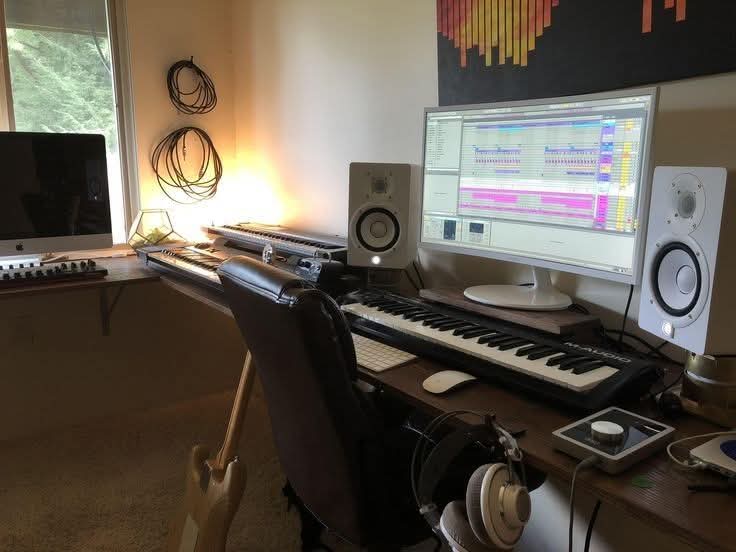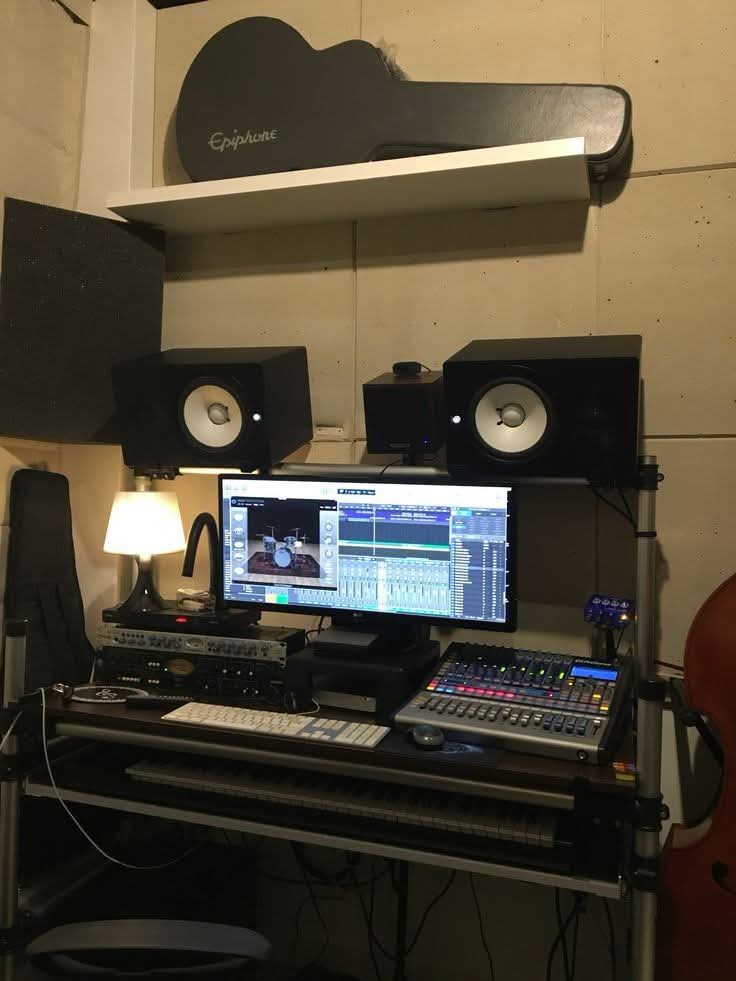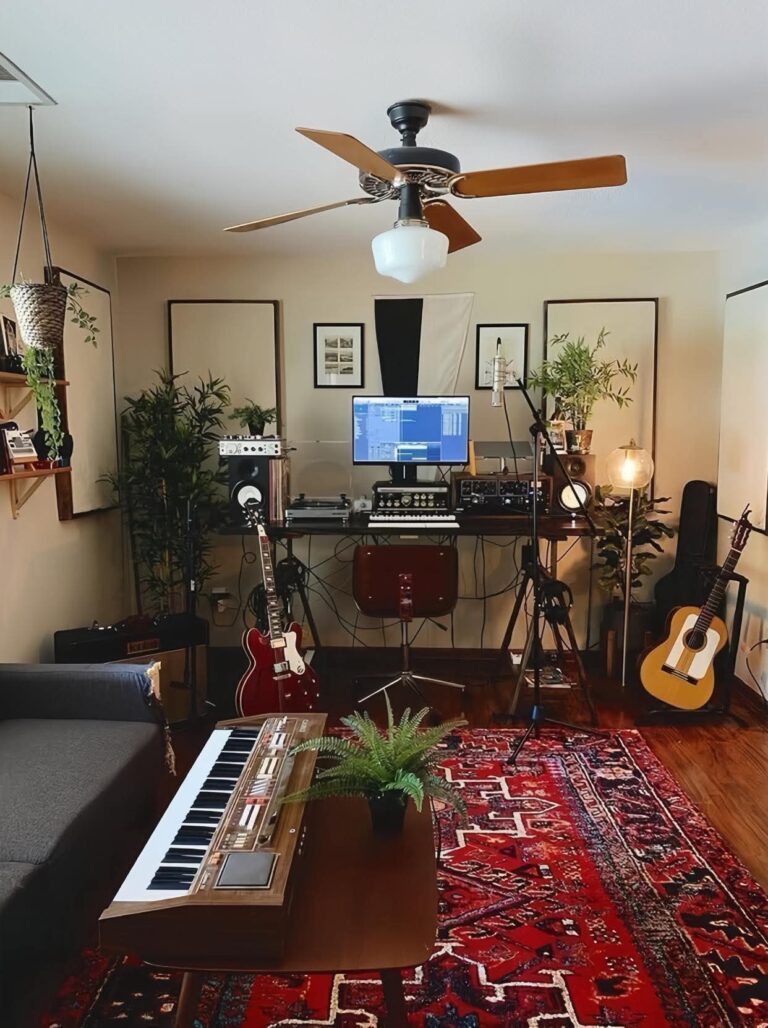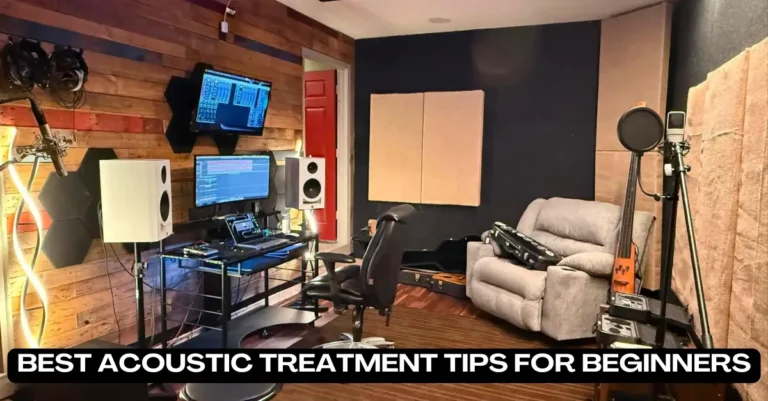

Afrobohemian style brings pattern, warmth, and history into a room that usually gets treated as purely functional. It works because a studio doesn’t have to look sterile to sound good.
Here are ways to bring that mix of color, texture, and craft into your own setup.
Afrobohemian Music Studio Corner Ideas
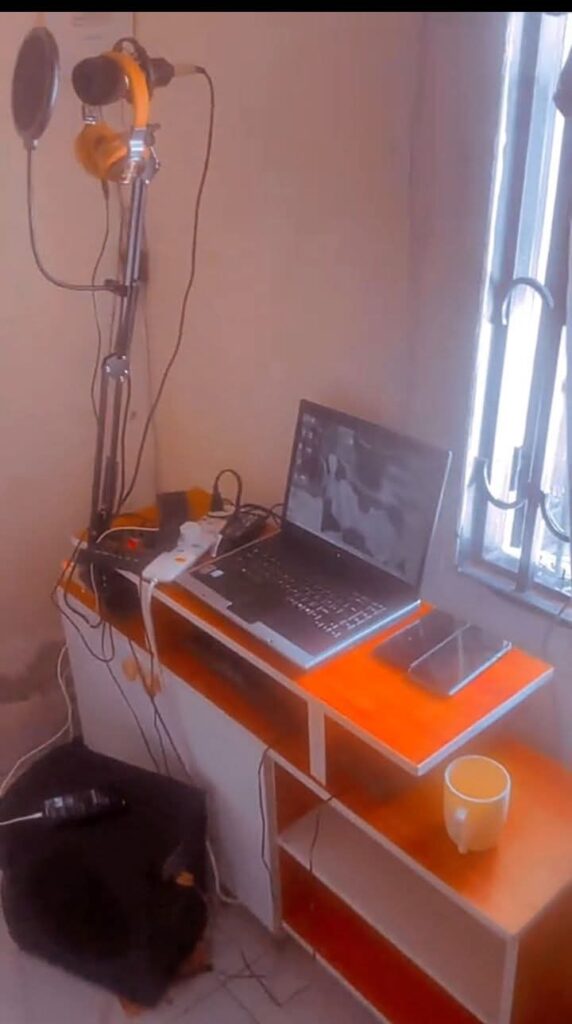
A corner like this works best when you stop treating the studio as a separate zone from the rest of your home.
Mixing pattern and function in one space keeps the room feeling lived in rather than staged.
Good for anyone who wants their gear to sit inside their actual life instead of a sterile booth.
Warm and Layered Afrobohemian Recording Studio
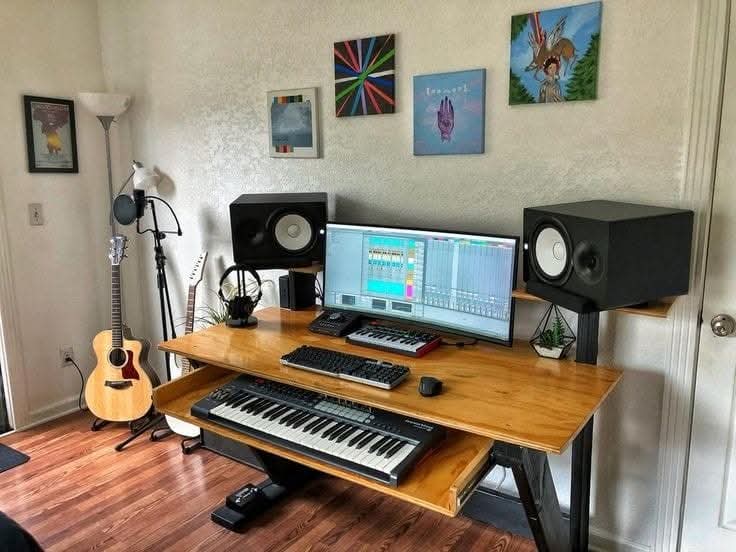
Layering is the whole trick here, rugs over rugs, throws over chairs, nothing matching on purpose. If your space gets decent natural light, warm layered tones will read even better throughout the day.
Works for people who record often enough that the room needs to feel comfortable, not just functional.
Textured Afrobohemian Home Studio Setup
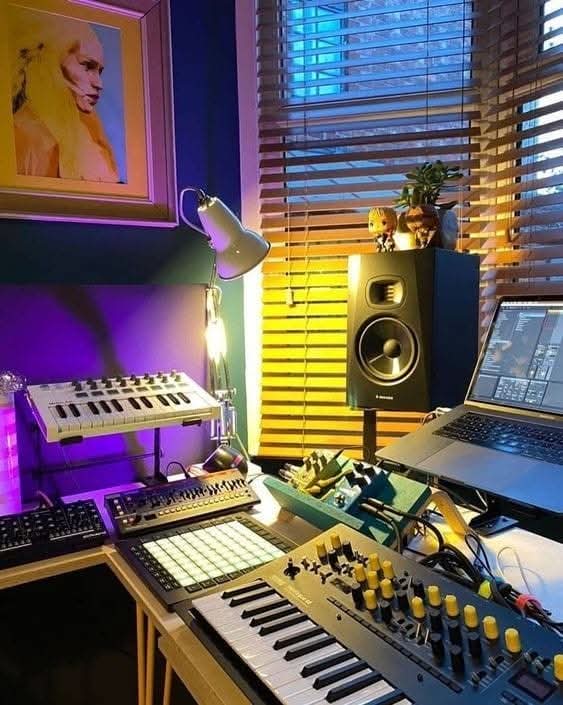
Texture does a lot of the acoustic work without looking like acoustic treatment. Woven surfaces and heavier textiles soften a room in a way that flat walls never will.
This fits smaller spaces where visible foam panels would make the room feel clinical.
Afrobohemian Recording Space for Creatives
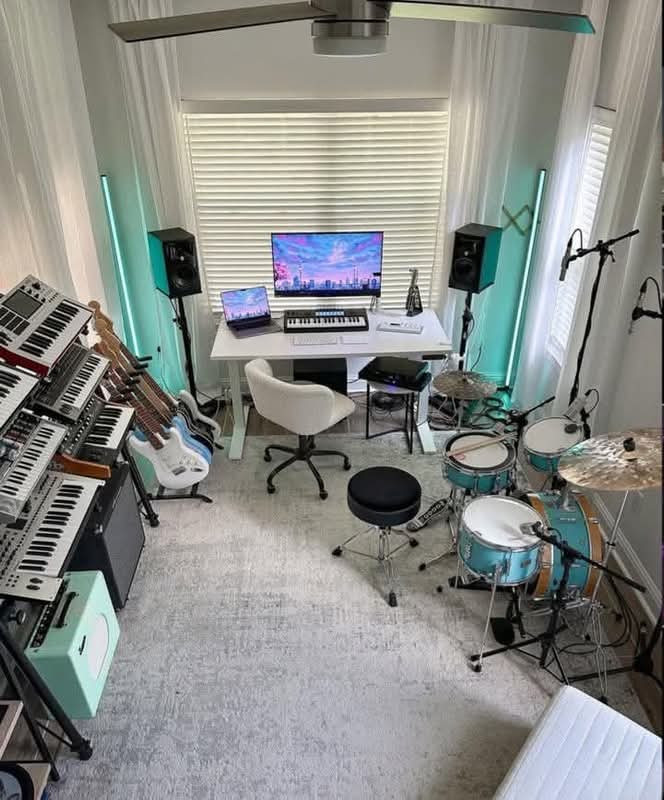
Some people need a space that inspires them before they even hit record. A recording space with this much personality does that without needing constant redecorating.
Fits songwriters and producers who spend long stretches in one room and want it to hold their attention.
Bold Print Afrobohemian Music Production Studio
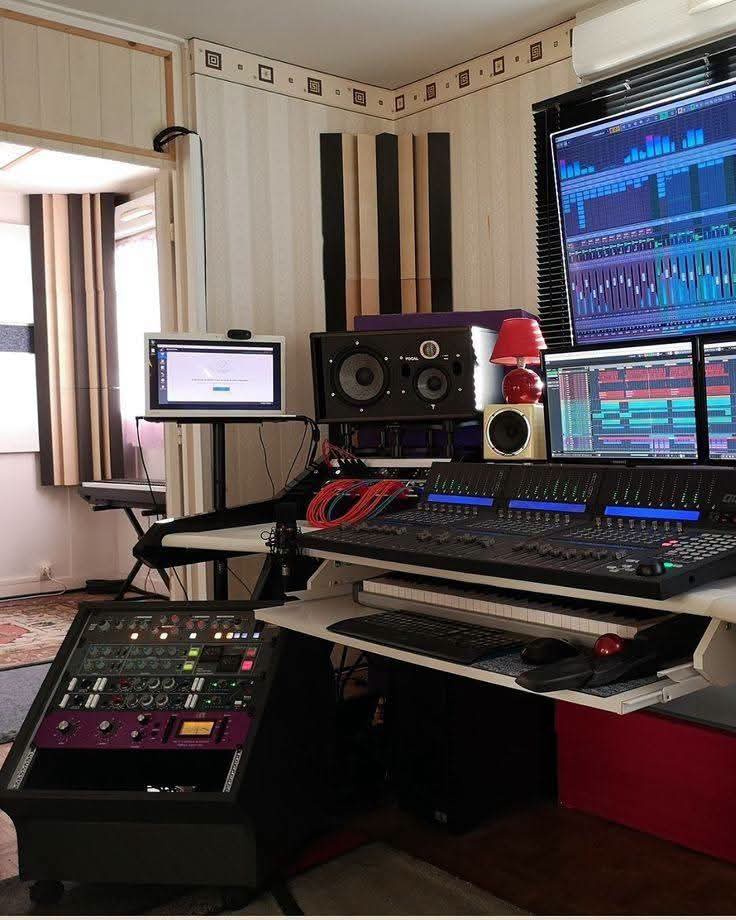
Restraint isn’t the goal here, contrast is. Bold prints on one or two surfaces keep a small room from feeling flat or forgettable.
Ideal for anyone tired of the all-gray, all-black studio look that dominates most gear photos online.
Pro Tip: Visual aesthetics shouldn’t compromise sound. Always make sure your studio monitors are placed at ear-level and form an equilateral triangle with your listening position, regardless of the room’s decor.
Earthy Afrobohemian Studio Layout
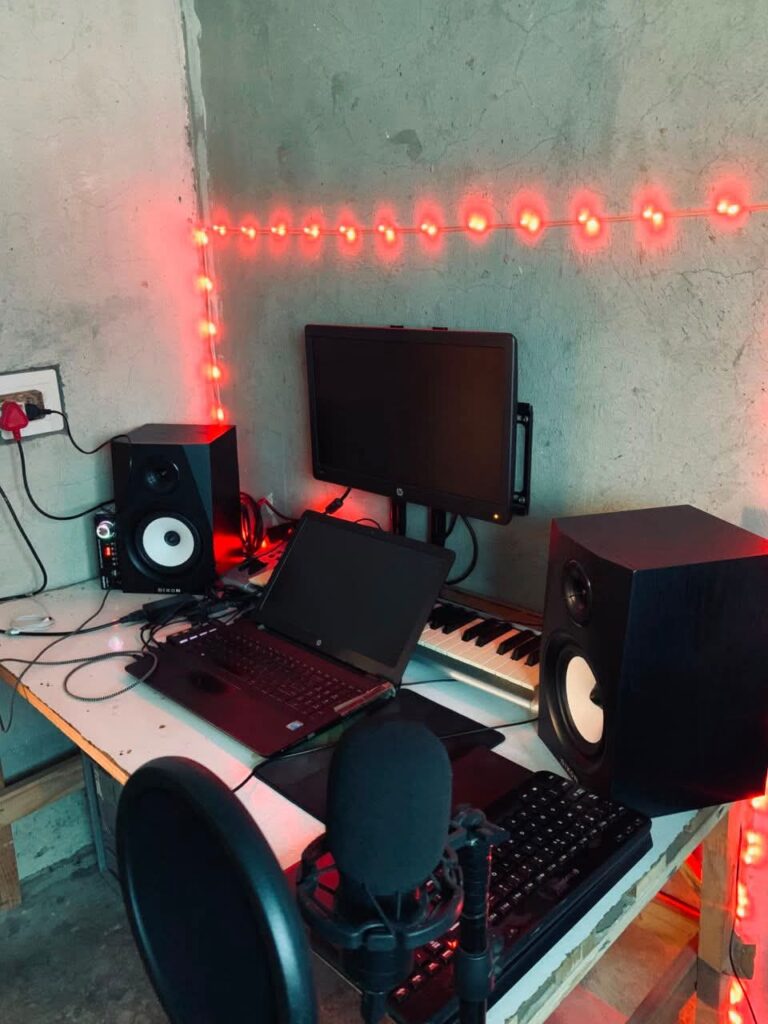
A muted, earthy palette tends to hold up longer than a trend-driven one. Clay tones, deep browns, and burnt orange age well and rarely look dated a few years later.
Good for a long-term setup you don’t plan to redo every season.
Afrobohemian Home Studio Design Concepts
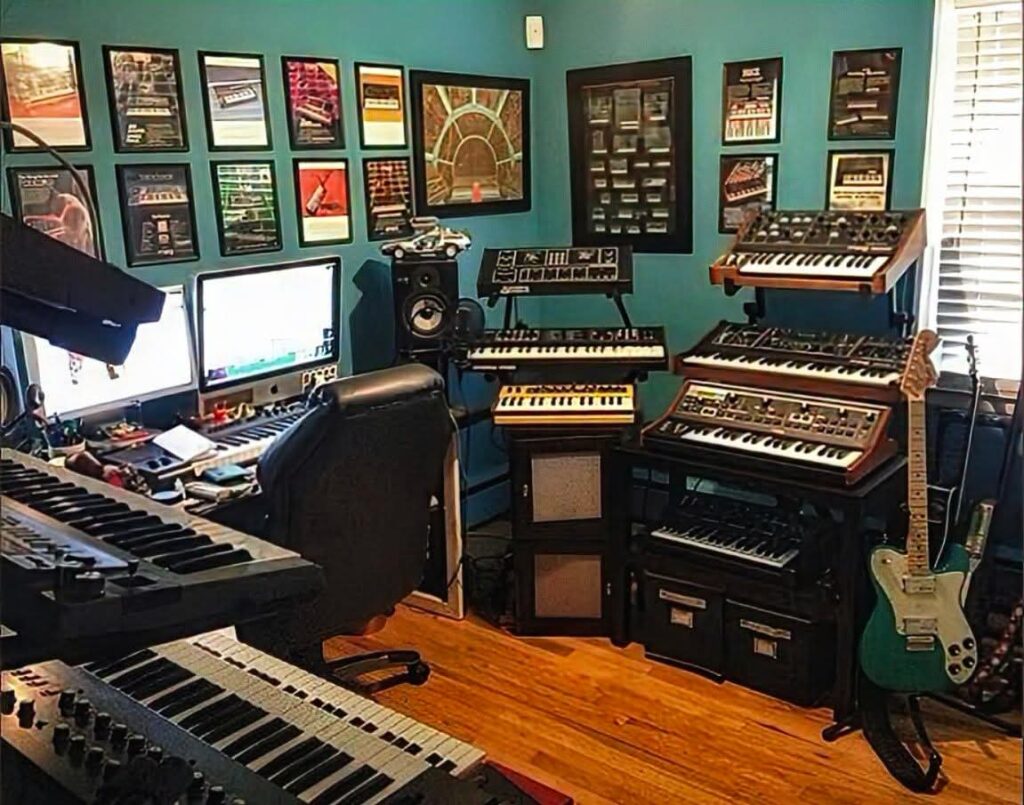
Designing a studio around personality instead of pure function changes how it feels to work in daily.
A room that reflects who you are tends to get used more than one that just looks impressive in photos. Suits anyone building a space they’ll actually spend hours in, not just show off.
Handwoven Afrobohemian Recording Studio Decor
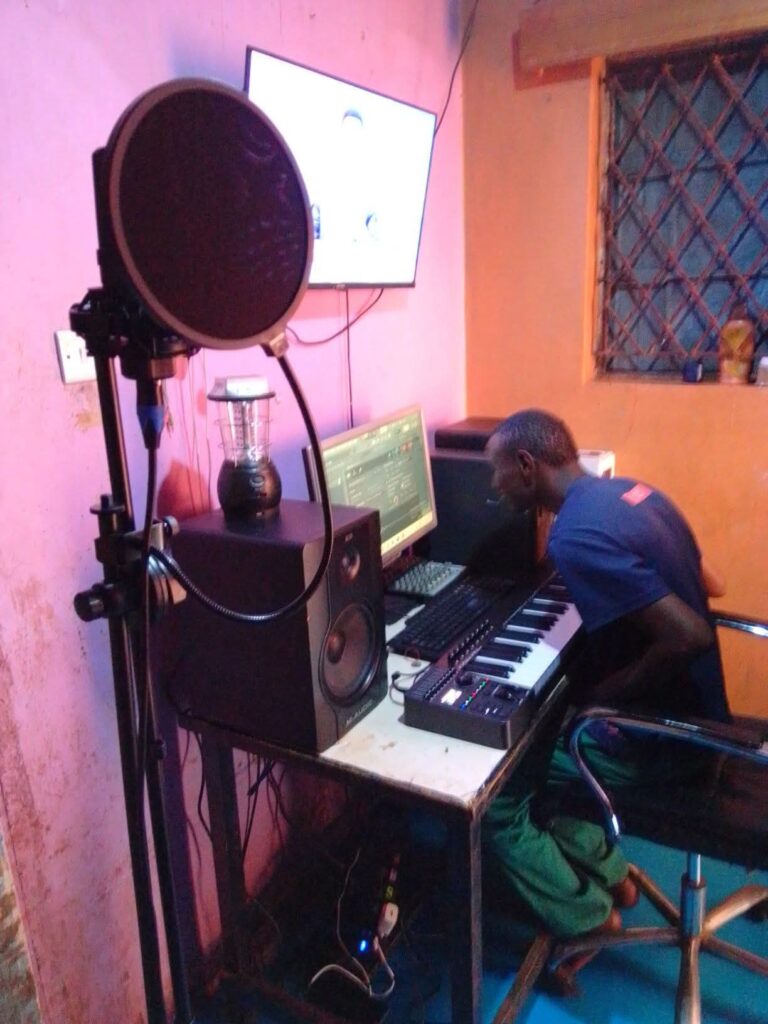
Handwoven pieces bring in a kind of texture that manufactured decor can’t fake. Baskets, mats, and woven wall pieces add depth without adding clutter.
This works particularly well in a room that’s otherwise kept simple and calm.
Sun-Warmed Afrobohemian Music Studio Inspiration
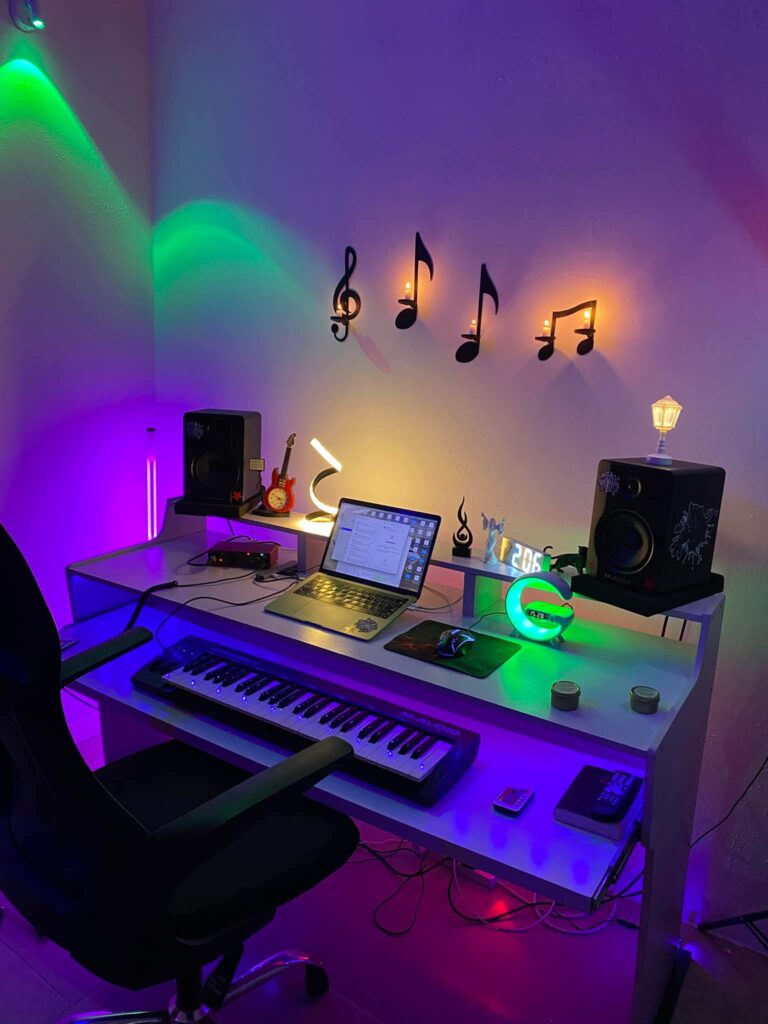
If your studio gets afternoon light, warm tones will pick it up and hold onto it. A sun-warmed palette turns a plain room into something that photographs well and feels good to sit in for hours.
Fits home studios in smaller apartments where natural light is limited but present.
👉 Read Next: Looking for more inspiration? Check out our guide on Portable Music Studio Setups for Creators on the Go.
Afrobohemian Studio Space for Small Rooms
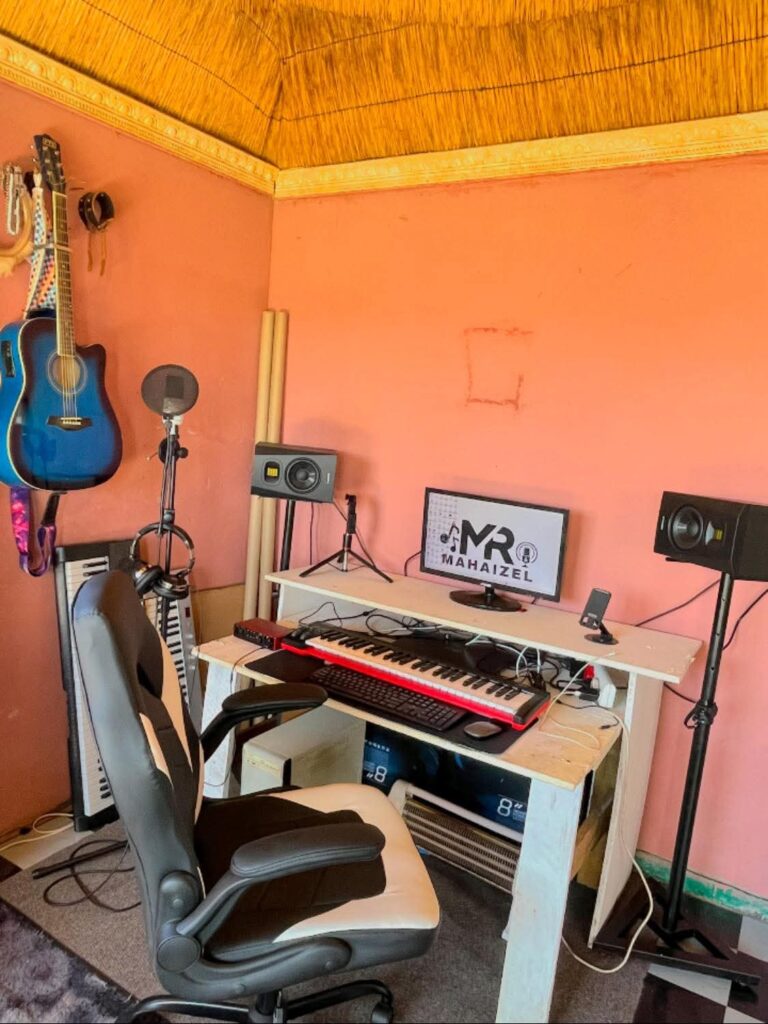
Small rooms benefit more from personality than from trying to look expansive. A studio space with strong pattern and color draws the eye away from square footage.
Works for anyone who has accepted a smaller room and wants it to feel intentional rather than cramped.
Rich Color Afrobohemian Recording Space
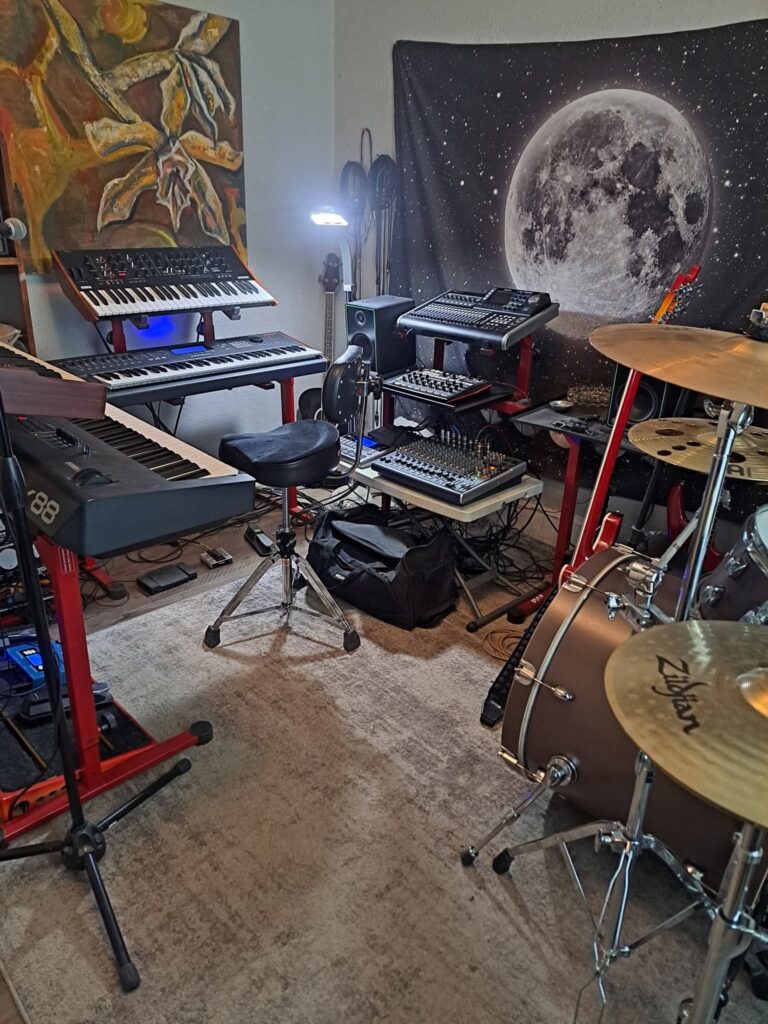
Color does a lot of psychological work in a room you sit in for long sessions. Rich, saturated tones tend to feel more energizing than neutral ones over time.
Good for producers who work late and want the room to keep them alert rather than lull them into a slump.
Patterned Afrobohemian Home Music Studio
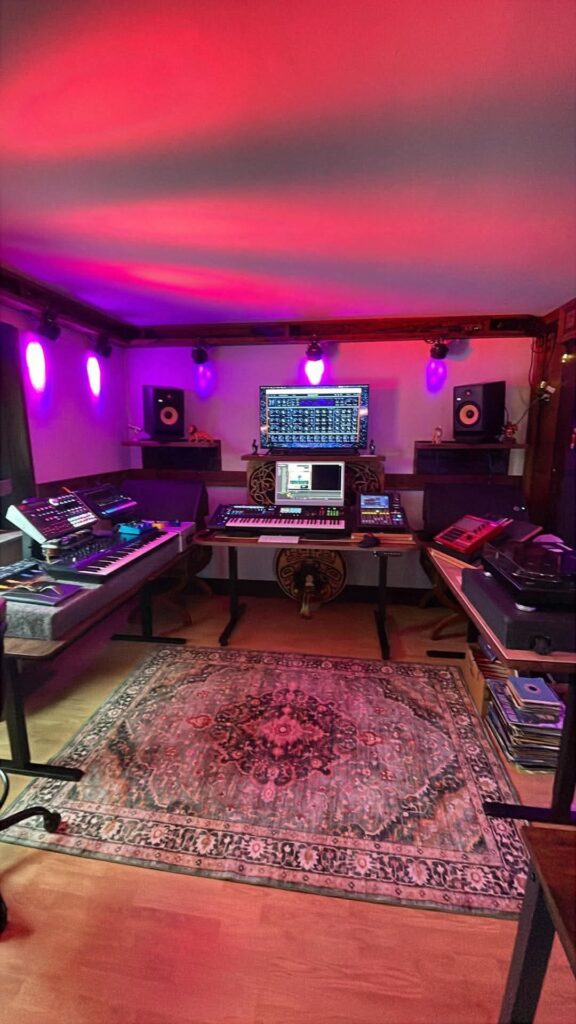
Pattern mixing takes some trial and error, but a home studio is a low-stakes place to practice it. Nobody sees the room but you and the people you record with.
Fits anyone who wants to experiment with a bolder look than the rest of their home allows.
Afrobohemian Music Production Studio Ideas
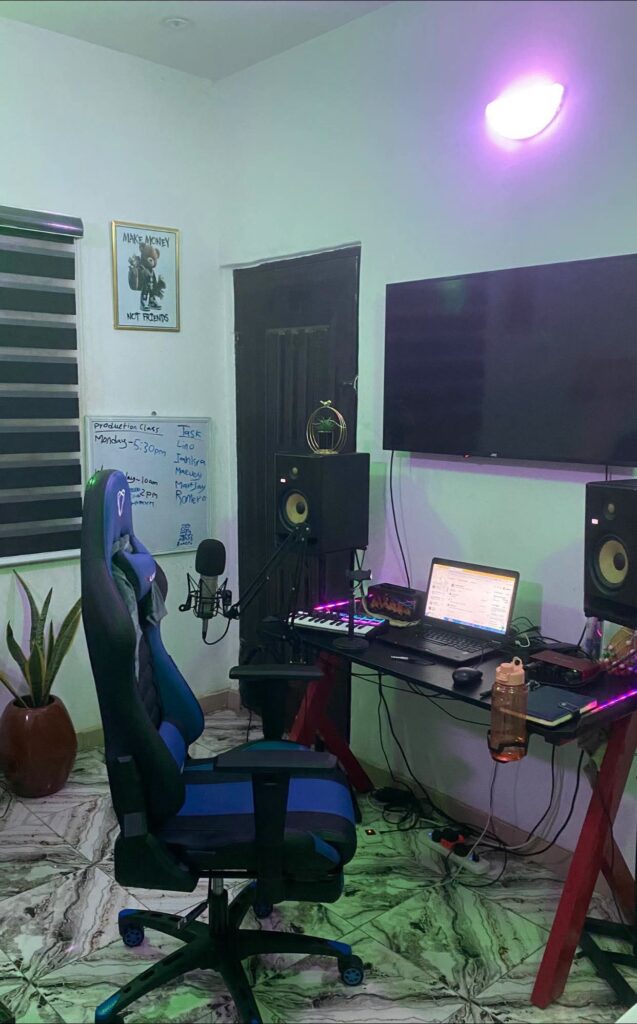
A production studio doesn’t need to look like a commercial space to function like one. Ideas that lean into color and craft can coexist with serious work happening in the room.
Suits solo producers building a home setup that still feels personal.
Global Inspired Afrobohemian Studio Corner
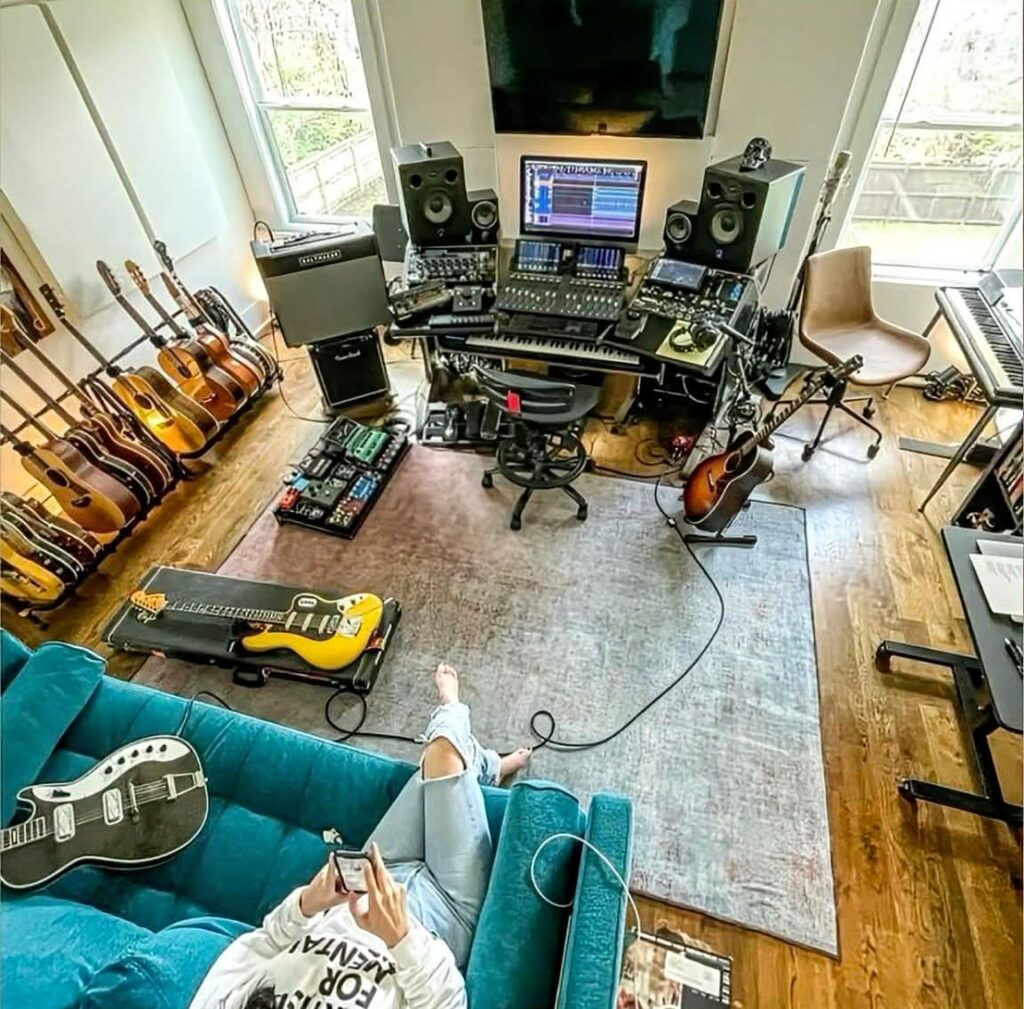
Pulling references from different regions and eras gives a small corner more depth than a single matched set ever could.
A studio built this way tends to evolve over time as pieces get added. Works well for anyone who collects rather than furnishes all at once.
👉 Read Next: You might also like our breakdown of Budget Friendly Studio Setups with a High-End Look.
Woven and Warm Afrobohemian Recording Studio
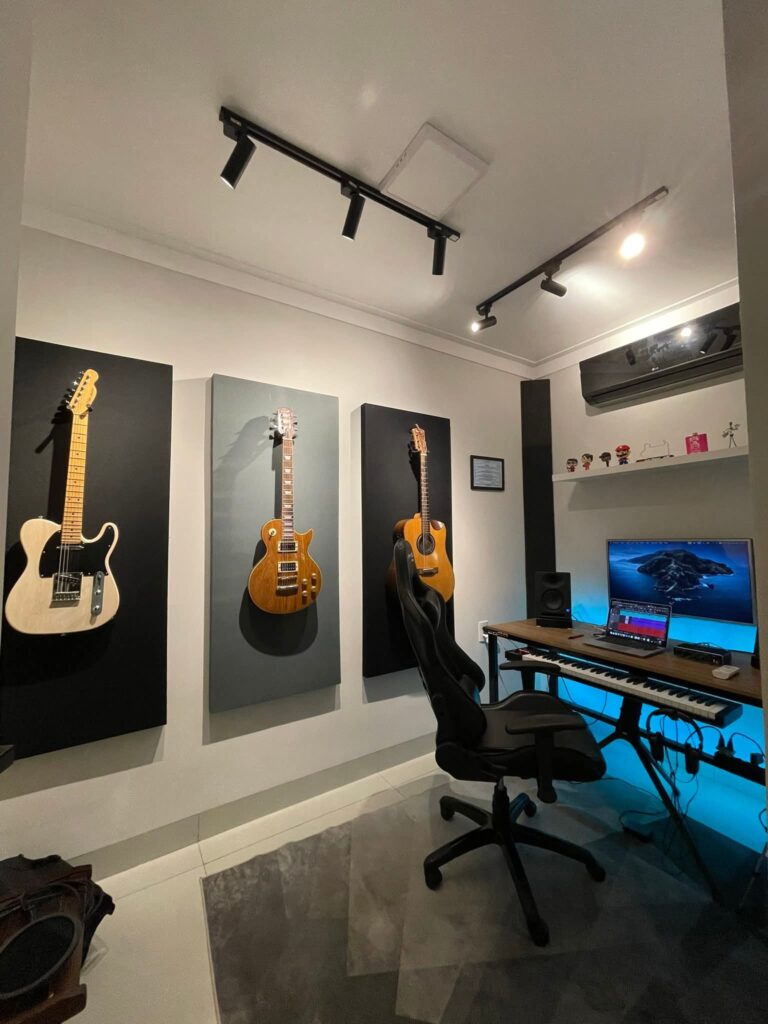
Woven textures paired with warm lighting change the feel of a room more than most people expect. It softens hard surfaces like desks and equipment cases.
This suits a studio that doubles as a place to relax between sessions, not just record in.
Afrobohemian Home Studio for Artists
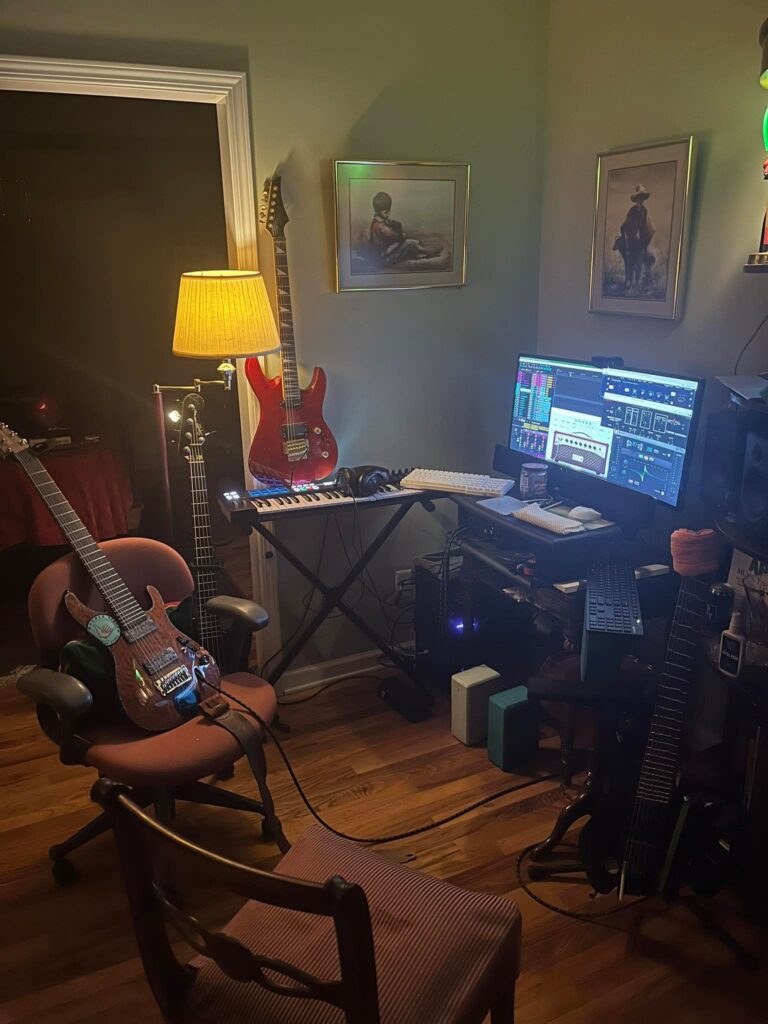
Artists tend to want their workspace to reflect their output, not contrast with it. A home studio with real visual character supports that instinct instead of fighting it.
Fits musicians who also paint, write, or design and want one room to hold all of it.
Vibrant Afrobohemian Music Studio Aesthetic
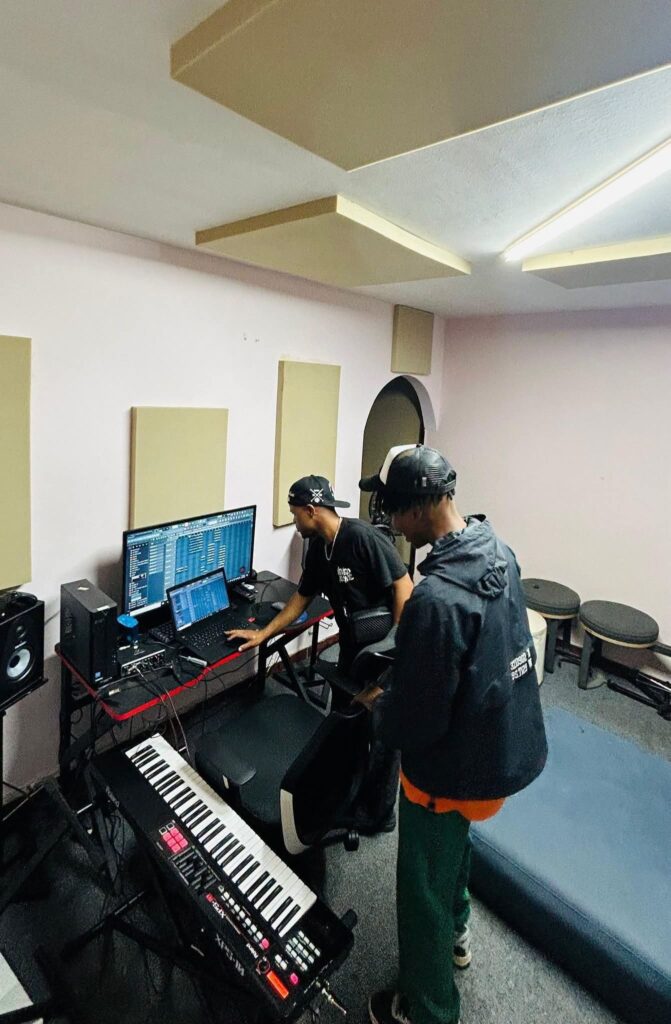
A vibrant aesthetic isn’t for everyone, and that’s fine. It works best for people who genuinely enjoy color and don’t want their studio to disappear into the background of their home.
Good for anyone building a space meant to energize rather than calm.
Layered Textiles Afrobohemian Recording Space
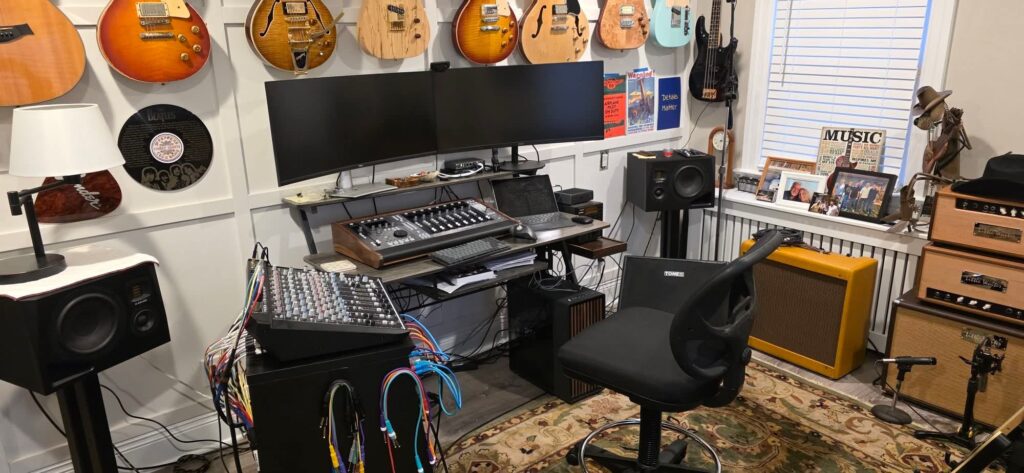
Textiles layered across a room absorb sound in a way that also looks intentional. Throws, cushions, and rugs stacked together soften reflections without the visual bulk of foam panels.
Fits a recording space where acoustic treatment needs to double as decor.
Afrobohemian Studio Setup for Vocalists
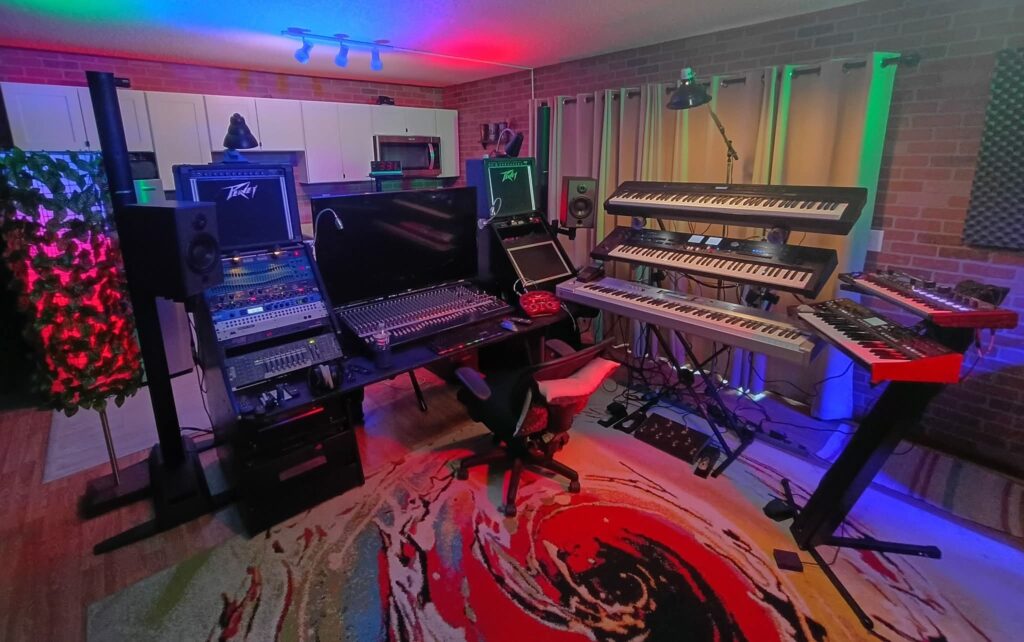
Vocalists often spend more time simply sitting in the room than actively recording. A setup with warmth and texture makes that time feel less clinical.
Works for anyone who treats vocal booths as a creative space rather than a sterile box.
Terracotta Toned Afrobohemian Music Studio
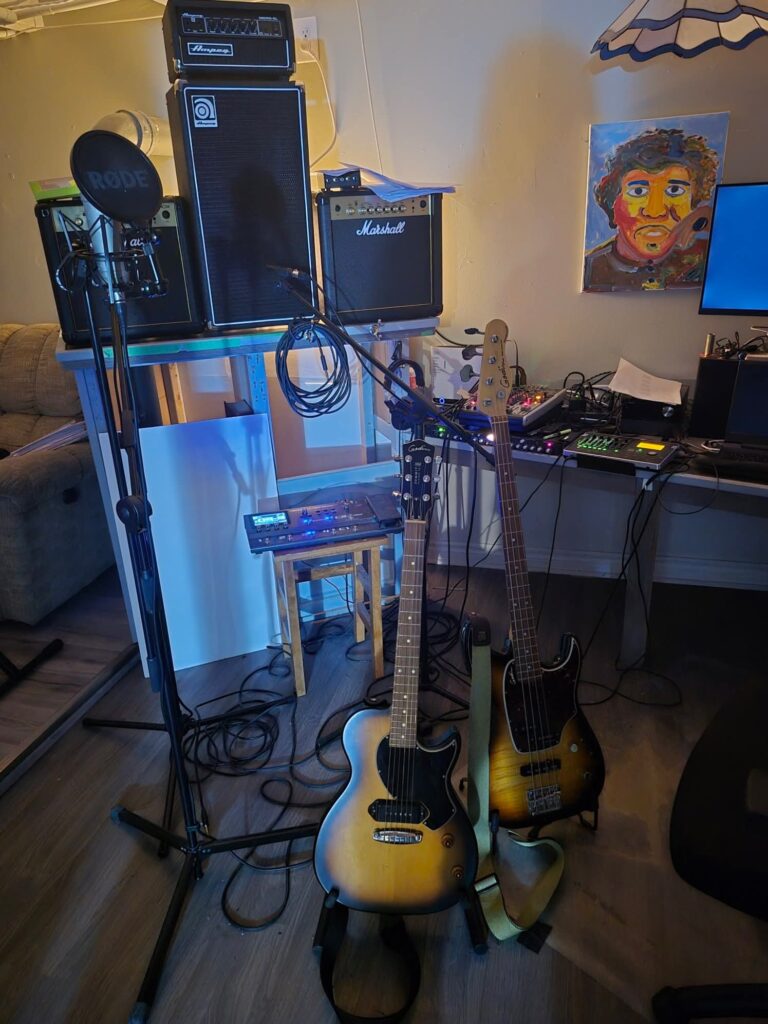
Terracotta reads as both warm and grounded, which is rare for a single color. A studio built around that tone tends to feel calm without being cold.
Suits rooms that get a lot of natural light throughout the day.
Eclectic Afrobohemian Recording Studio Layout
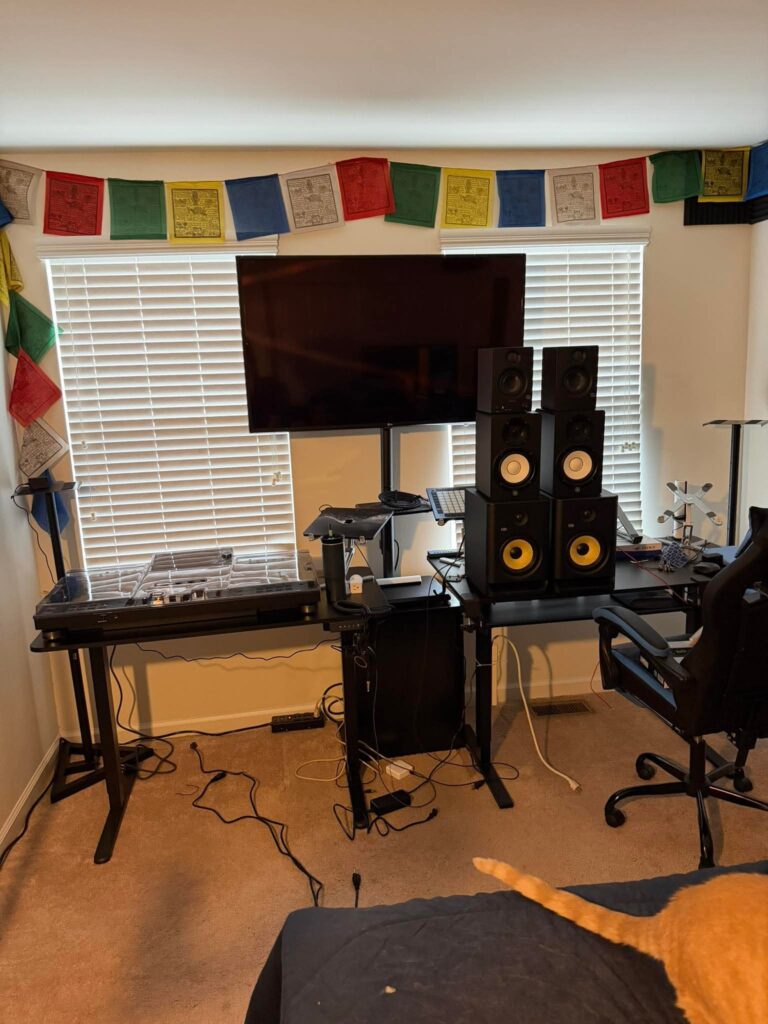
Eclectic doesn’t mean chaotic, it means chosen. A layout built from pieces collected over time usually looks more intentional than one bought as a matched set in a single order.
Fits anyone who’s been slowly building their studio rather than furnishing it all at once.
Afrobohemian Home Recording Studio Concepts
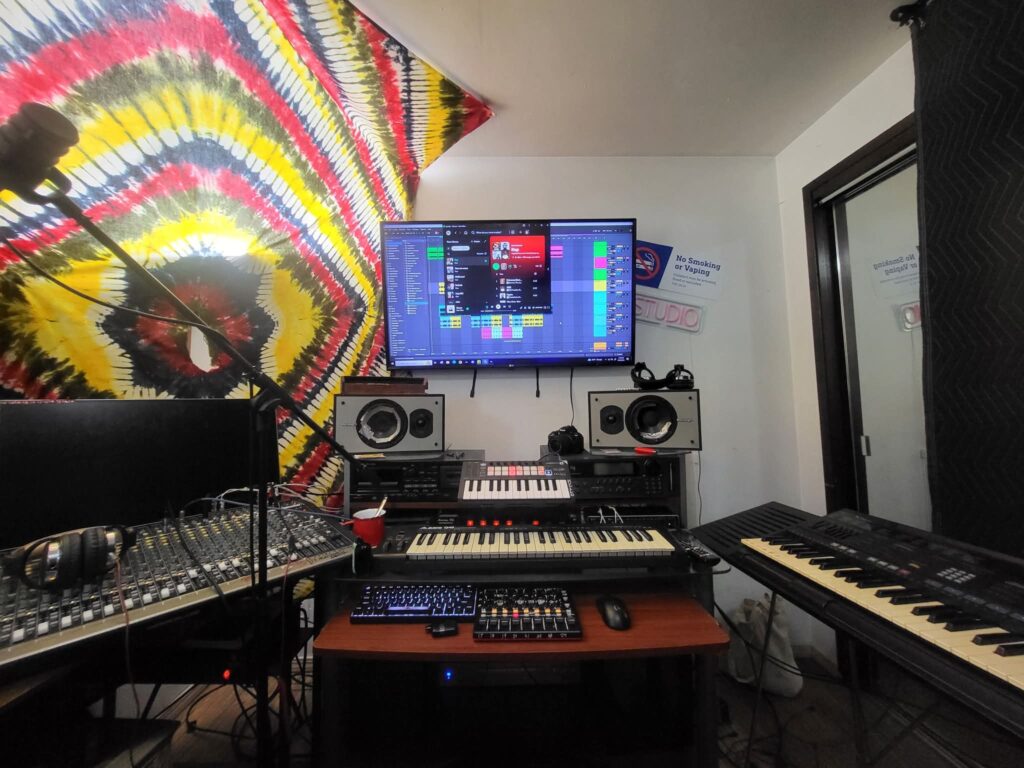
Concepts built around craft and heritage give a home studio a story most rooms don’t have. That story tends to matter more to the person living in the space than to anyone visiting it.
Good for musicians who want the room to mean something beyond function.
Sunlit Afrobohemian Studio Corner Design
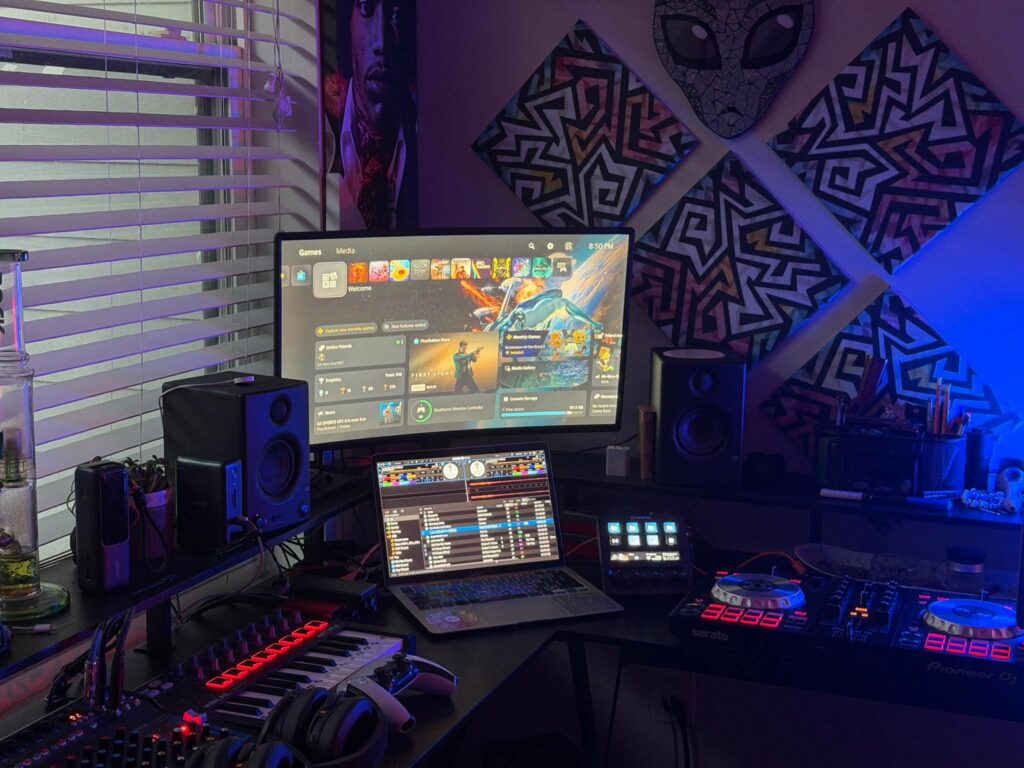
A sunlit corner changes character throughout the day in a way north-facing rooms never do.
Warm tones and natural textures respond well to shifting light. Works for anyone with a smaller studio built into a bright corner of a larger room.
Print Mixing Afrobohemian Music Studio
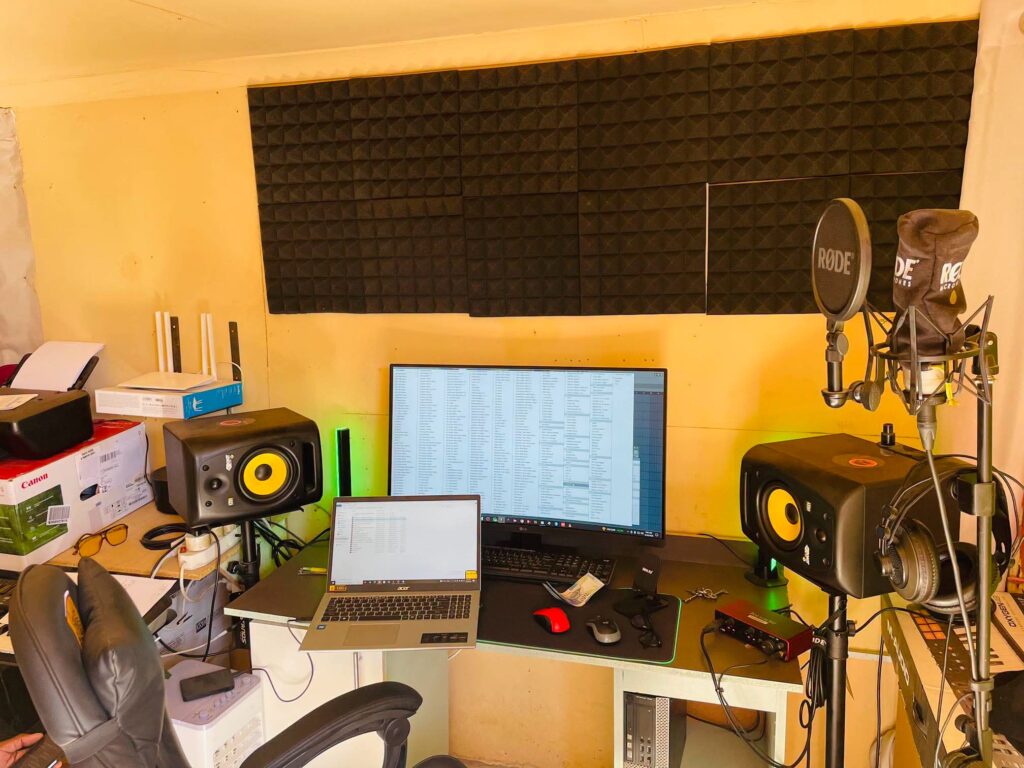
Mixing prints confidently takes practice, but a music studio is a forgiving place to try it since the room isn’t judged the way a living room is.
Bold combinations here read as intentional rather than risky. Fits anyone ready to move past a neutral, matched setup.
Afrobohemian Recording Studio for Songwriters
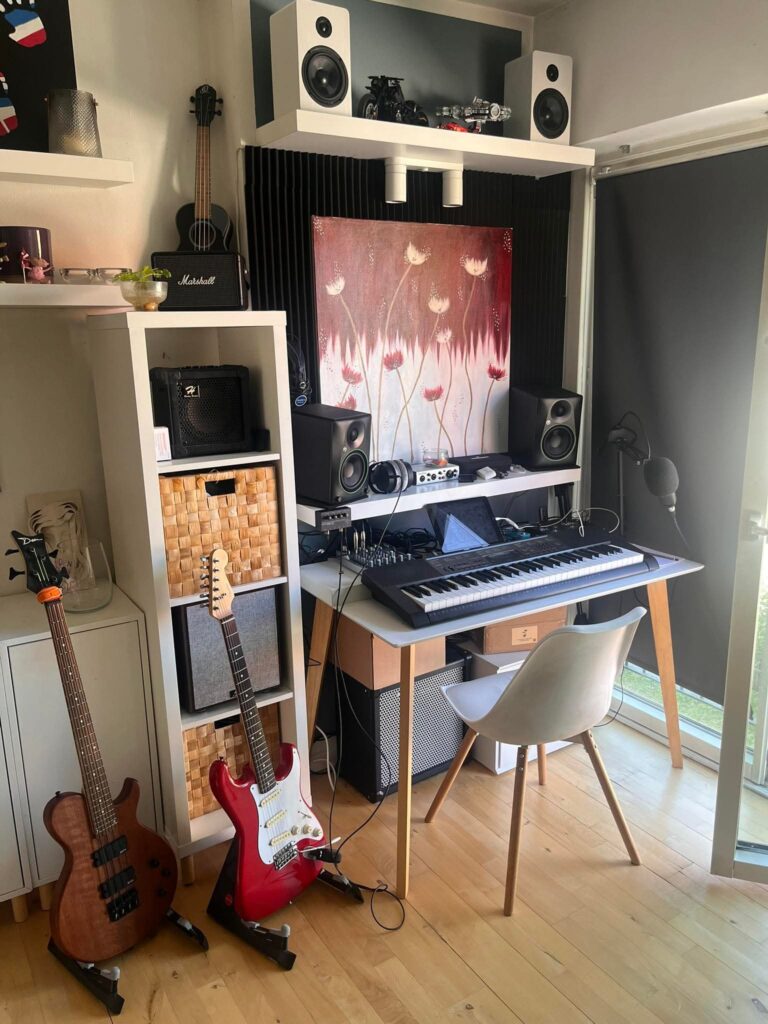
Songwriters spend more idle time in a room than almost anyone else in music production.
A recording studio with real character gives that idle time somewhere pleasant to happen. Suits writers who work in long, unstructured sessions rather than short scheduled blocks.
Woven Basket Afrobohemian Studio Decor
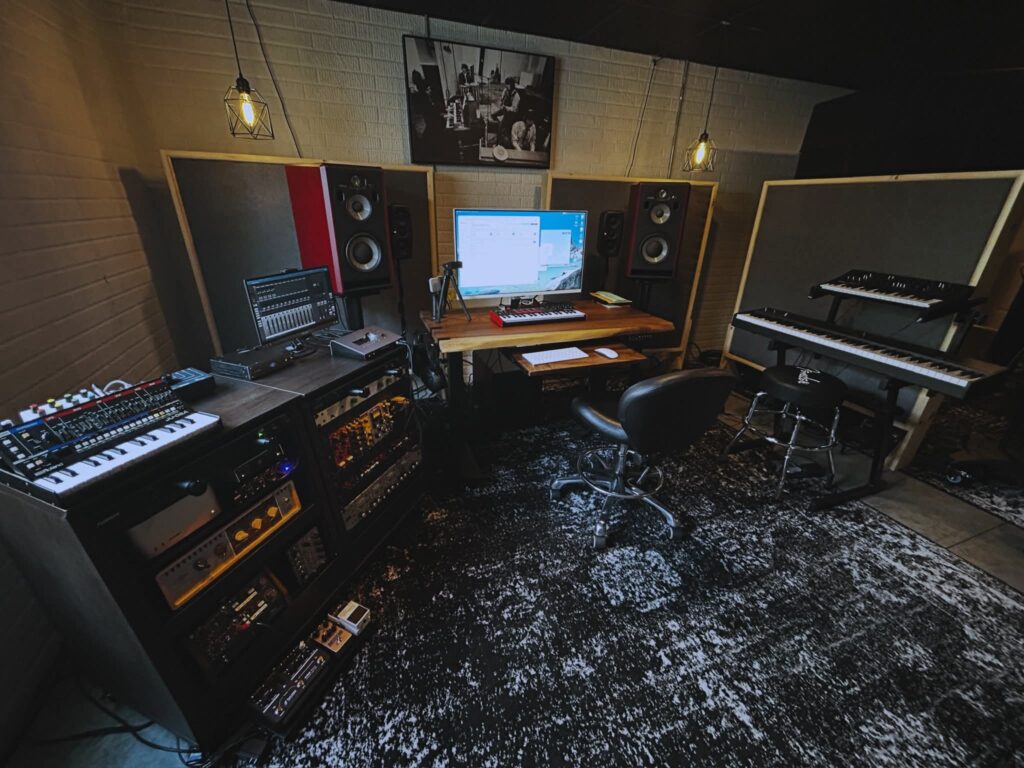
Woven baskets solve two problems at once, storage and texture. They hide cables and small gear while adding visual warmth that shelving alone can’t.
This works in a studio where clutter tends to build up fast.
Deep Tone Afrobohemian Recording Space
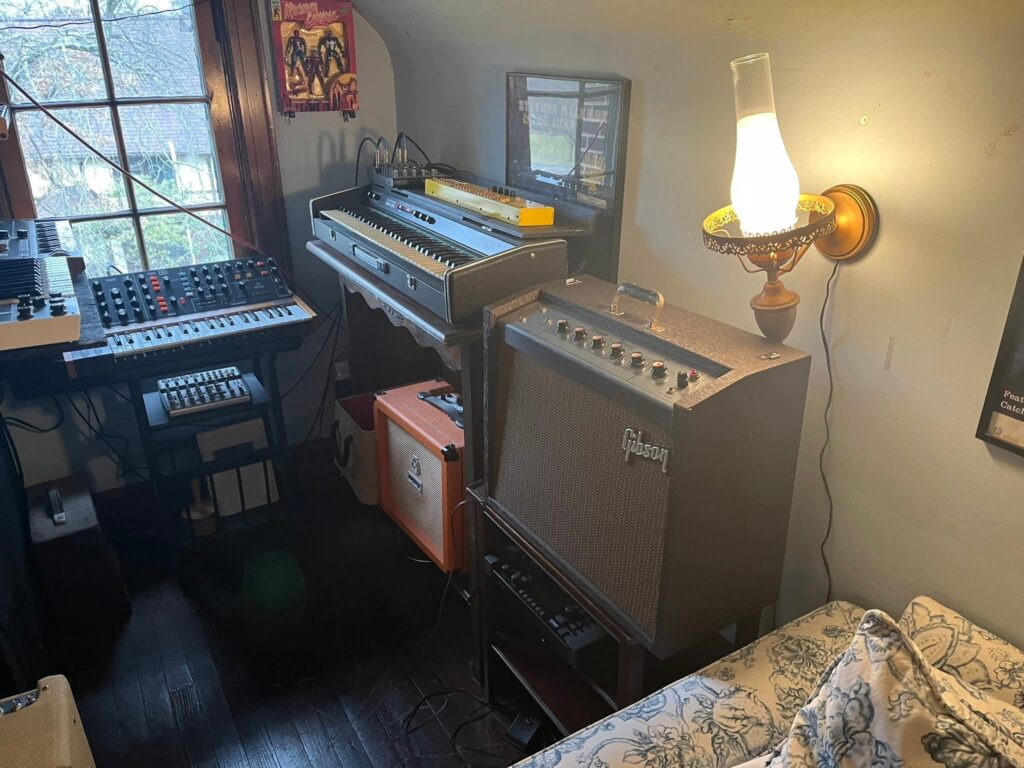
Deep wood tones ground a room that might otherwise feel too bright or busy. Paired with patterned textiles, wood keeps the space from tipping into overwhelming.
Good for a recording space that needs to feel serious and warm at the same time.
Afrobohemian Music Studio Styles for Apartments
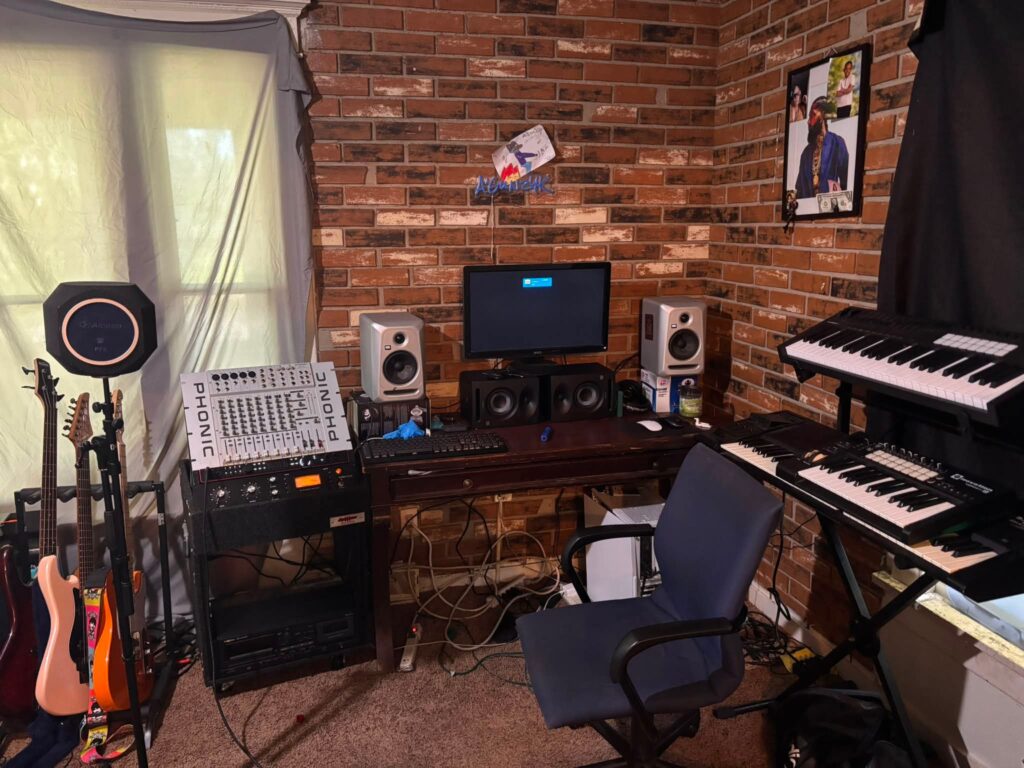
Apartment studios force you to work smarter with a smaller footprint, and this style handles that limitation well.
A few strong pieces do more work than a room full of matched furniture. Fits renters who want personality without committing to permanent changes.
Rattan and Rhythm Afrobohemian Studio Corner
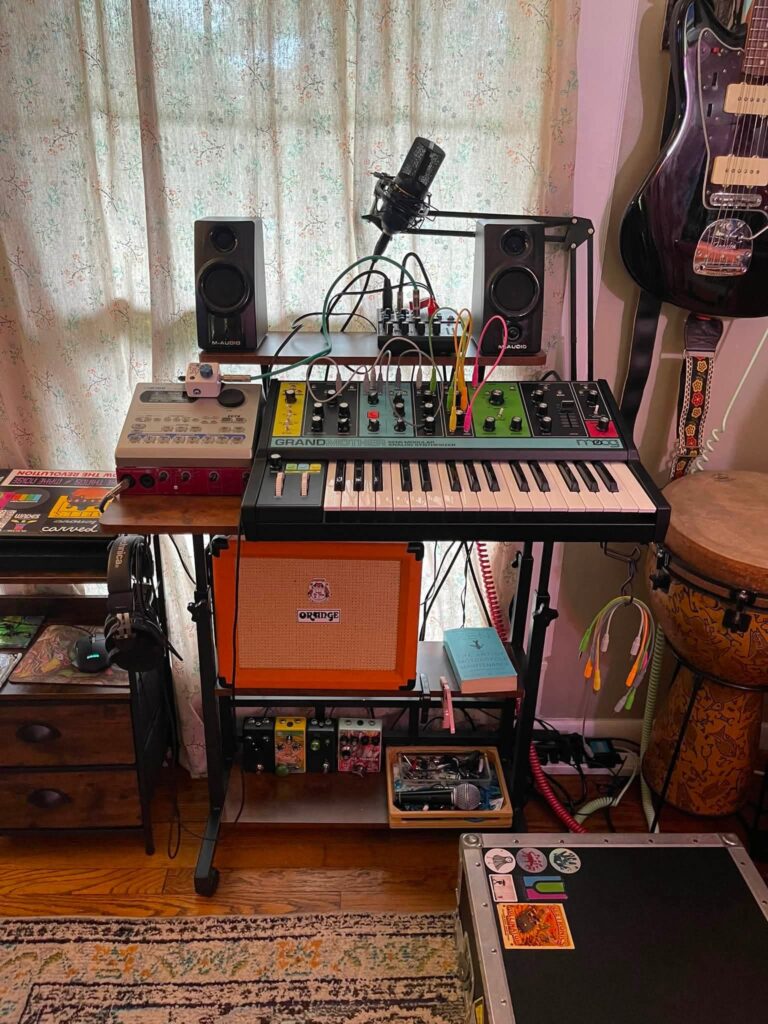
Rattan brings texture without weight, which matters in a corner that already has gear taking up visual space.
It photographs well and holds up over years of daily use. Works for a compact studio corner built into a shared room.
Bold Textile Afrobohemian Recording Studio
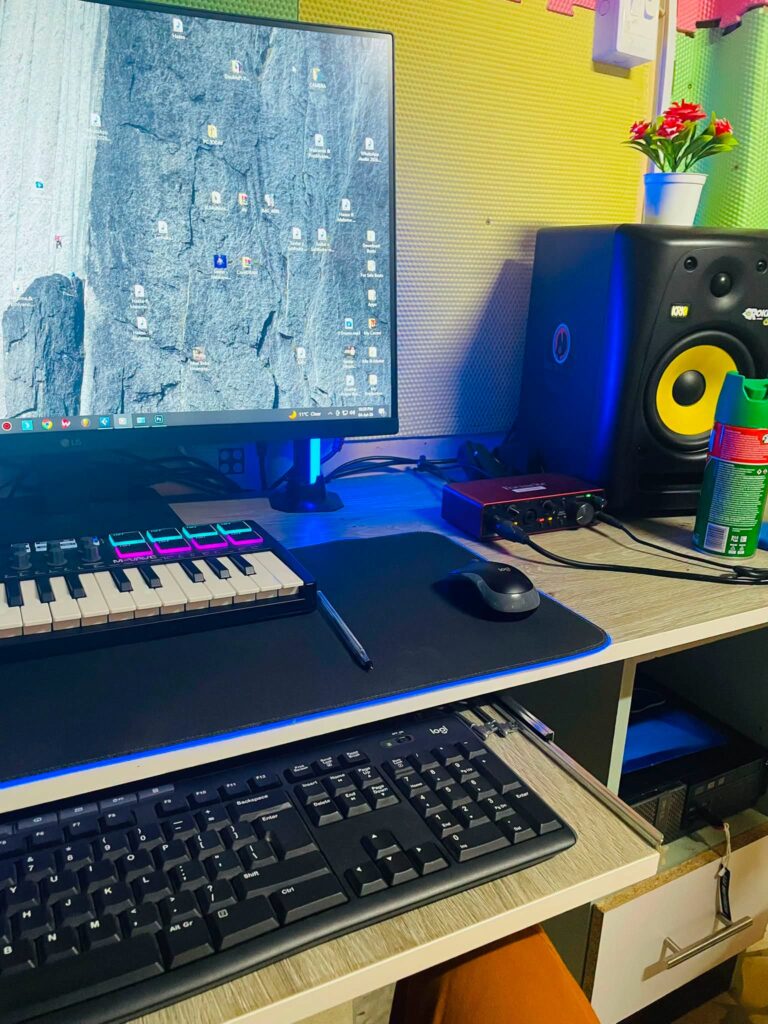
Textiles carry most of the personality in a room where the gear itself tends to be black, gray, or beige. A bold textile choice can offset that visual flatness fast. Suits a studio that felt too neutral before and needed one strong change.
Afrobohemian Studio Layout for Beat Makers
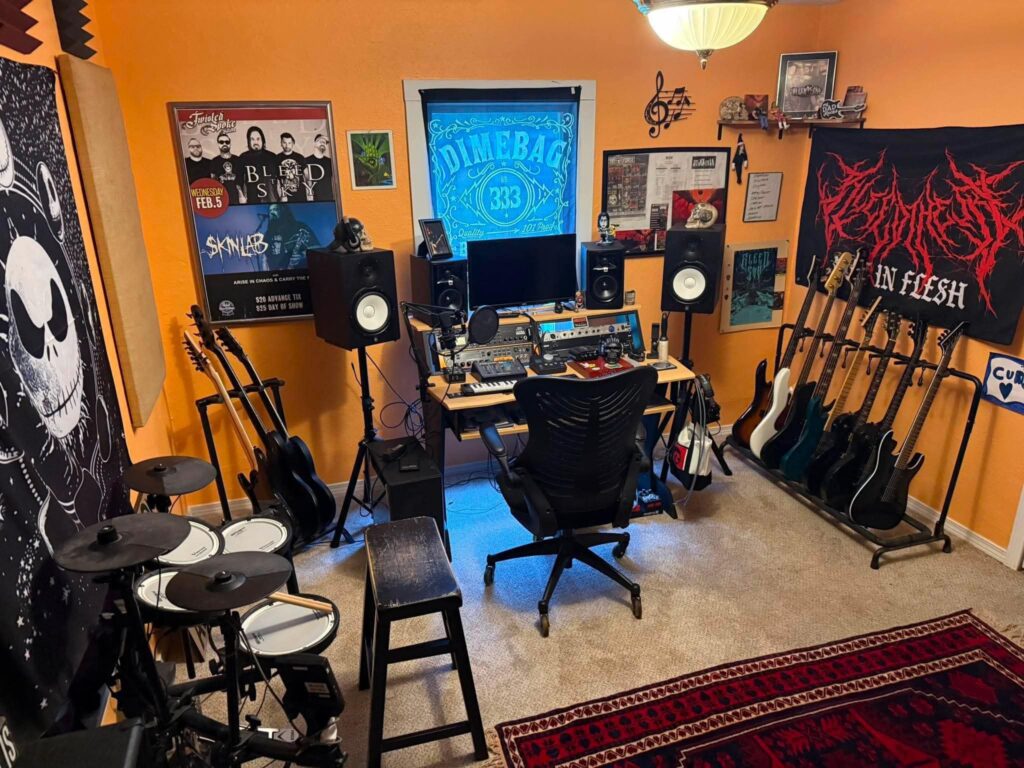
Beat makers often work in short, repeated sessions rather than long single takes. A layout with strong visual identity makes those short sessions feel less routine.
Fits anyone producing from the same corner day after day.
Clay and Copper Afrobohemian Music Studio
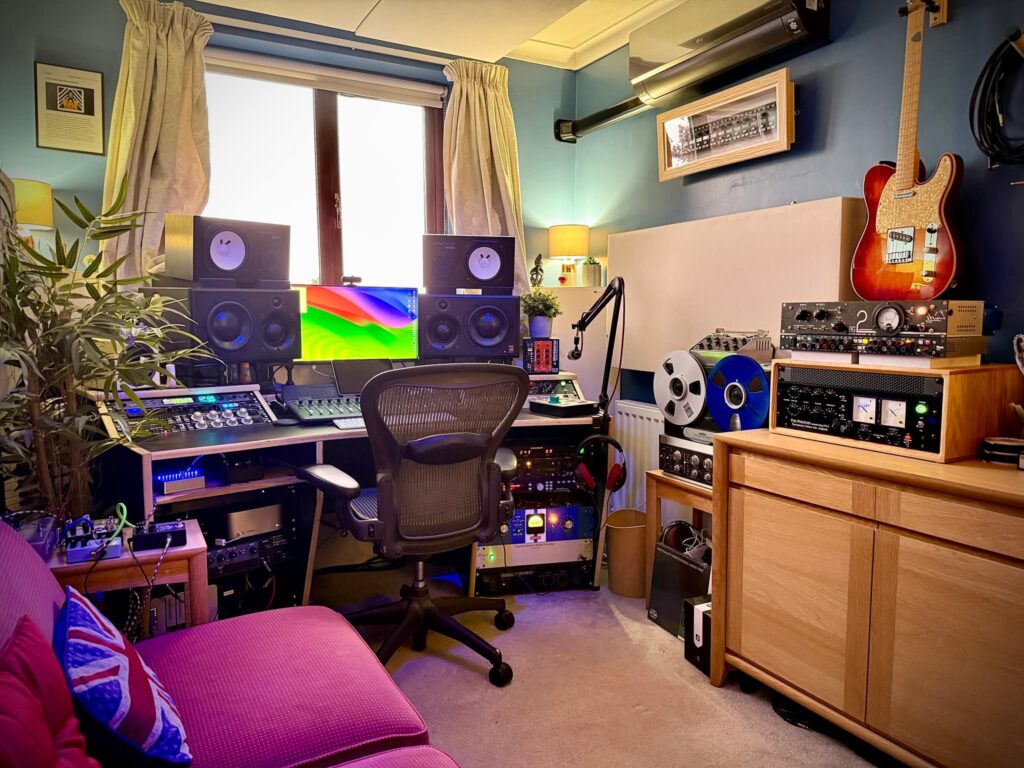
Clay and copper tones pair warmth with a bit of shine, which keeps a muted palette from feeling flat.
Small metallic accents go a long way in an otherwise earthy room. Good for a studio that wants warmth without leaning fully neutral.
Free Spirited Afrobohemian Recording Space
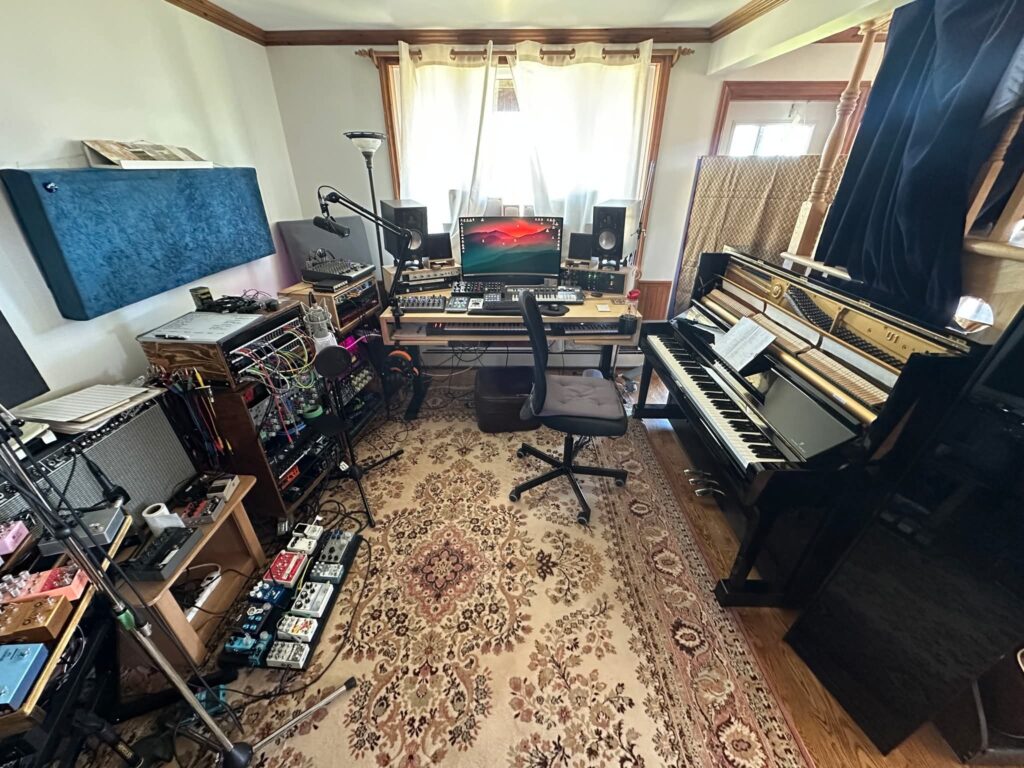
Not every studio needs to look curated. A free-spirited recording space embraces a bit of visual mess, mismatched pieces, and personal objects that don’t quite match.
Works for musicians who’d rather the room feel honest than photograph perfectly.
That’s a Wrap
Afrobohemian style gives a home studio permission to look like a real room instead of a showroom.
None of these setups require starting from scratch, most work by adding a few strong pieces to what you already have.
Pick the version that matches how you actually use your space, not just how you want it to look in photos.