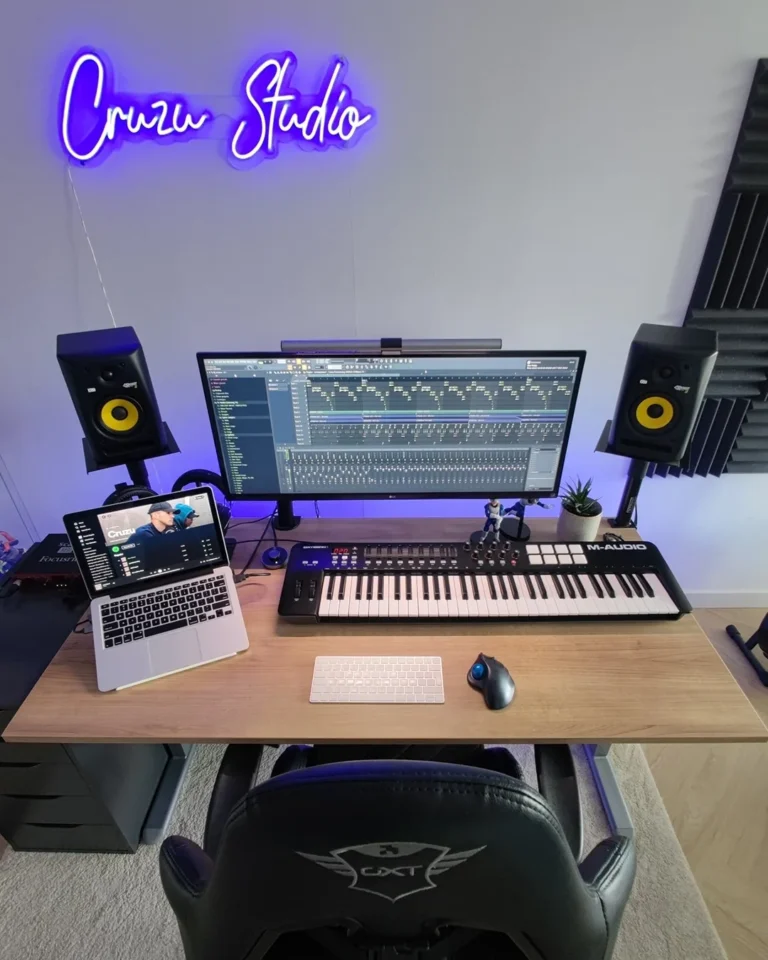

Not everyone has a lot of room for a home studio. That makes it more important to choose gear that actually fits the space you have, and studio monitors are usually the first thing that goes wrong when a small room gets the wrong pair.
This guide is for producers, mixers, and podcasters working out of bedrooms, closets, or shared desks who need monitors that fit the room instead of fighting it.
Since placement matters as much as the pair you buy, our studio layout ideas that improve your mixes guide pairs well with this one.
We looked at frequency response, driver size, price, and how each pair actually behaves in a tight space, drawing on current 2026 reviews and specs from the manufacturers themselves, to build a shortlist that will not fight your room.
Key Takeaways
- Five-inch monitors are the safe default for most small rooms. Four inch works for tight desks, and anything bigger than 6.5 inches usually fights the room instead of helping it.
- The Kali Audio LP-6 V2 is the strongest value pick for producers on a budget.
- Small rooms exaggerate bass, so pair any monitor with careful placement and use headphones as a second reference for low end.
- Compact monitors like the IK Multimedia iLoud Micro trade deep bass for a cleaner, more honest sound in cramped spaces.
Quick Comparison
| Monitor | Driver Size | Best For | Approx. Price (Pair) |
|---|---|---|---|
| Kali Audio LP-6 V2 | 6.5″ | Best overall value | ~$400 |
| KRK Rokit 5 G4 | 5″ | Bass-forward genres | ~$300 |
| Yamaha HS5 | 5″ | Flat, neutral reference | ~$400 |
| IK Multimedia iLoud Micro | 3″ | Tight desks, travel | ~$300 |
| Genelec 8010A | 3″ | Compact premium build | $700+ |
Ranked Picks
1. Kali Audio LP-6 V2: Best Overall Value
Verdict: the Kali Audio LP-6 V2 is the strongest all-around pick for a small room on a real budget.
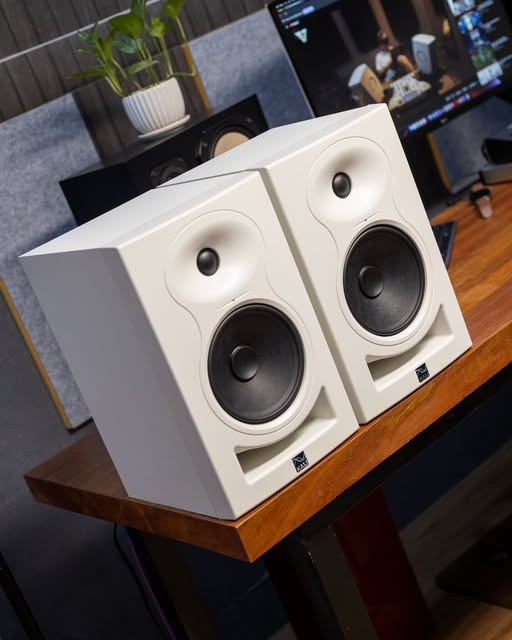
Kali Audio was started by former JBL engineers, and the LP-6 V2 shows it. The V2 update lowered the self-noise floor and switched to a thinner paper woofer for quicker transient response, so drums and transients read clearly instead of smearing together.
Why it ranks here: a 39Hz to 25kHz frequency response and 80 watts per speaker is a lot of monitor for the price, and the imaging is tight enough that stereo placement stays honest even close to a desk.
Best for: producers who want one pair that handles mixing and casual listening without a big spend.
Main drawback: at 6.5 inches, it wants a bit more desk space than the smallest options on this list.
If your room is small but not tiny, this is the pair to buy without overthinking it.
2. KRK Rokit 5 G4: Best for Bass-Forward Genres
Verdict: the KRK Rokit 5 G4 gives you that bass-heavy Rokit sound, with less of the mud earlier generations were known for.
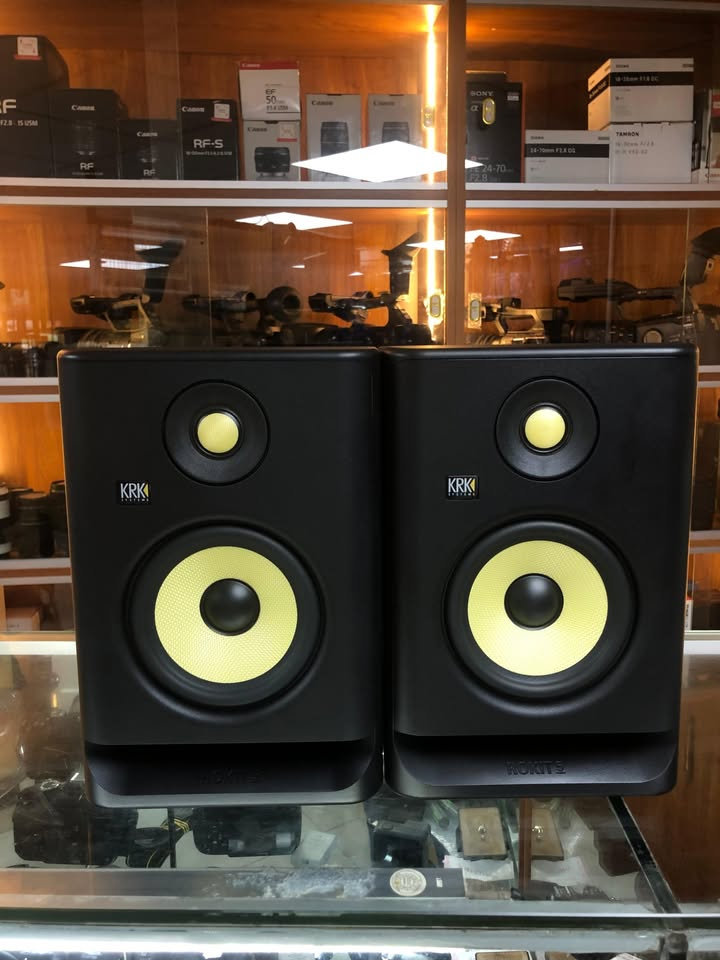
The Rokit line has a reputation for being fun rather than flat, and the G4 generation tightened that up without losing the low end that hip-hop, trap, and electronic producers tend to want.
Why it ranks here: the 5-inch woofer keeps things manageable in a bedroom, and onboard tuning controls let you compensate for a wall-hugging desk or an untreated corner.
Best for: producers working mostly in bass-driven genres who still need the pair to behave in a small, untreated room.
Main drawback: still slightly more colored than a truly flat reference monitor, so critical mastering decisions benefit from a second reference.
A solid choice if the music you make leans on low end and you want to feel it without overloading the room.
3. Yamaha HS5: Best Flat, Neutral Reference
Verdict: the Yamaha HS5 is the industry-standard choice for producers who want an honest, uncolored sound.
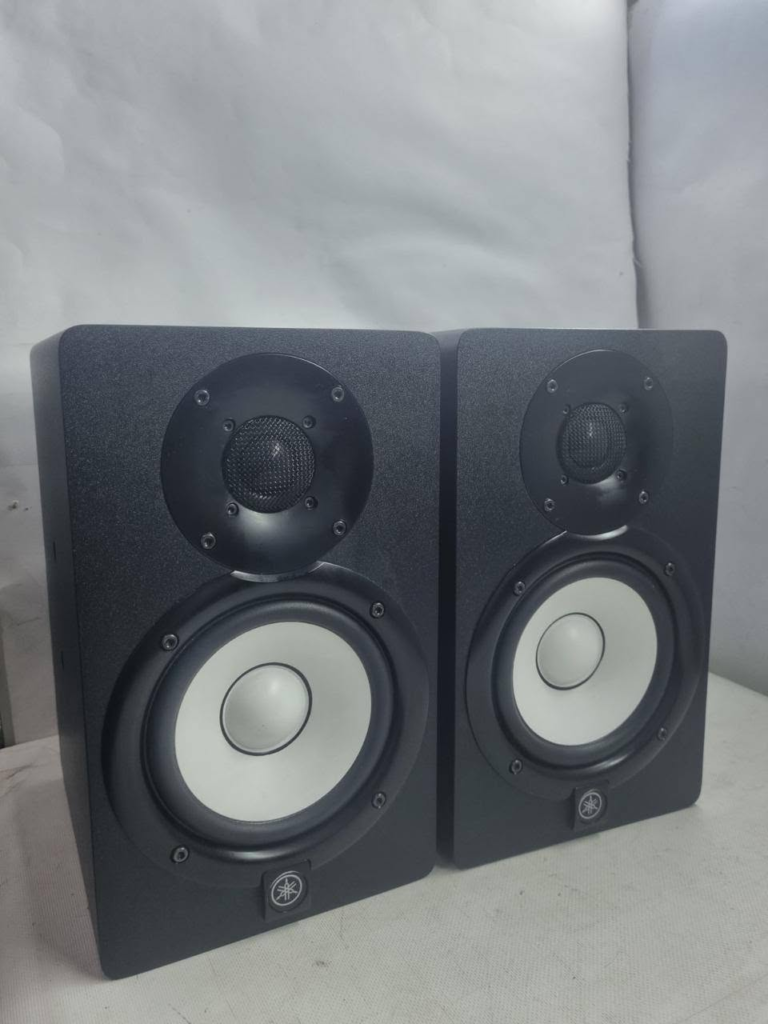
The white-cone HS5 has been a studio fixture for years for a simple reason: it does not flatter your mix. What you hear is closer to what is actually there, which matters more in a small room where the space itself is already adding coloration.
Why it ranks here: a genuinely flat response with 1 inch dome tweeter clarity, sold individually rather than only as a pair, which is convenient if you already own one and want to add a matching subwoofer or center channel later.
Best for: mixing and mastering work where accuracy matters more than an exciting sound.
Main drawback: the flat sound can feel underwhelming for casual listening compared to bass-forward alternatives.
If you want the closest thing to ground truth in a small room, this is the safe, proven pick.
4. IK Multimedia iLoud Micro Monitor: Best for Tight Desks
Verdict: the IK Multimedia iLoud Micro Monitor is the best option when desk space, not just room size, is the real constraint.
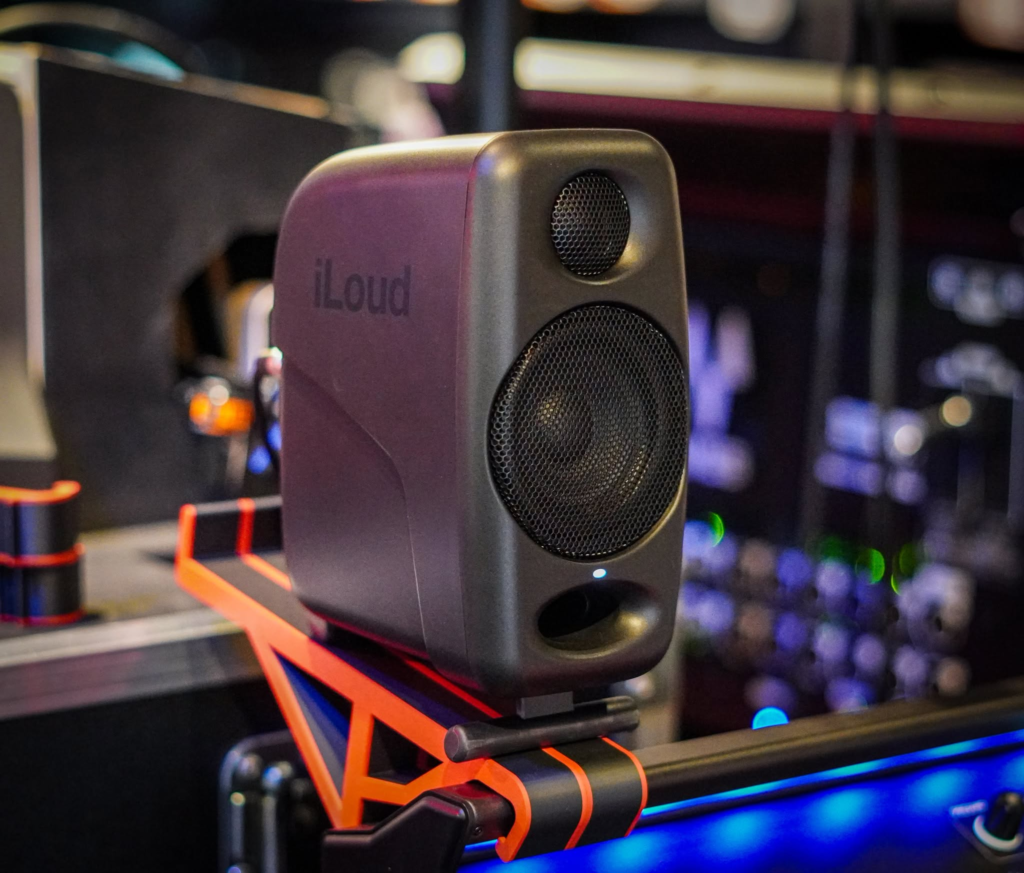
These monitors are small enough to sit beside a laptop without crowding it, but the bi-amped design and 3-inch woofer still produce a usable, controlled low end for a box this size.
Why it ranks here: roughly 50 watts of bi-amped power per speaker in a footprint that fits almost anywhere, with a low-end roll-off starting around 70Hz that stays clean rather than boomy.
Best for: producers in shared rooms, tiny desks, or anyone who needs a travel-friendly monitor that still sounds like a real reference.
Main drawback: the limited low end means bass-heavy genres will need a subwoofer or headphone reference to catch what these monitors physically cannot reproduce.
A smart pick when the room is not just small, it is genuinely cramped.
5. Genelec 8010A: Best Compact Premium Build
Verdict: the Genelec 8010A delivers professional-grade monitoring in one of the smallest cabinets on this list.
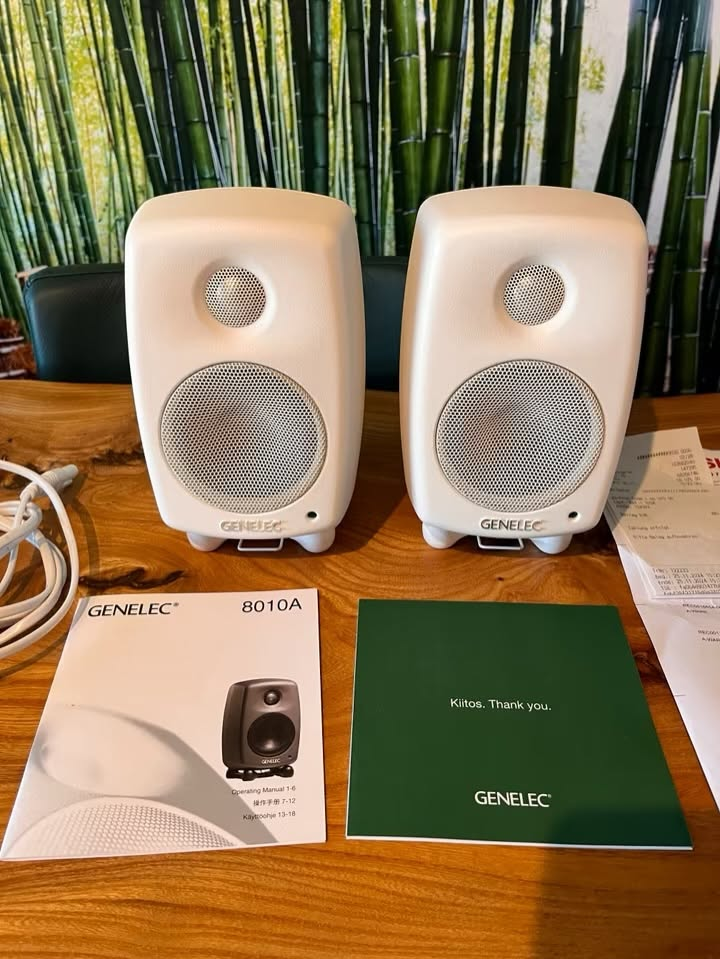
Genelec has built its reputation in professional studios for decades, and the 8010A brings that same design philosophy down to a size that suits a small mix room without asking the room for more than it can give.
Why it ranks here: the compact aluminum cabinet with a 3-inch woofer and 3/4 inch tweeter limits the boomy buildup that happens when bigger monitors get crammed into a small space.
Best for: producers who want Genelec’s build quality and reliability and are willing to pay for it.
Main drawback: the price sits well above the rest of this list, and the low end is limited, so a companion subwoofer is worth planning for.
The pick if budget is less of a concern than long-term build quality and reliability.
Buying Guide
Match Driver Size to Room Size
For most small rooms, 5-inch monitors are the safe middle ground. A 4-inch or 3-inch pair makes sense if your desk is especially tight.
Going bigger than 6.5 inches in a small, untreated room usually creates boomy, smeared bass rather than more usable low end.
Do Not Expect Full Bass Extension
Small monitors will not reproduce the deepest bass frequencies on their own. That is normal, not a flaw.
Pair them with a subwoofer if you mix bass-heavy genres, or use closed-back headphones as a second reference to check the low end you cannot hear through the speakers.
Placement Matters More Than Spec Sheets
Set the monitors and your head up in an equilateral triangle, with tweeters at ear height, aimed at your listening position rather than past it.
Keep both monitors an equal distance from side walls. An uneven setup will pull your stereo image to one side no matter how good the monitors are.
Best By Use Case
Best for Beginners
The Kali Audio LP-6 V2 or Yamaha HS5 are the easiest to recommend for a first serious pair. Both are forgiving to set up and widely used, so troubleshooting help and reviews are easy to find.
Best for Bass-Heavy Production
The KRK Rokit 5 G4 gives you more low end to work with directly from the monitors, though a subwoofer still helps for anything mastered for club or car playback.
Best for Ultra-Tight Desks
The IK Multimedia iLoud Micro Monitor is built for exactly this. If your setup shares a desk with a bed or a closet, this is the pair that will not fight you for space.
How We Chose These Picks
These picks were chosen by comparing published specs, frequency response, and pricing across current 2026 gear guides and manufacturer data, alongside firsthand experience running a home studio setup in a limited space.
Selection criteria focused on how each monitor behaves specifically in a small room, not just how it performs on a spec sheet in an ideal, treated space.
We did not include monitors marketed mainly for large or professionally treated studios, since that is a different buying decision.
FAQ
What size studio monitors are best for a small room?
For most small rooms, 5-inch studio monitors are the safest choice because they give you enough detail without overwhelming the space. If the room is very tight, even smaller monitors can work better than larger ones.
Are 5-inch studio monitors enough for a small room?
Yes, 5-inch monitors are usually enough for a small room, especially for bedroom studios and nearfield listening. They are often the best balance of clarity, bass control, and space efficiency.
Do I need a subwoofer in a small studio room?
Usually no. In a small room, a subwoofer can make bass problems worse unless the room is treated and well calibrated. Most people are better off starting with good nearfield monitors first.
Should studio monitors be placed against the wall in a small room?
No, they should not be pushed directly against the wall if you can avoid it. Leaving some space helps reduce bass buildup and improves stereo balance.
What is the best listening distance for studio monitors in a small room?
A short nearfield listening distance is usually best, often around arm’s length or a little more. The goal is to hear more direct sound from the speakers and less reflection from the room.
Are front-ported or rear-ported studio monitors better for small rooms?
Front-ported monitors are often easier to place in small rooms because they are less sensitive to wall placement. Rear-ported monitors can still work well, but they usually need more breathing room behind them.
Do studio monitors sound different in a small untreated room?
Yes, they do. A small untreated room can exaggerate bass, blur the stereo image, and make mixes less accurate. That is why placement and basic treatment matter so much.
What is the best studio monitor setup for a bedroom studio?
The best setup is usually a pair of nearfield monitors placed in an equilateral triangle with your head, away from corners if possible. Adding basic acoustic treatment and keeping the volume moderate will improve results a lot.
Are expensive studio monitors better for small rooms?
No. A well-matched budget pair like the Kali Audio LP-6 V2 can outperform a pricier monitor that is the wrong size or design for your room. Monitors are just one part of the essential hardware for a home studio.
How far apart should studio monitors be in a small room?
Set them up in an equilateral triangle with your listening position, with tweeters at ear height. In a small room, this is often just a couple of feet apart, which is fine as long as the triangle stays even.
Can I use studio monitors for casual music listening too?
Yes, though flatter monitors like the Yamaha HS5 will sound less exciting than a consumer speaker. Bass-forward options like the KRK Rokit 5 G4 tend to double better as everyday listening speakers.
In Conclusion
A small room is not ideal for music production, but it comes with one real advantage: less space for clutter. A small studio setup forces you to pick only the essentials, which is often healthier than filling a bigger room with gear you rarely use.
Best overall: the Kali Audio LP-6 V2.
Best for bass-heavy genres: the KRK Rokit 5 G4.
Best for the tightest desks: the IK Multimedia iLoud Micro Monitor.
It is also worth checking whether your chosen manufacturer sells bundles. Many offer matching audio interfaces and microphones alongside their monitors, which keeps your signal chain consistent across projects.
At the end of the day, the right studio monitors should feel comfortable in your space and sound honest from the first idea through final mastering. Pick the pair that fits your room, set it up with care, and let the monitors do their job.