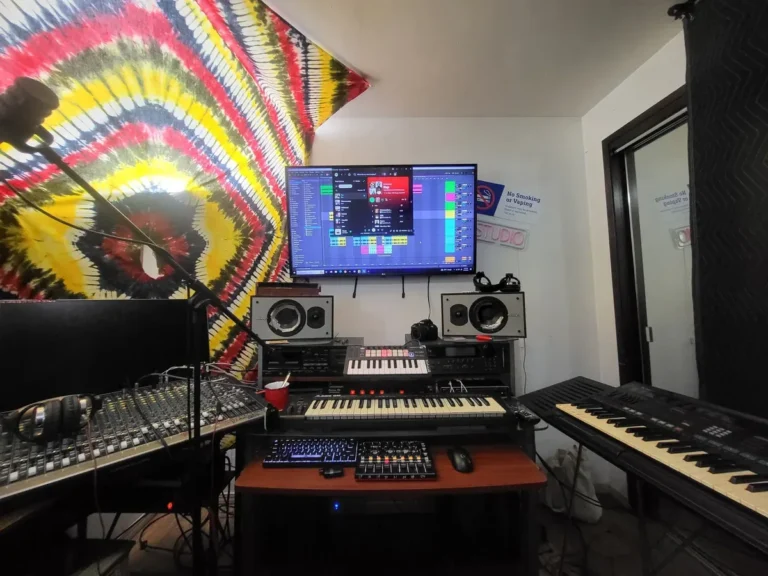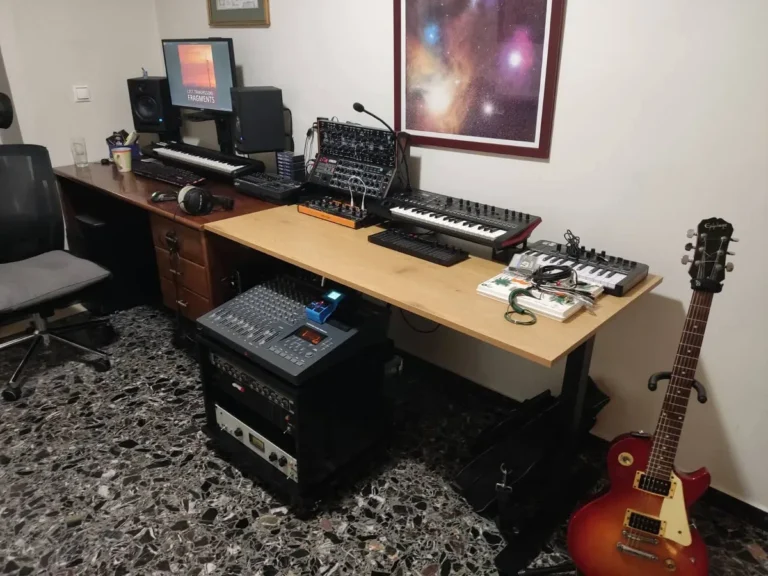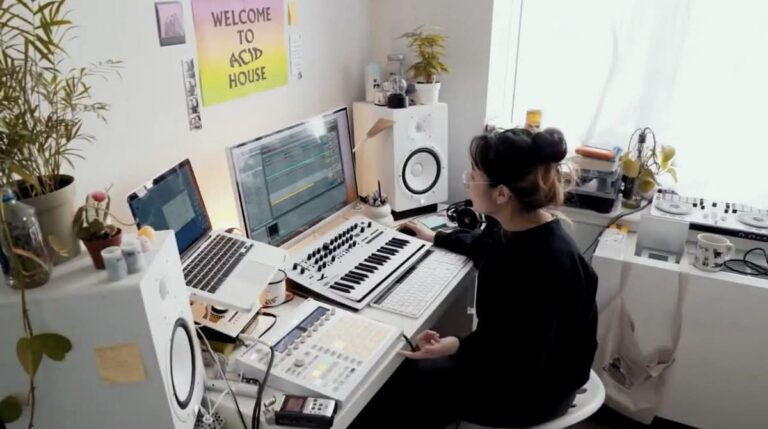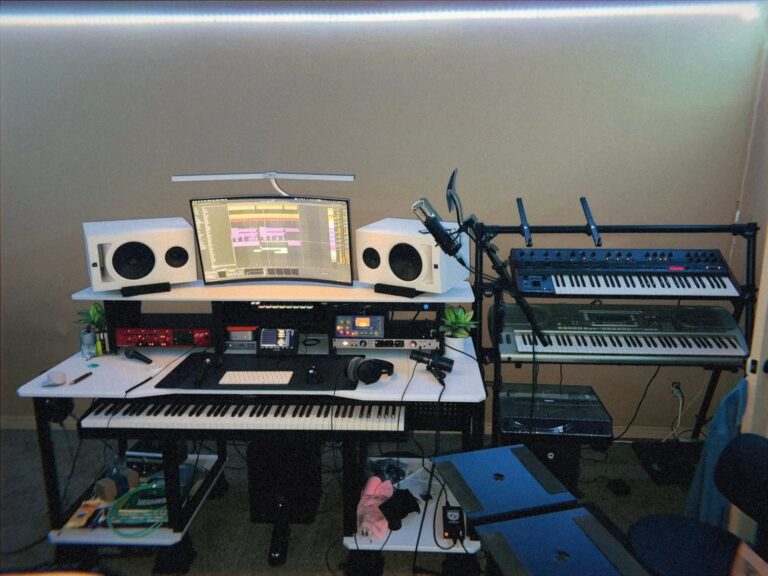

Art Deco is one of those looks that either clicks immediately or feels like too much to pull off in a practical space.
For a home studio, it’s actually more workable than you’d think, mostly because the style rewards intentional choices over clutter.
These setups below cover a range of takes on the aesthetic, from full commitment to a light nod toward the geometric and the gold-accented.
Geometric Art Deco Recording Studio
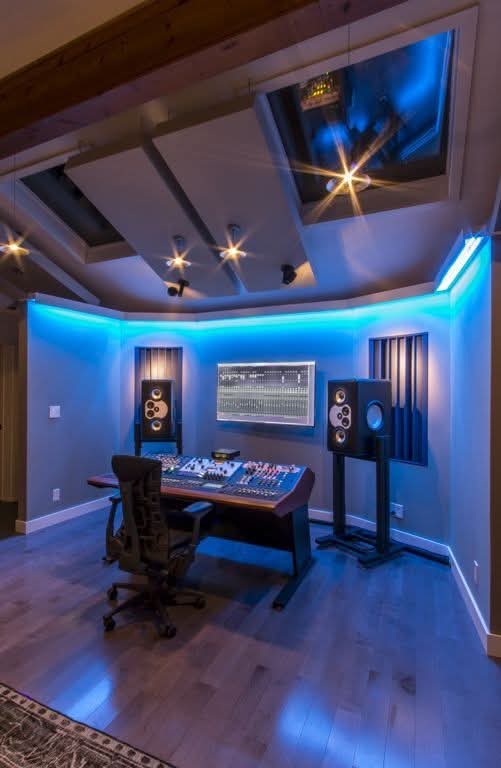
If you’re drawn to strong shapes over soft ones, this direction suits you well.
A lot of producers find that a space with clear visual structure also helps them work in a more focused way, whether or not there’s a real connection between the two. The geometry doesn’t need to be loud to register.
Bold Art Deco Music Production Studio
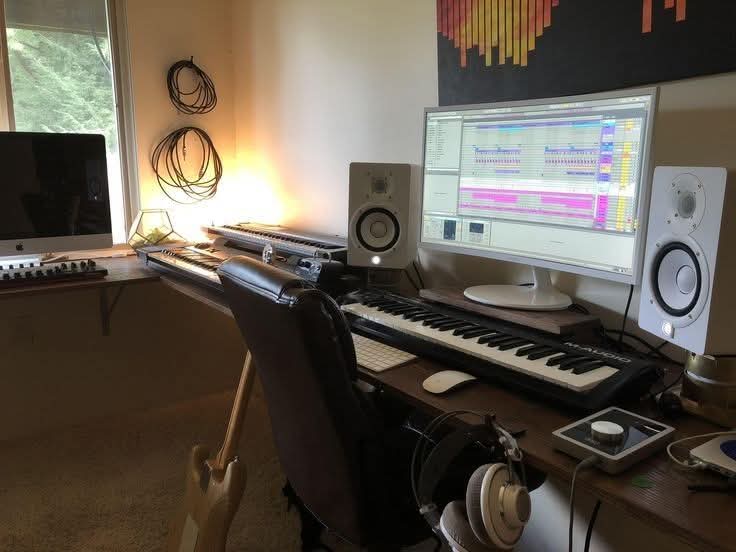
This works for producers who aren’t afraid to let the room make a statement.
A bolder take on the aesthetic usually means high contrast, deliberate symmetry, and surfaces that feel intentional rather than casual.
It’s not for everyone, but it photographs well and it holds up longer than trends that feel softer.
Luxe Art Deco Recording Space
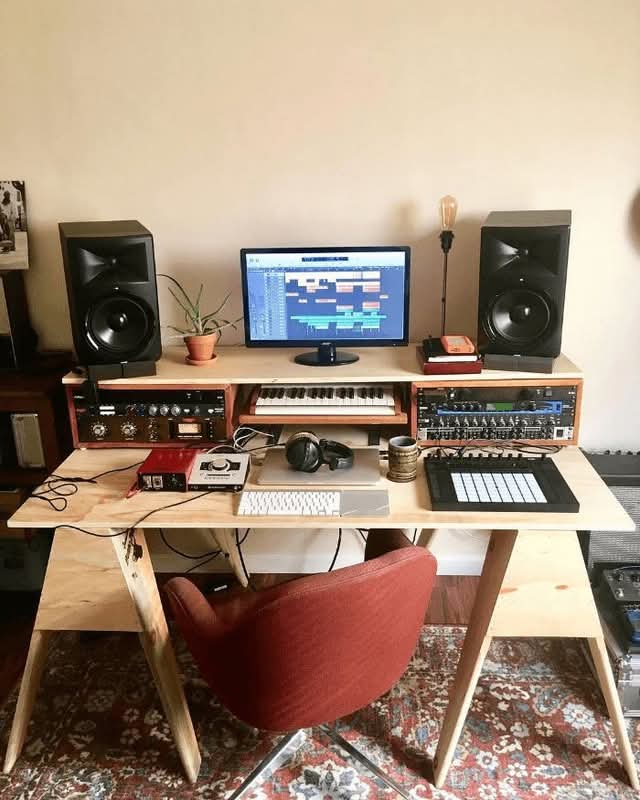
If your goal is a studio that feels elevated without looking overdesigned, the luxury angle of Art Deco is a good fit.
The style has a long association with craftsmanship and finish quality, so it lends itself naturally to spaces where the details matter.
Good for anyone who wants their workspace to feel like it was built rather than assembled.
Sunburst Art Deco Home Studio Design
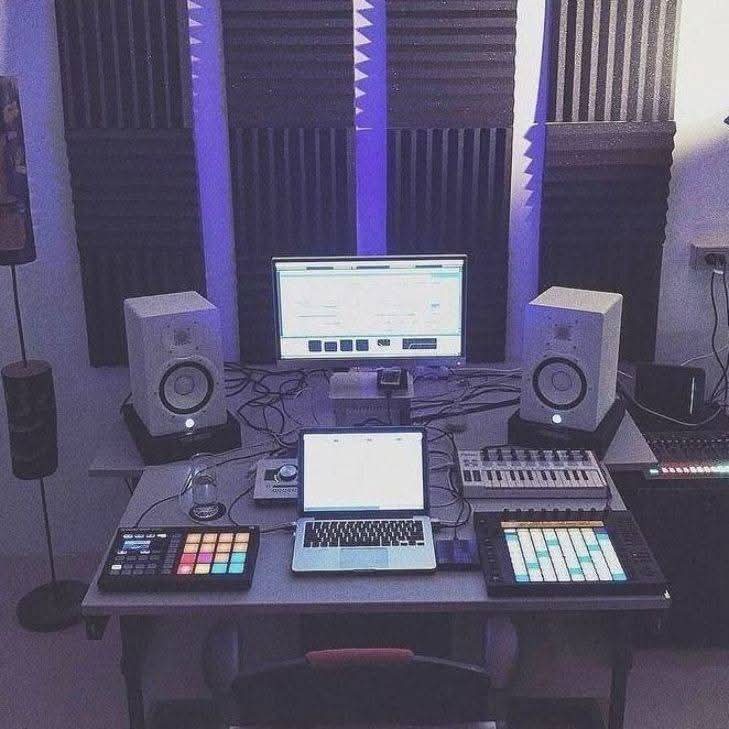
The sunburst motif is one of the most recognizable shapes from this era and it reads well at different scales. It can be a focal point in a room or just a repeating detail that ties the space together without dominating it.
Producers who like a single strong visual element rather than all-over pattern tend to prefer this approach.
Stepped Art Deco Music Studio Setup
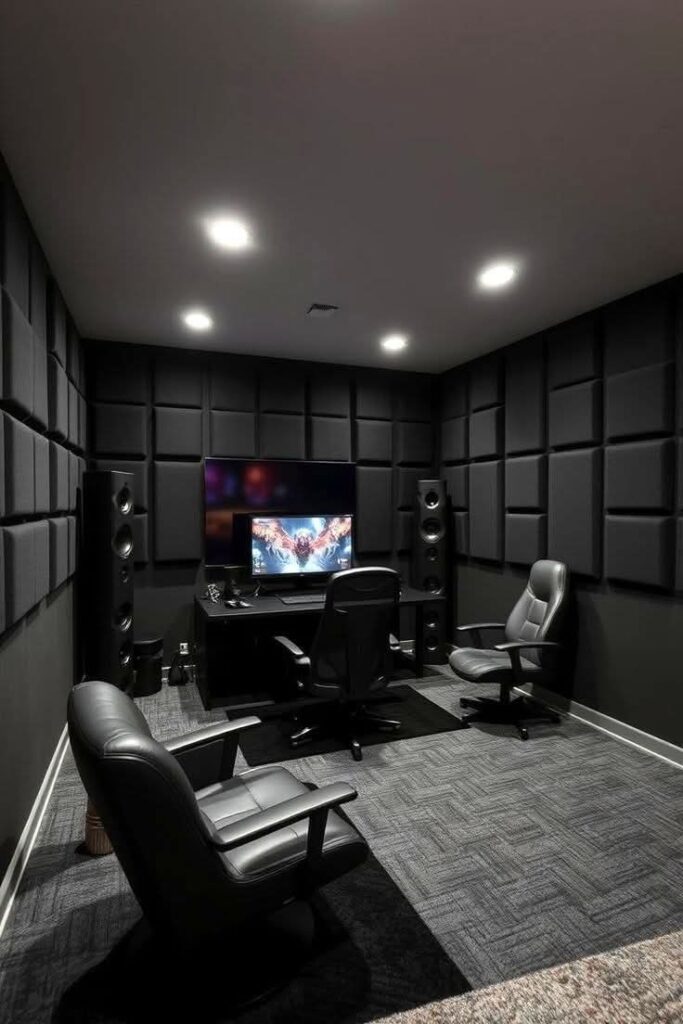
Stepped forms and tiered shapes show up constantly in Art Deco design and translate well into a studio context because they give the space visual rhythm without adding noise.
If you’ve ever felt like your room looks flat or unfinished, this is worth considering. The effect works even when it’s applied selectively.
Glamorous Art Deco Recording Studio Style
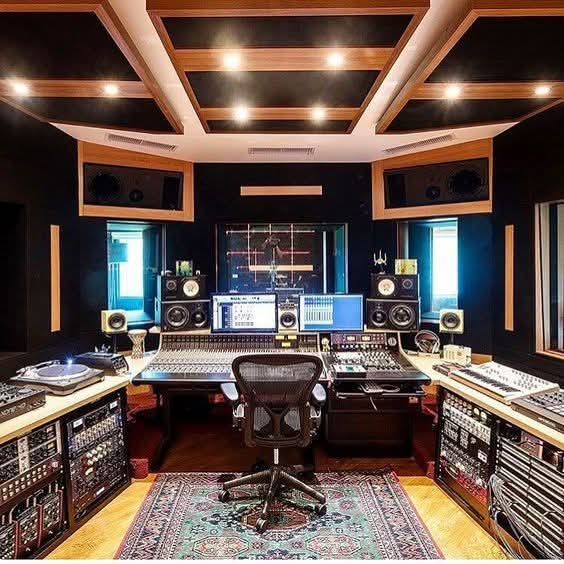
Not every home studio needs to look workmanlike. For producers who care about what the room looks like on video calls, during sessions with collaborators, or just in general, a more glamorous interpretation of Art Deco is a reasonable choice.
Restraint is still part of it, but it’s a different kind of restraint than you’d find in a more minimal aesthetic.
Monochrome Art Deco Music Production Setup
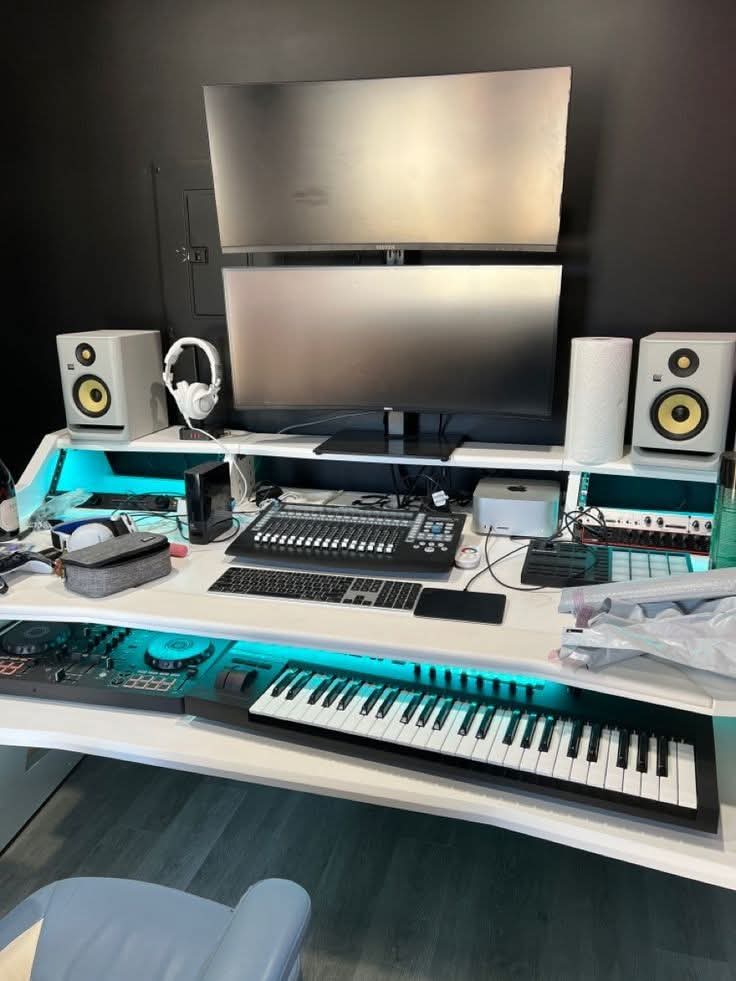
Black, white, and everything in between works especially well with this style because Art Deco already leans toward high contrast. If you’re not ready to commit to gold accents or jewel tones, a monochrome palette is an easier entry point that still reads clearly as the aesthetic.
It also tends to be more forgiving in rooms with limited or uneven light.
Linear Art Deco Home Recording Studio
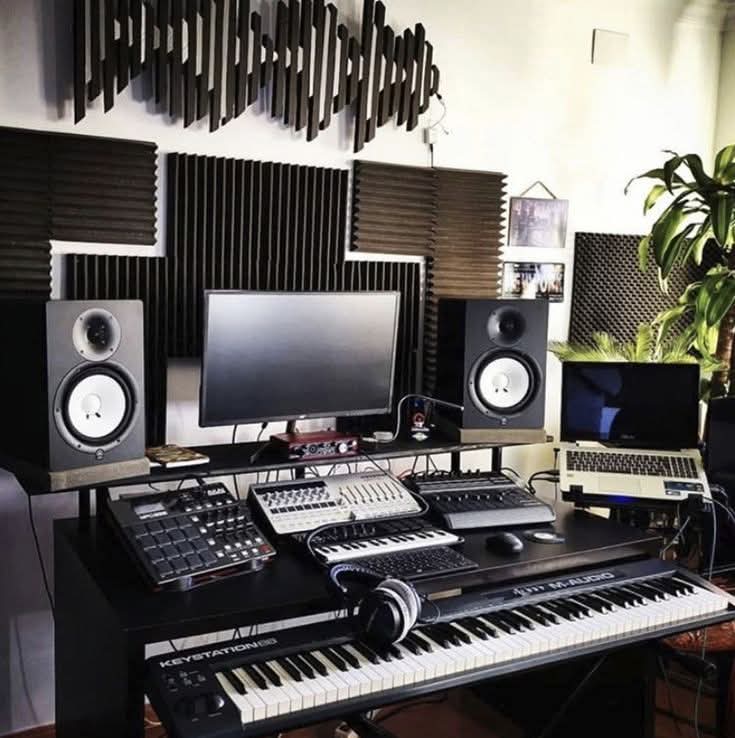
Clean horizontal and vertical lines are a constant across Art Deco design, which makes this direction one of the most adaptable versions of the style.
Producers working with irregular room shapes often find that leaning into strong lines actually makes the space feel more intentional. It doesn’t require symmetry to work.
Gilded Art Deco Recording Space
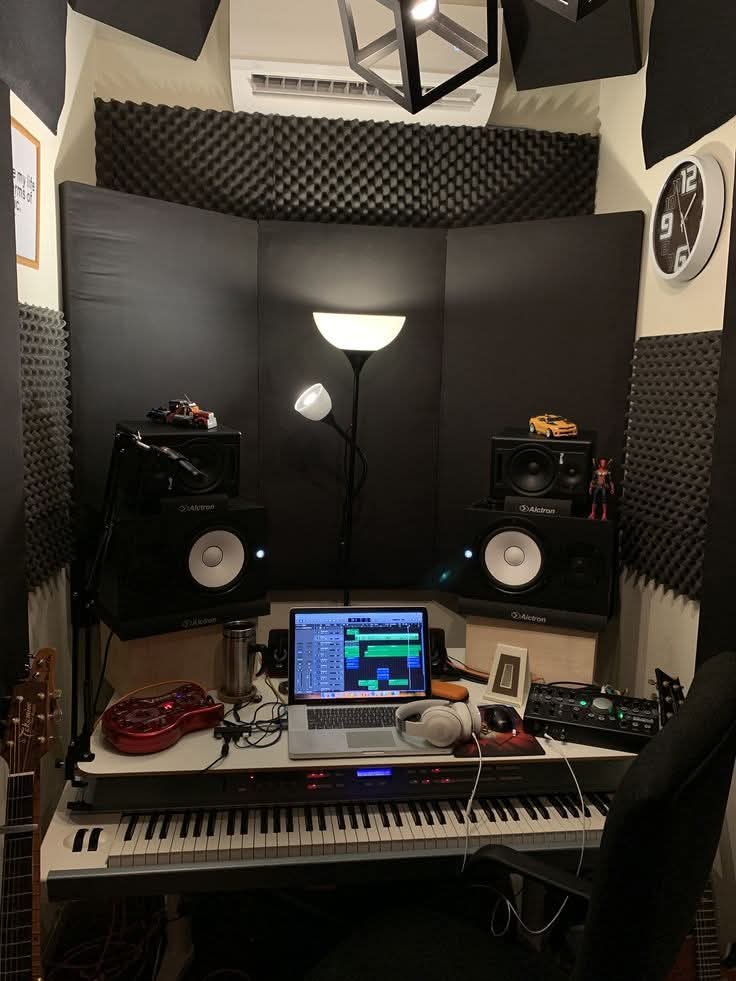
Gold shows up in almost every version of Art Deco, but the gilded approach leans into it rather than treating it as a minor accent. This suits someone who has a specific vision for their studio and wants the warmth and contrast that metallic tones bring to a darker or richer color palette.
It’s a committed choice and it works when the rest of the room is considered.
Dark and Dramatic Art Deco Music Studio
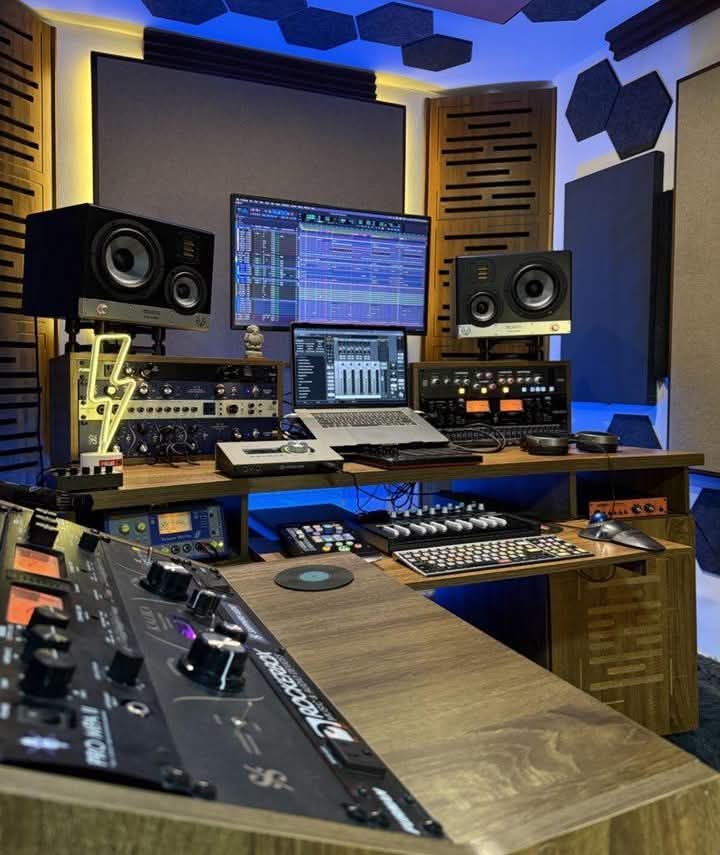
Deep backgrounds with high-contrast detail is a combination that Art Deco handles better than most styles.
For producers who prefer a moodier, more enclosed feeling in their workspace, the dark take on this aesthetic delivers that without sacrificing the sense of intention that the style is built on. Rooms with limited natural light often work best here.
Refined Art Deco Home Studio Concept
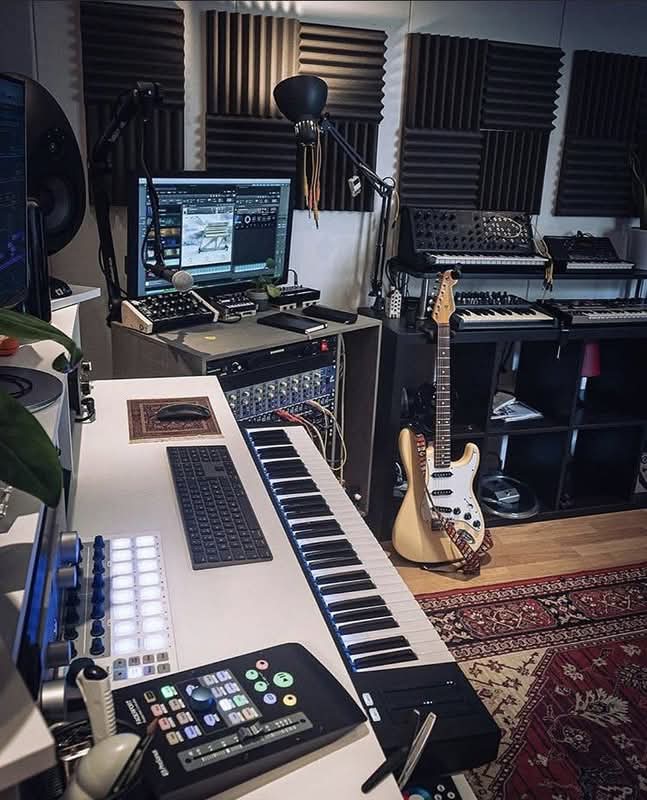
You don’t need to go theatrical with this style to pull it off. A refined version of Art Deco uses the same building blocks but in a quieter register, so it reads as polished rather than flashy.
Good for someone who wants the character of the aesthetic without the visual volume.
Vintage Art Deco Recording Studio Design
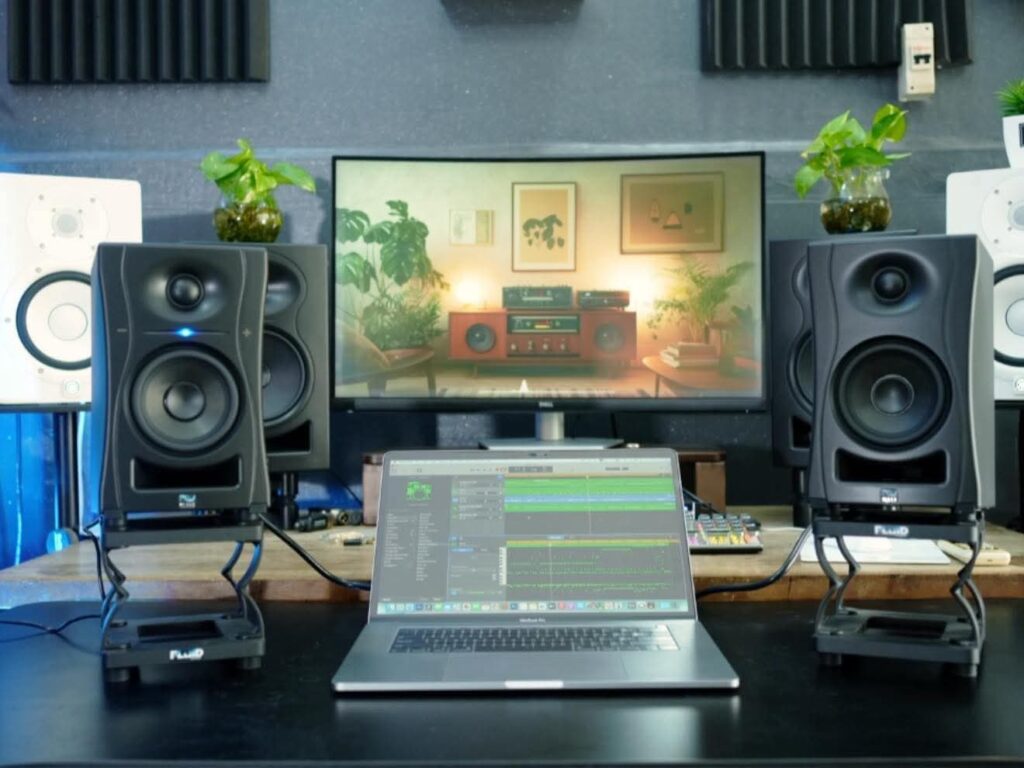
The historical angle of Art Deco is harder to fake than the geometric one, and when it works it adds a layer of authenticity that newer interpretations often miss.
If you’re drawn to original-era references rather than contemporary interpretations, this direction feels more grounded. It also tends to age better in a space because it’s not chasing a current trend.
Warm Gold Art Deco Music Studio Corner
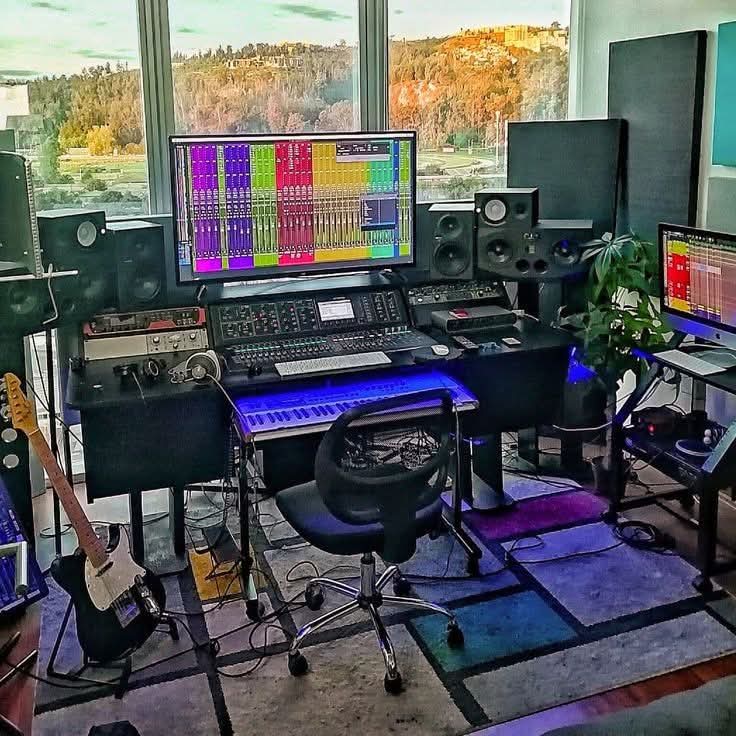
Gold tones in a smaller footprint work better than most people expect. A corner or section of a room done in warm metallic tones can anchor the aesthetic for the whole space without requiring you to commit every surface to the look.
Good for producers who are still working out how much of the style they actually want to live with.
Chevron Art Deco Home Recording Setup
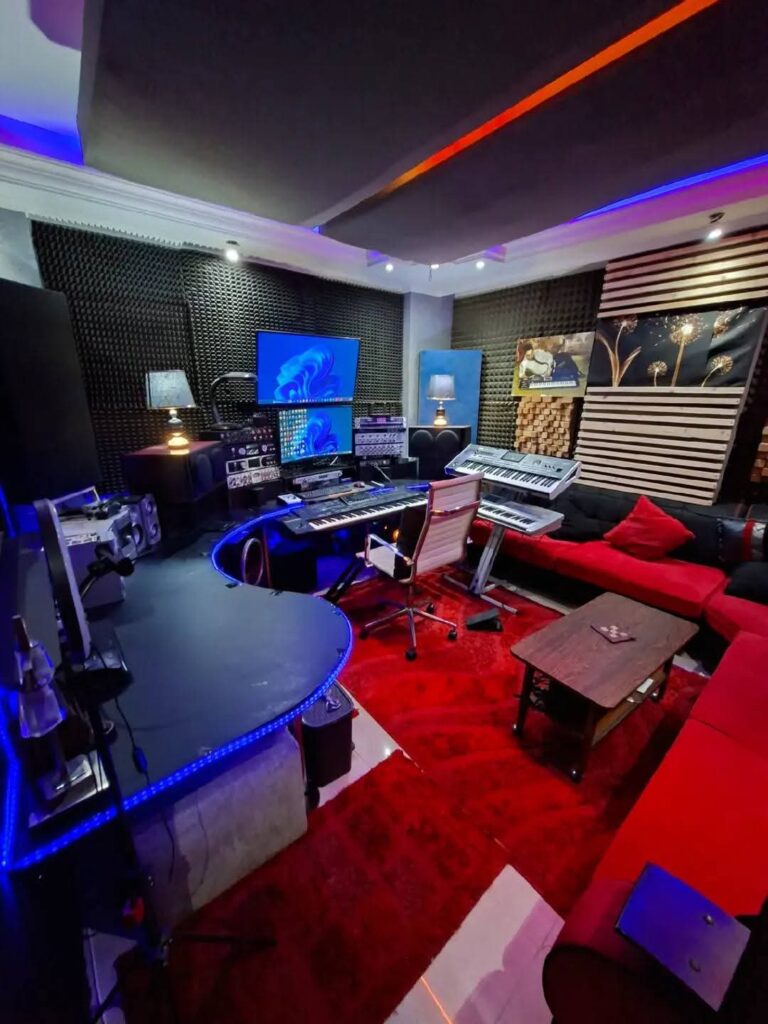
Chevron patterns sit alongside zigzags and stepped forms as one of the most characteristic Art Deco motifs. At the right scale they add movement to a room without making it feel restless.
If your space currently feels static or unresolved, a directional pattern like this can shift that.
Art Deco Music Studio for Small Spaces
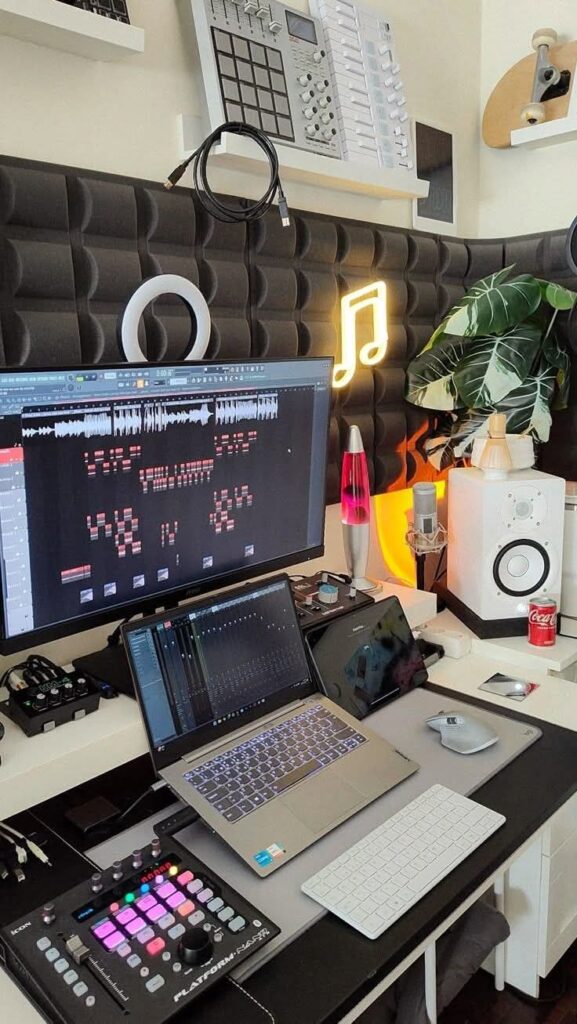
Apartment producers and bedroom studio setups don’t get left out here. The style actually rewards small spaces in some ways because the constraint forces you to be selective, and selective choices tend to land better with Art Deco than an all-at-once approach does. Less room means fewer decisions to get wrong.
Mirrored Art Deco Recording Studio Look
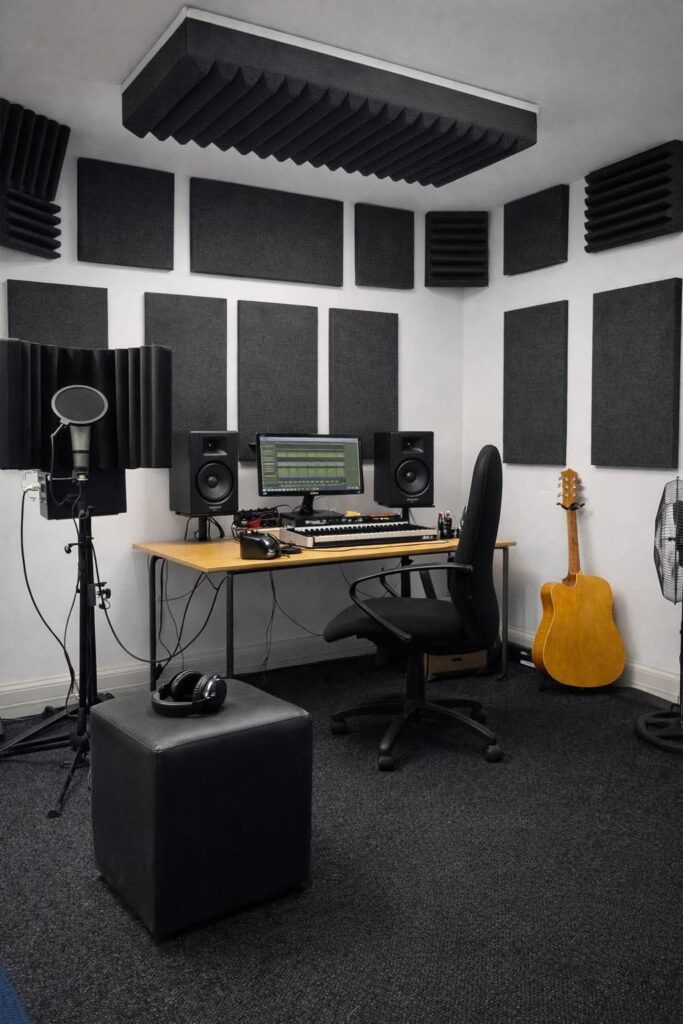
Reflective surfaces have been part of Art Deco interiors since the beginning and they still work for practical reasons beyond aesthetics. In a small or awkward room, the way mirrors and metallic finishes play with light can change how the space feels at different times of day.
For video-focused producers, it’s also useful to understand how your room reflects back on camera before committing to this direction.
Symmetrical Art Deco Music Production Room
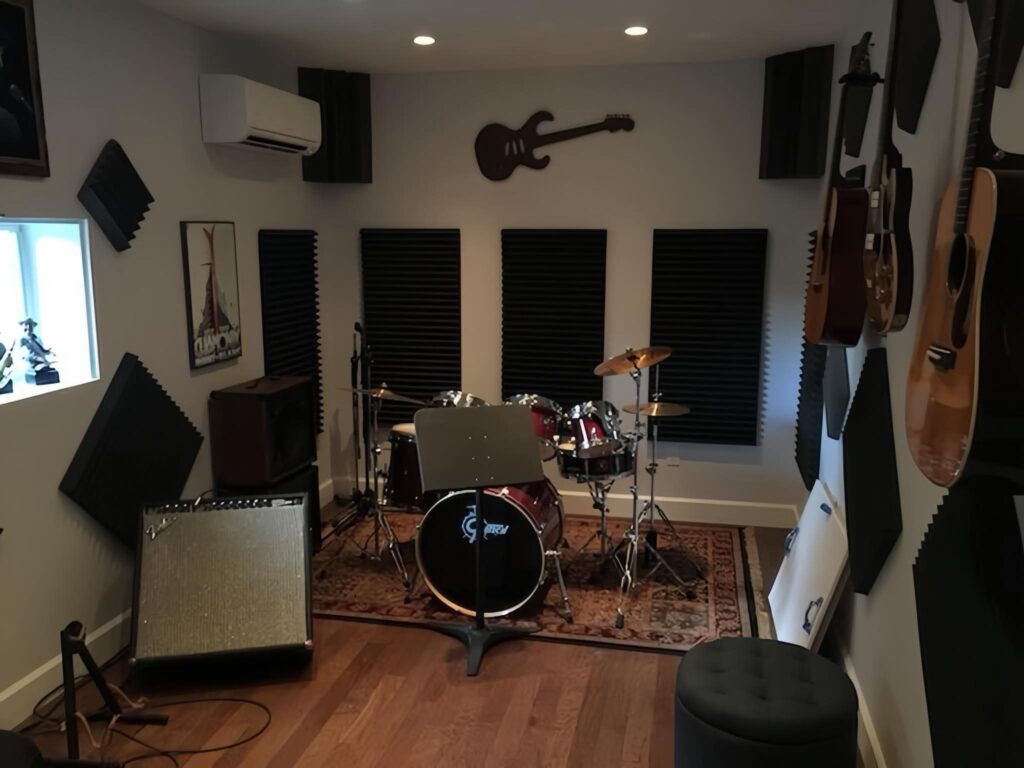
Art Deco often defaults to bilateral symmetry, which can feel formal but also gives a room a sense of resolution that asymmetric layouts sometimes don’t have.
This suits producers who prefer a composed-looking setup over one that looks like it evolved organically. It takes more planning to get right but the result is usually cleaner.
Jazz Age Home Studio with Art Deco Flair
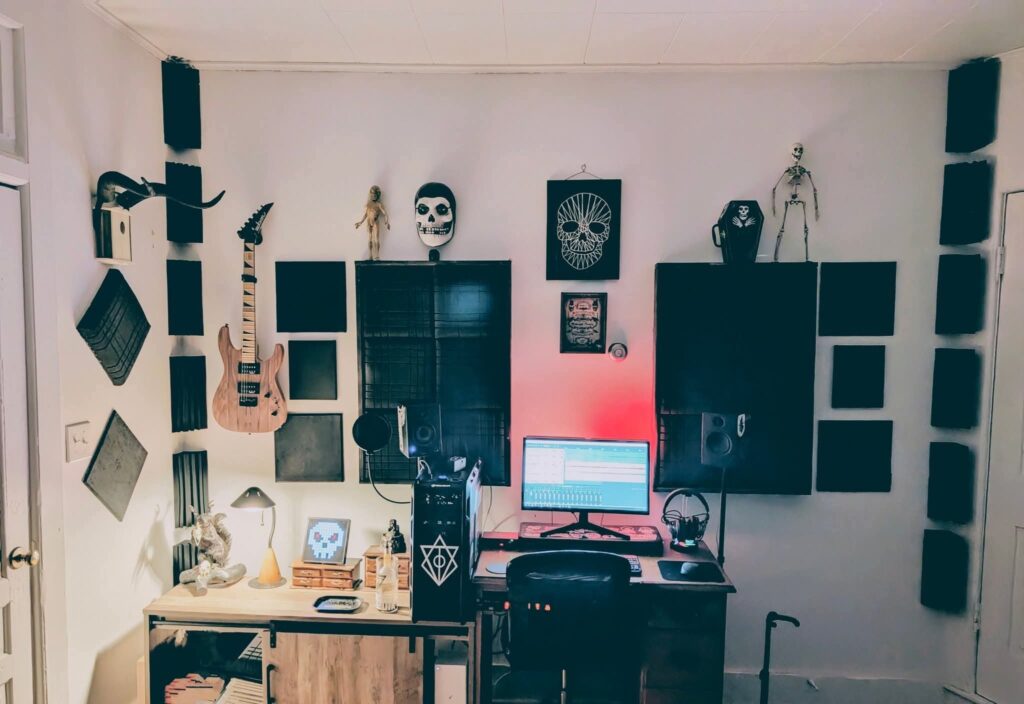
The 1920s and 30s connection between Art Deco and jazz music history is obvious enough that leaning into it doesn’t feel forced, especially in a music space.
If you’re a producer who works in jazz-adjacent genres, the reference adds meaning beyond just visual preference. Even if you’re not, the warmth and sophistication of that era translates well into a studio context.
Black and Gold Art Deco Recording Space
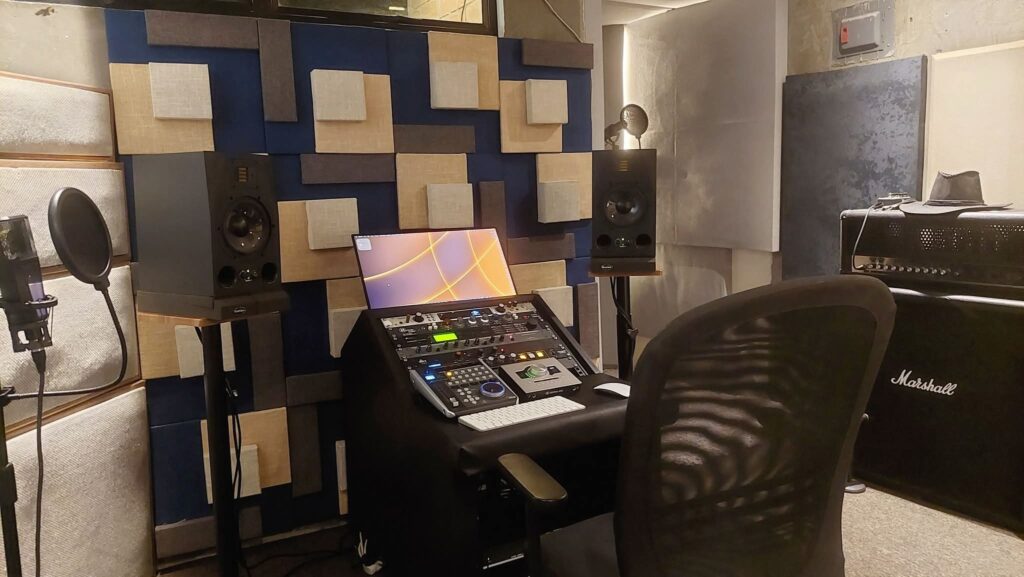
High contrast palettes were standard in Art Deco design and black-gold is the most direct expression of that.
It’s also one of the more forgiving combinations to work with because the relationship between the two tones is already established. You don’t need to figure out whether they go together.
Opulent Art Deco Music Studio Design
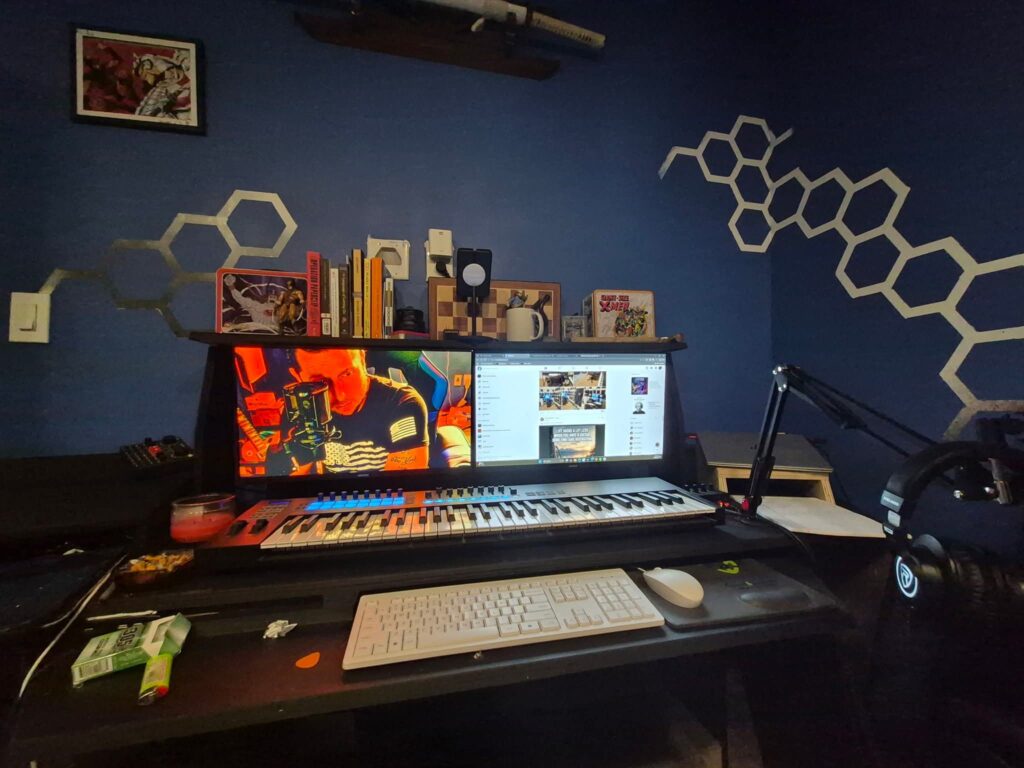
An opulent take on the style is about surface richness and material quality rather than just decoration. If your instinct is to invest in fewer things but better ones, this interpretation aligns with that approach.
The result tends to look more intentional than a room that’s been styled with a lot of lower-quality pieces in the same aesthetic.
Fan Motif Art Deco Home Studio Style
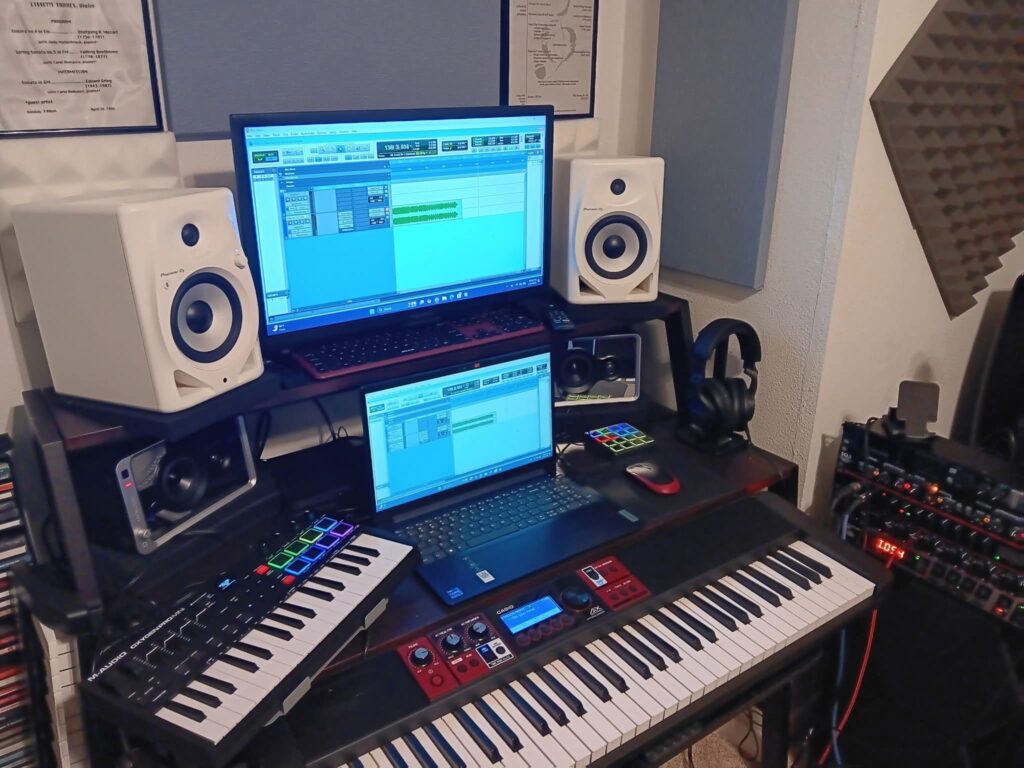
The fan shape appears in Art Deco design in a lot of contexts and it’s one of the more versatile motifs because it works at different scales and in different applications.
For a home studio, it can function as a single focal point or a recurring detail, depending on how much of the aesthetic you want the room to carry.
Masculine Art Deco Recording Studio Setup
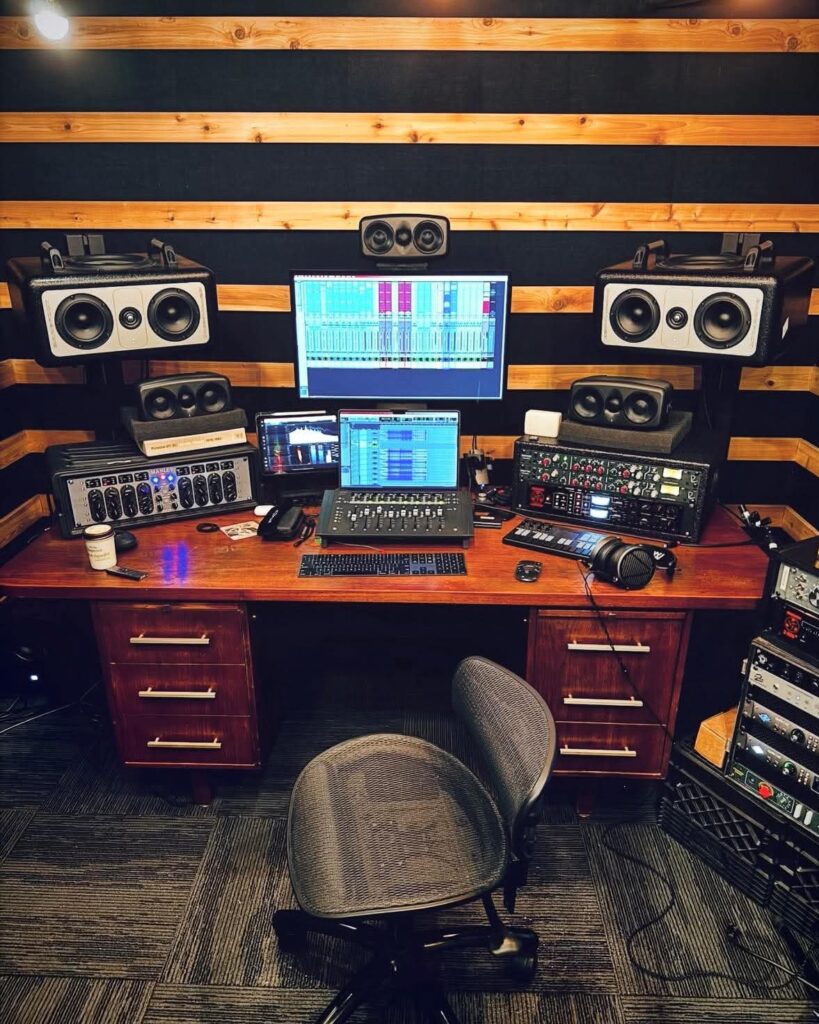
Darker tones, harder edges, and a preference for structure over softness characterize this interpretation. It’s not the only way to approach the style, but it’s a consistent one and it reads clearly.
Producers who find that lighter or warmer interiors distract them tend to work better in rooms with this kind of profile.
Art Deco Home Studio for Music Producers Who Mix Genres
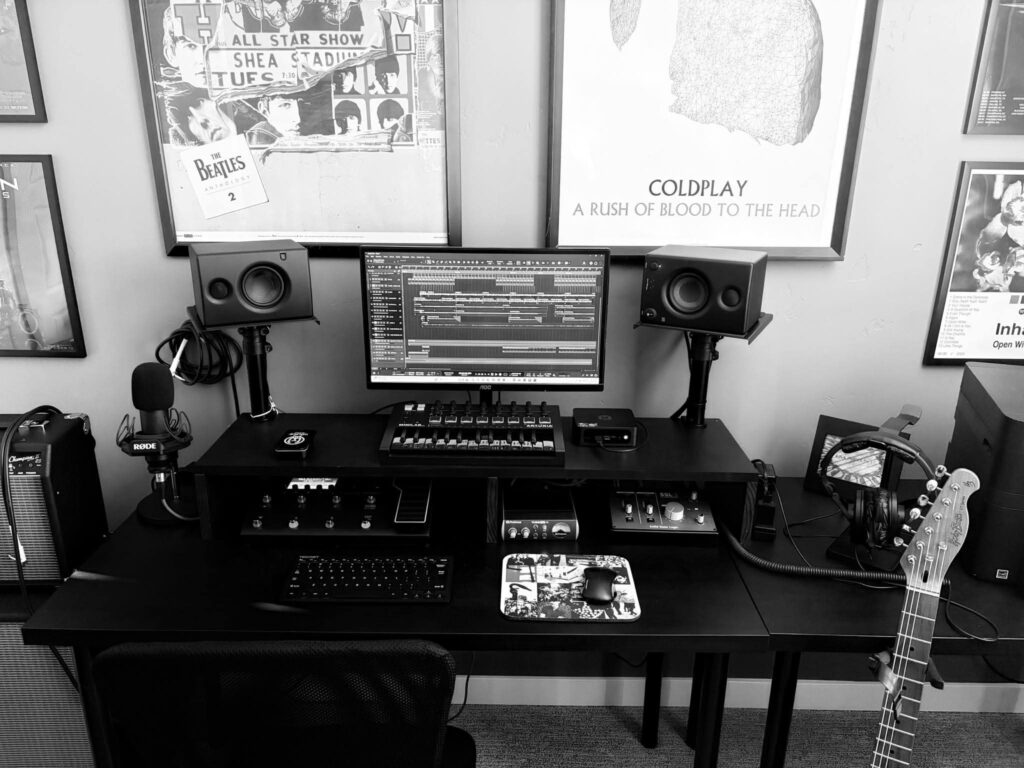
If your output crosses genre lines, the Art Deco aesthetic is broad enough to not pin you to one sound or market.
The visual associations of the style are strong but not genre-specific, which gives it more flexibility than looks that read immediately as hip-hop, electronic, or lo-fi.
Your room can look considered without sending a signal you didn’t intend.
Streamlined Art Deco Music Production Space
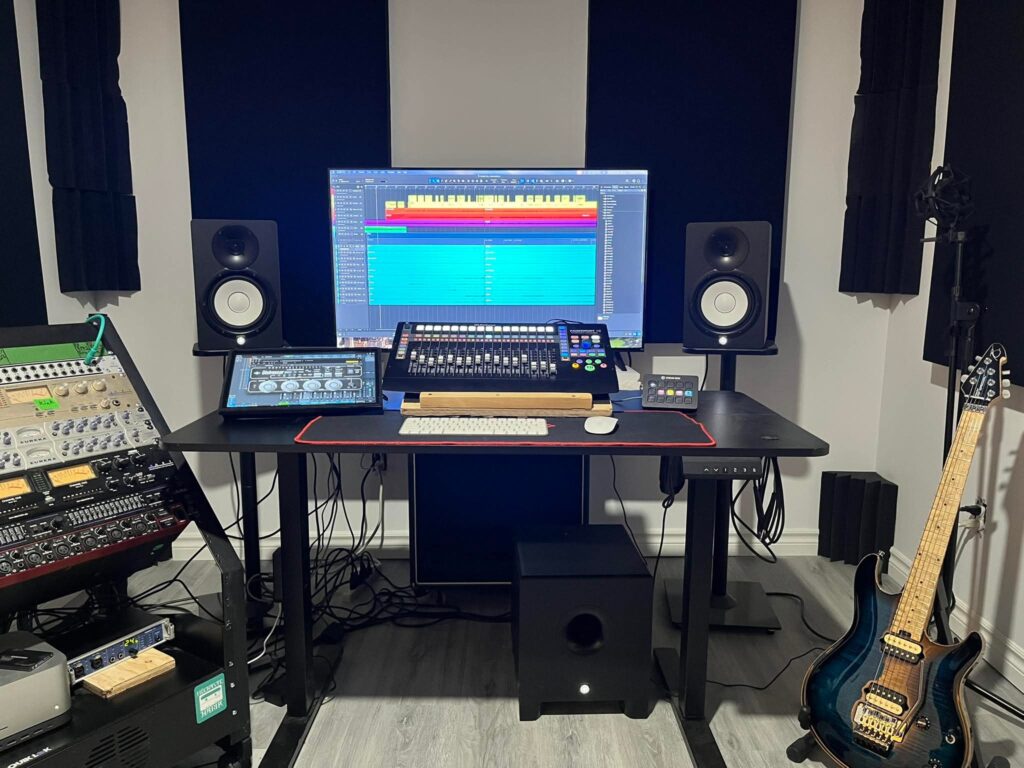
Streamlining was a later development in Art Deco design, moving away from ornamental excess toward cleaner, faster-looking forms.
For producers who want the heritage of the style without the decorative weight, streamlined Art Deco is the more practical choice.
It also tends to look better in rooms that have to function as actual workspaces rather than just look good in photos.
Art Deco Home Studio for Content Creators
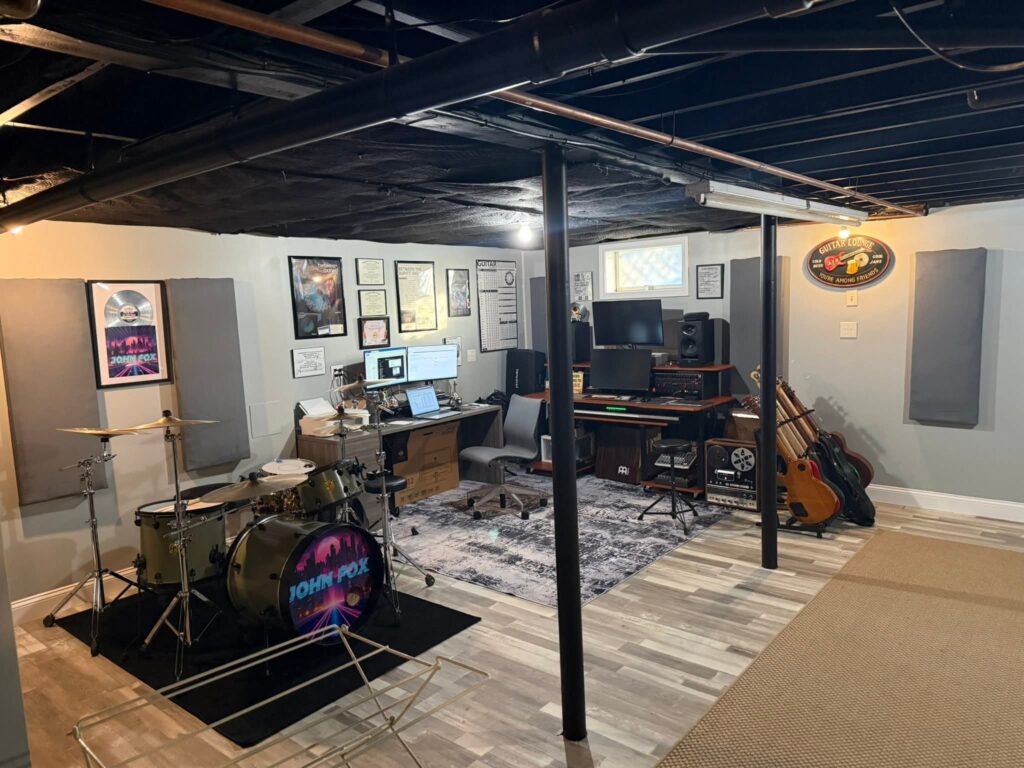
If your studio doubles as a set, the visual interest of Art Deco does a lot of background work for you.
The style reads well on camera, holds up across different lighting conditions, and signals production value without requiring a constantly updated setup.
Worth thinking about if part of your audience experiences your room through a lens rather than in person.
Eclectic Art Deco Recording Studio Concept
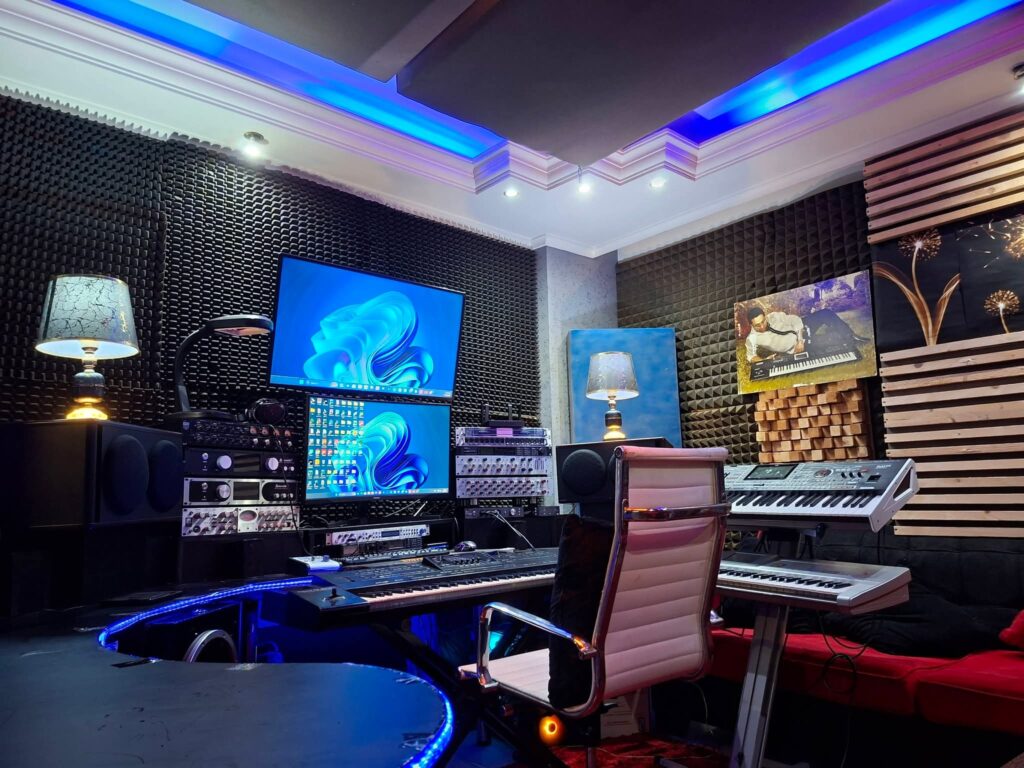
Pure style commitments are hard to maintain in a room that also has to function day to day.
A more eclectic take on Art Deco mixes the defining elements with other things you actually like, and the style is flexible enough to absorb that without losing its character.
If you’ve tried to stick to one aesthetic before and found it too constraining, this is the more honest version of the approach.
Midnight Art Deco Home Recording Studio
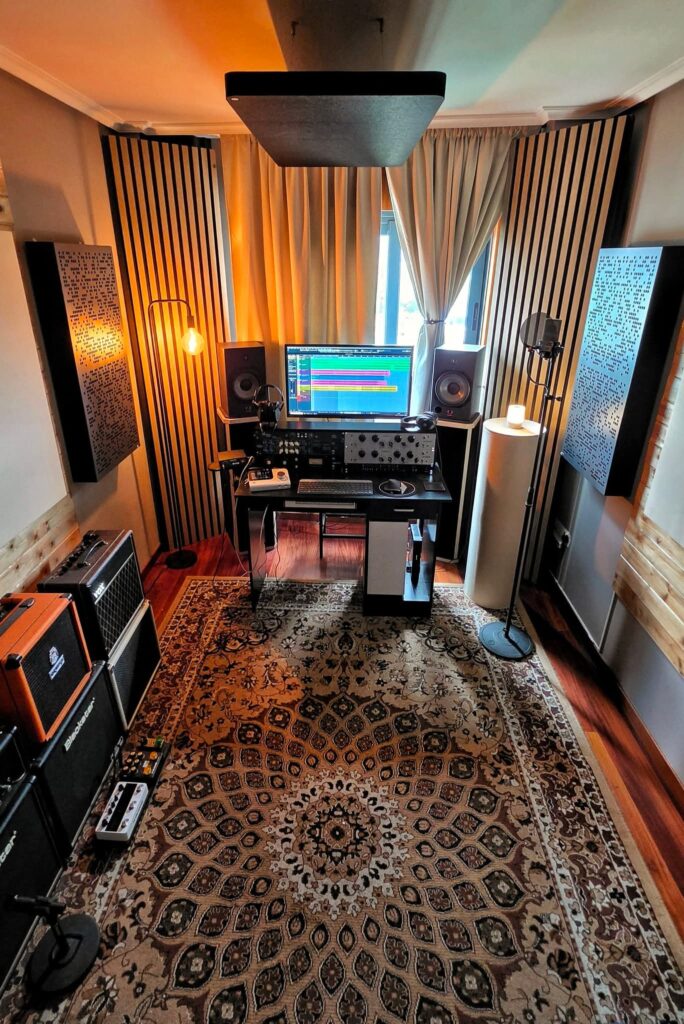
Deep blues and blacks with metallic contrast is one of the strongest color combinations available within this style.
If your sessions tend to run late and you prefer a room that feels appropriate for that rather than one that looks like it belongs in daytime, this interpretation fits.
It also tends to photograph with more atmosphere than lighter palettes.
Timeless Art Deco Music Studio Style
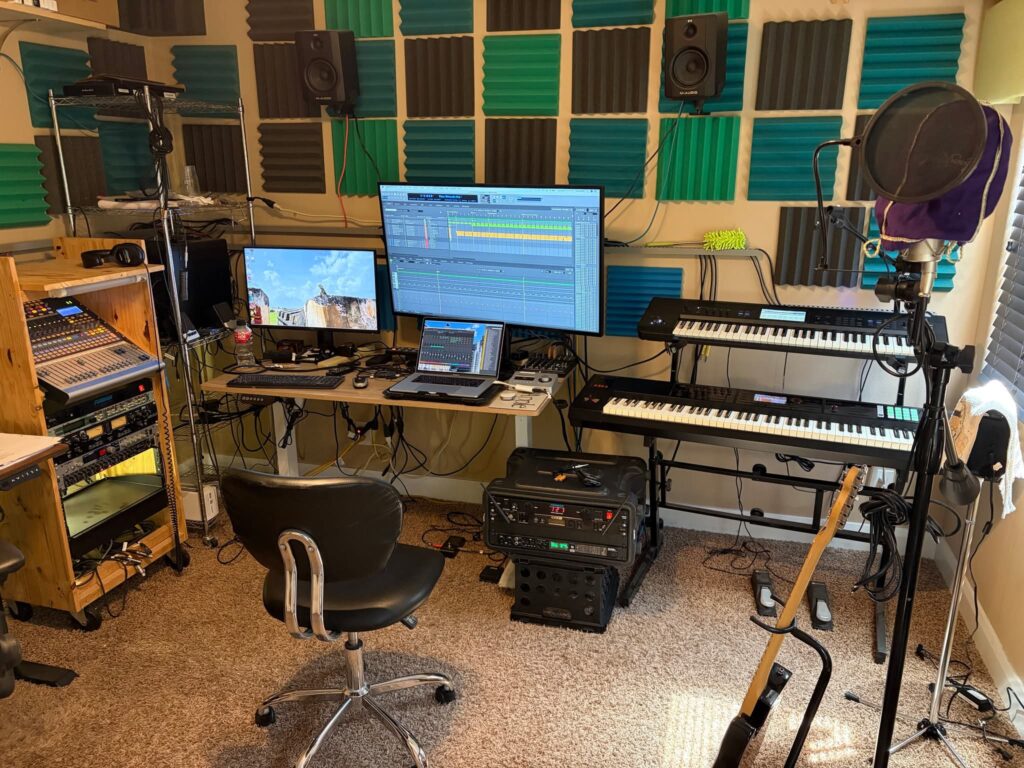
Art Deco has been around long enough that the good versions of it don’t look dated, they just look considered.
A setup built around the enduring elements of the style rather than current interpretations of it will probably hold up better over time than one chasing a trend cycle.
That’s the basic argument for any classic aesthetic and it applies here as much as anywhere else.
That’s a Wrap
Art Deco gives you a lot to work with for a home studio, mostly because the style already lives in the territory between elegance and function.
The look tends to hold up over time better than most. Pick the version that matches how you actually work, not just how you want the room to look in a photo.