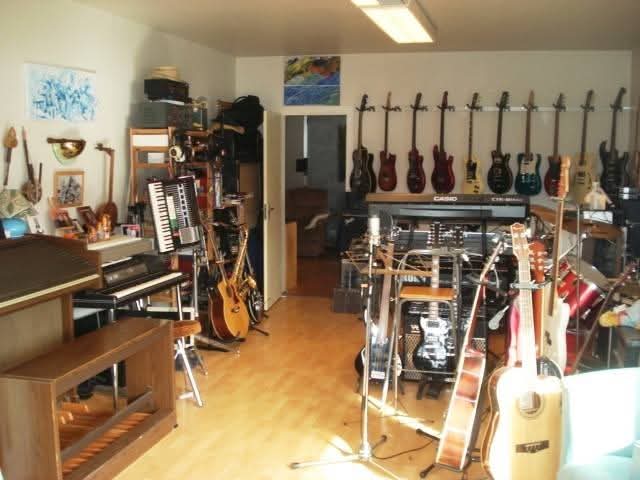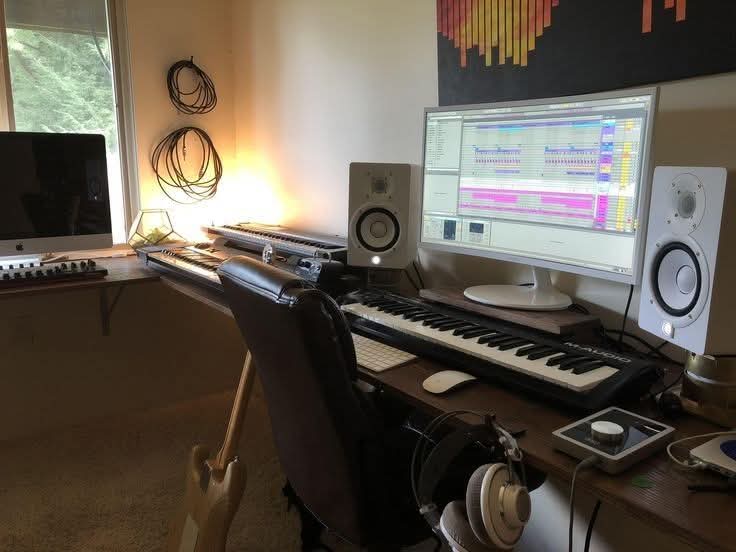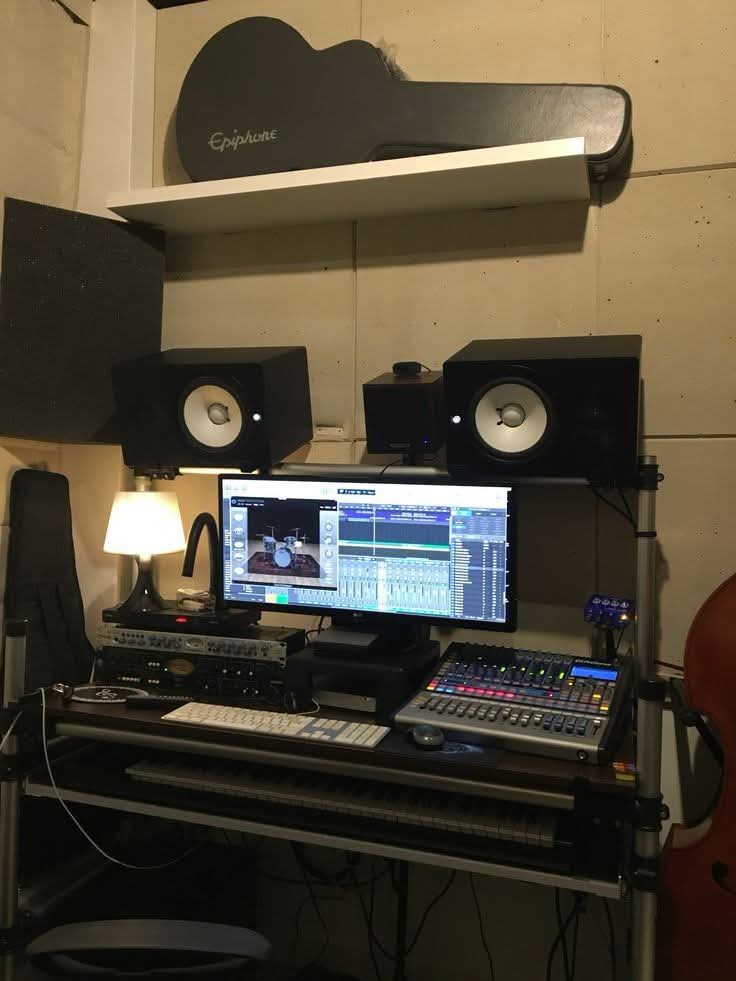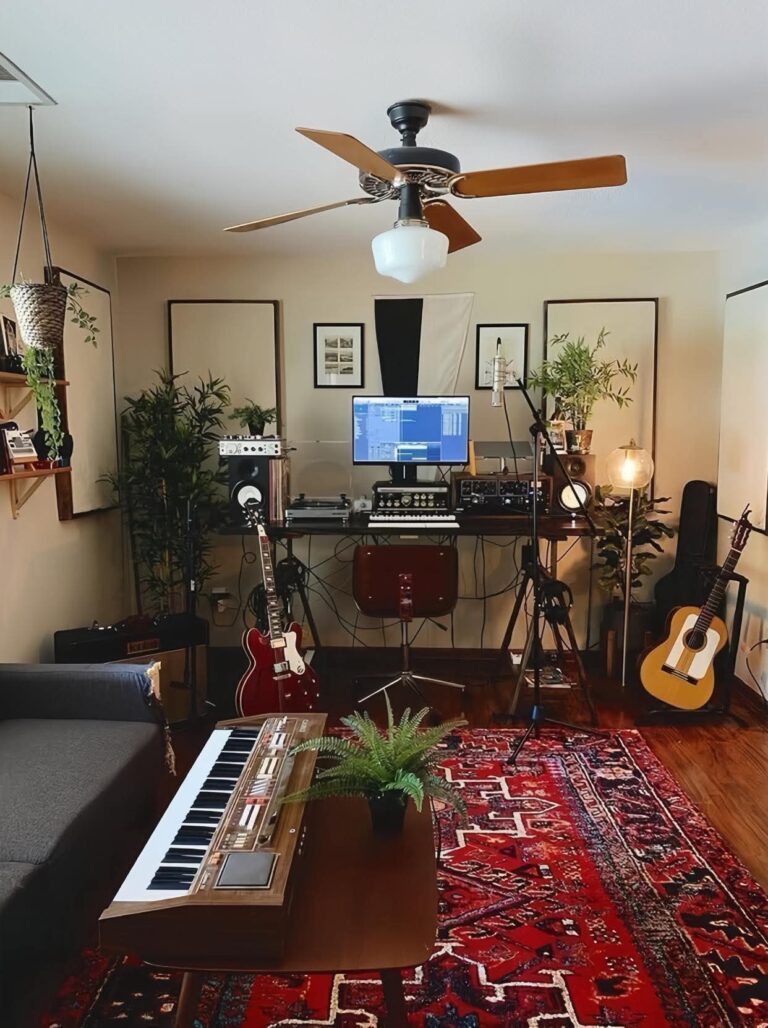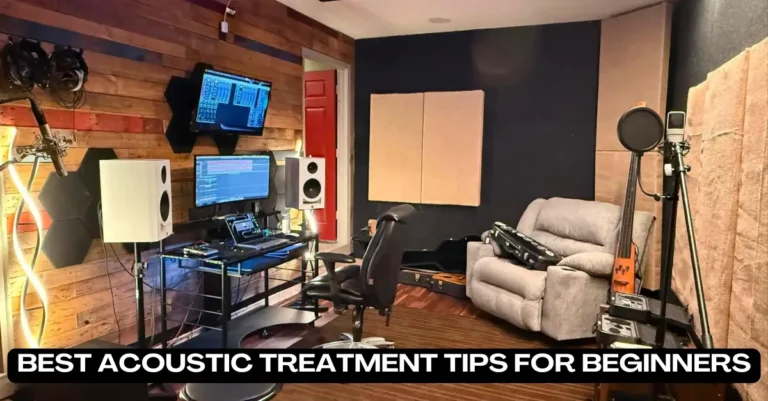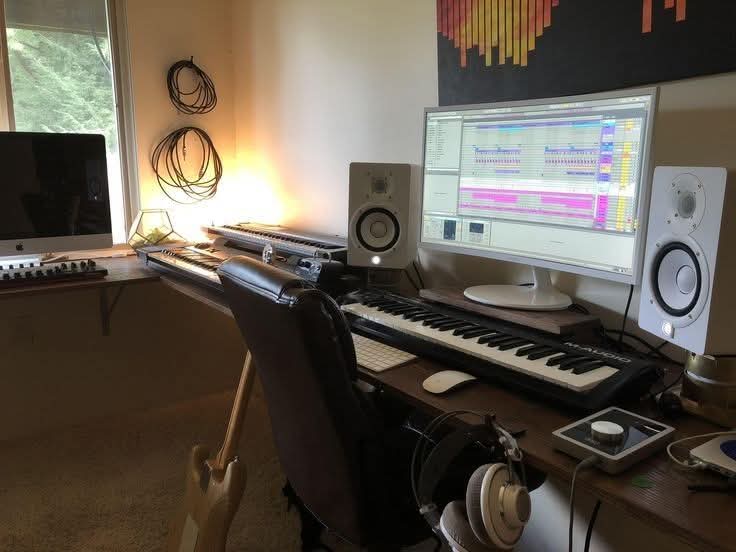

A wabi-sabi studio doesn’t chase clean lines or symmetry. It leans into what’s worn, mismatched, or slightly off, and somehow still feels finished.
If your space has character instead of polish, this aesthetic gives you permission to stop apologizing for it.
Wabi-Sabi Recording Studio Corner
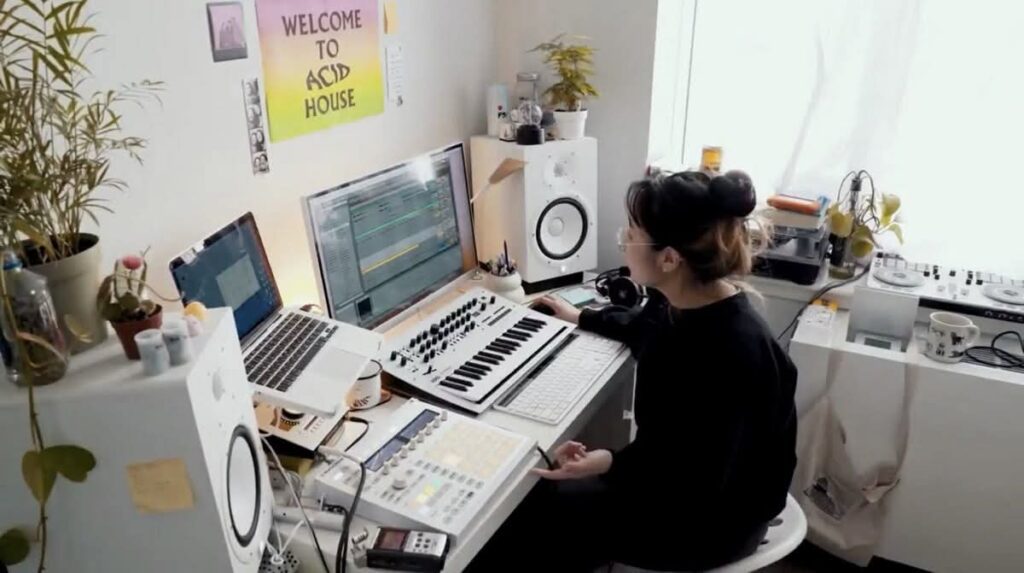
You don’t need a corner that looks like a showroom to make something worth hearing.
A space with a few dents, uneven walls, or furniture that doesn’t match can still hold a session together.
This suits anyone who’s been putting off recording because the room isn’t ready yet.
Worn and Weathered Wabi-Sabi Music Studio
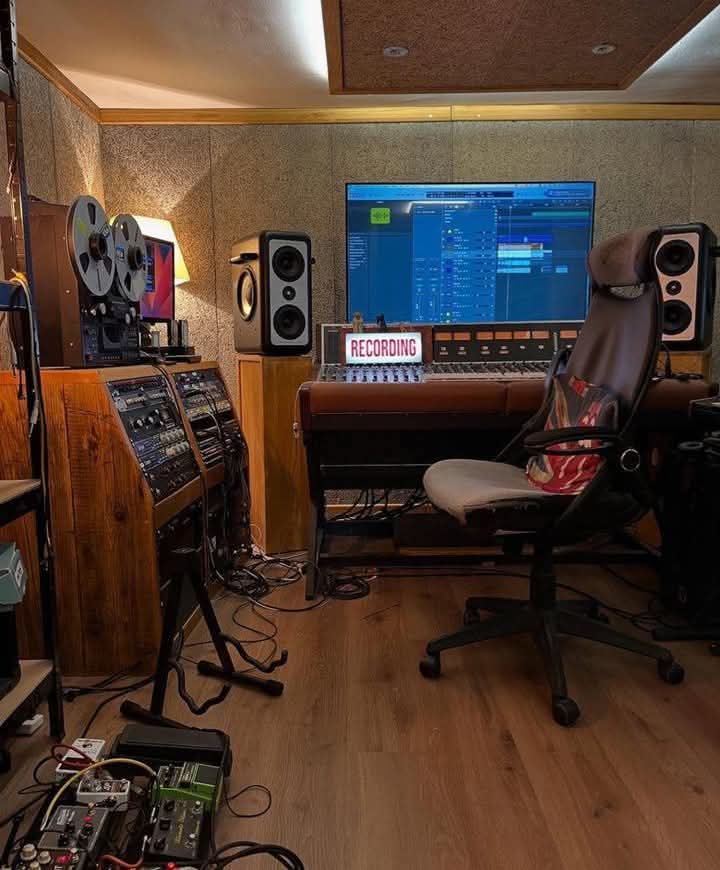
Some rooms look better the longer they’ve been lived in. This works for musicians who’d rather spend their energy on a track than on making the space look staged.
Nothing about a wabi-sabi room needs to be new to be functional.
Wabi-Sabi Home Studio for Minimalists
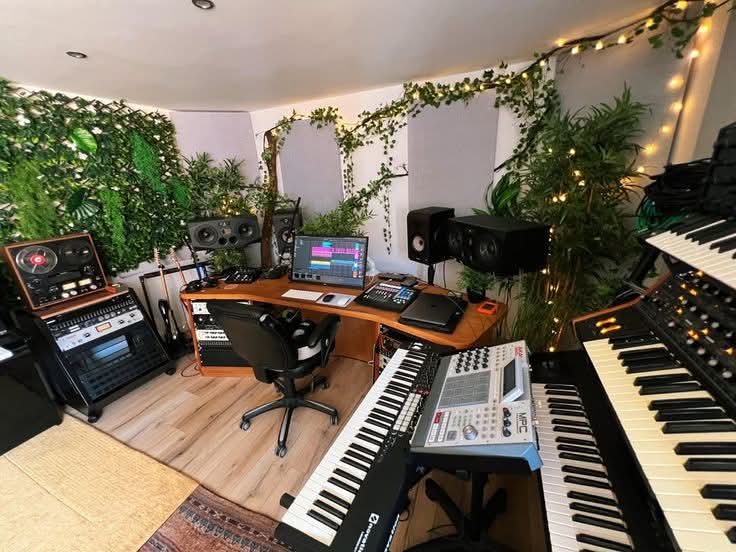
Minimal doesn’t have to mean sparse to the point of feeling unfinished. This suits someone who owns less gear than they used to and has made peace with that.
A quieter room often makes for a quieter mind, which tends to help more than another plugin ever will.
Imperfect Wabi-Sabi Recording Space
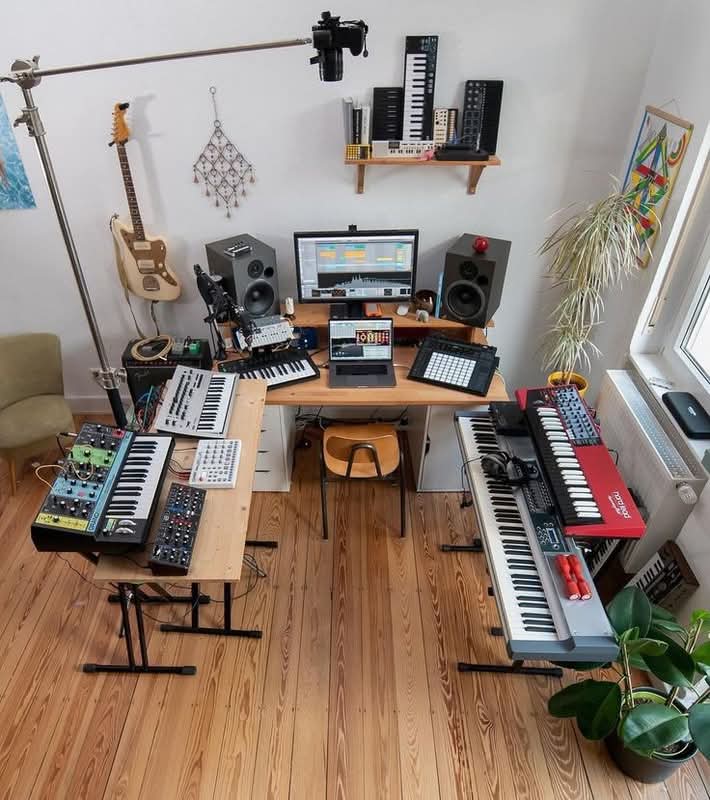
A recording space doesn’t have to be symmetrical to sound good or feel right. This suits people who’ve stopped trying to make their setup look like a magazine spread and started paying attention to whether it actually works for them.
Imperfect can still be intentional.
Wabi-Sabi Studio Setup for Slow Living
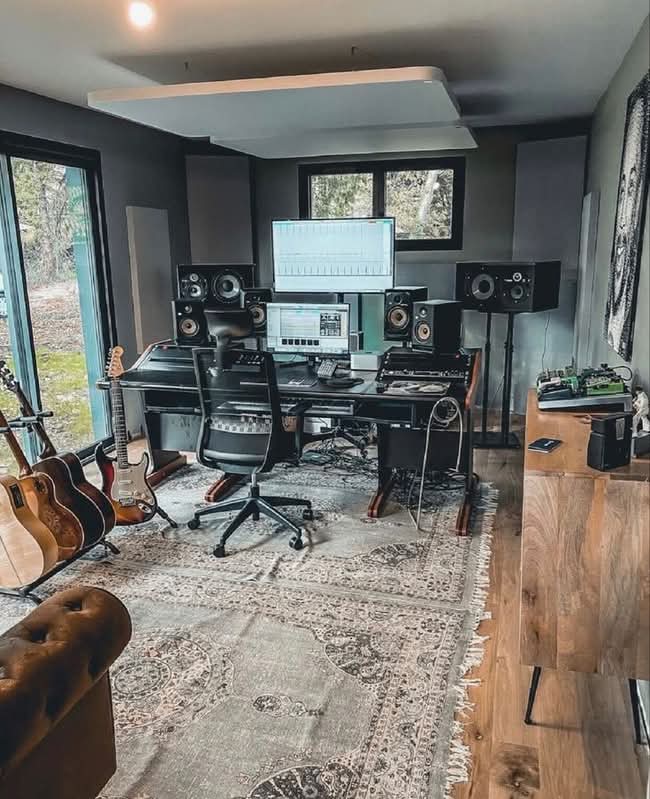
Not every session needs urgency behind it. Some people work better when the room itself asks them to slow down, fewer distractions, less visual noise, nothing demanding attention.
This suits someone who treats music as a practice rather than a race to finish a track by midnight. The pace of the room tends to match the pace of the work.
Pro Tip: Visual aesthetics shouldn’t compromise sound. Always make sure your studio monitors are placed at ear-level and form an equilateral triangle with your listening position, regardless of the room’s decor.
Rustic Wabi-Sabi Music Production Studio
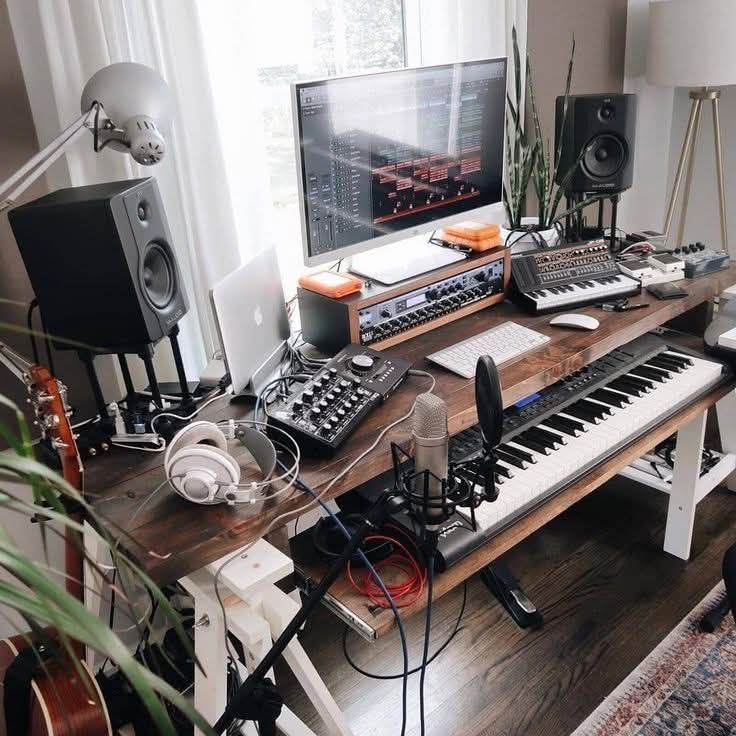
There’s a version of minimalism that feels cold, and a version that feels warm. This is the second kind.
It suits producers who want fewer distractions in the room without the space feeling empty or sterile.
Wabi-Sabi Recording Studio Nook
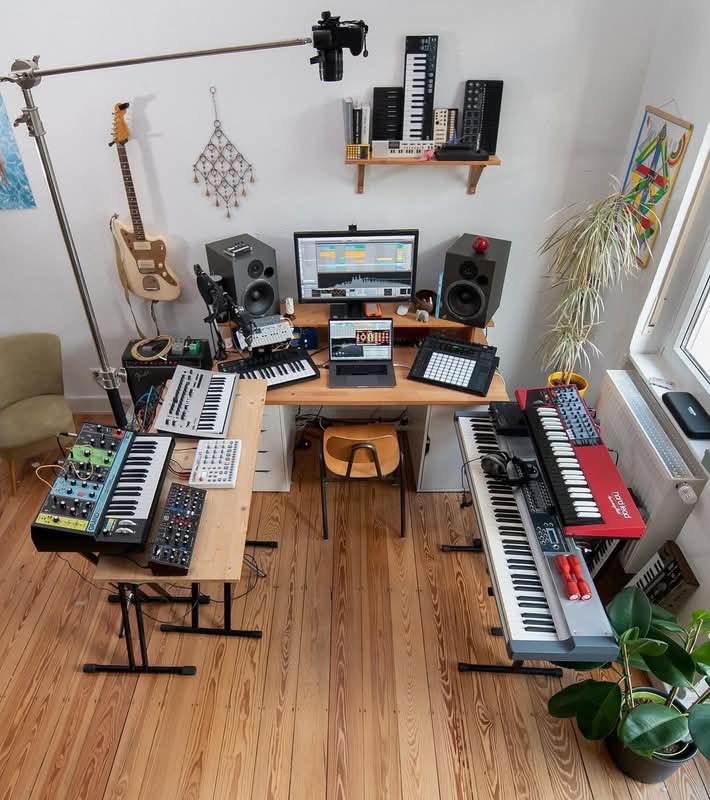
A nook doesn’t need much to earn its keep. This suits anyone working with a small footprint who’s decided that constraint isn’t the same as compromise.
Sometimes the smallest corner of a house ends up being the one you actually use.
Muted Tone Wabi-Sabi Home Studio
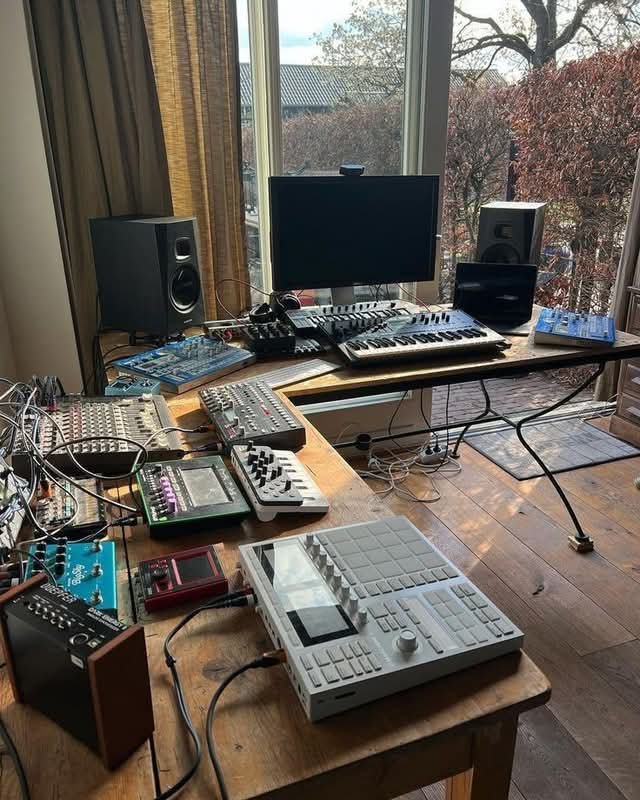
A muted palette tends to hold up longer than a bold one, both visually and in how the room feels to sit in every day.
This suits someone who wants the space to fade into the background so the work can take the foreground.
Wabi-Sabi Music Studio for Beginners
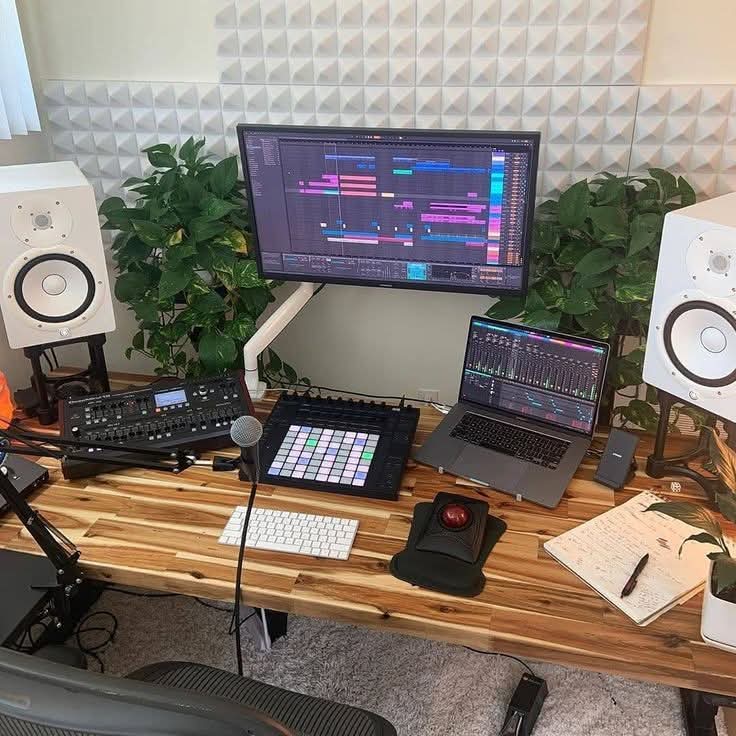
If you’re just starting out, there’s no reason to wait for a bigger budget or a better room.
A space built around what you already have, imperfections included, is still a real studio. This suits someone who wants to start recording this month, not next year.
👉 Read Next: Looking for more inspiration? Check out our guide on Dark and Moody Recording Studio Aesthetic Ideas.
Quiet Wabi-Sabi Recording Space Design
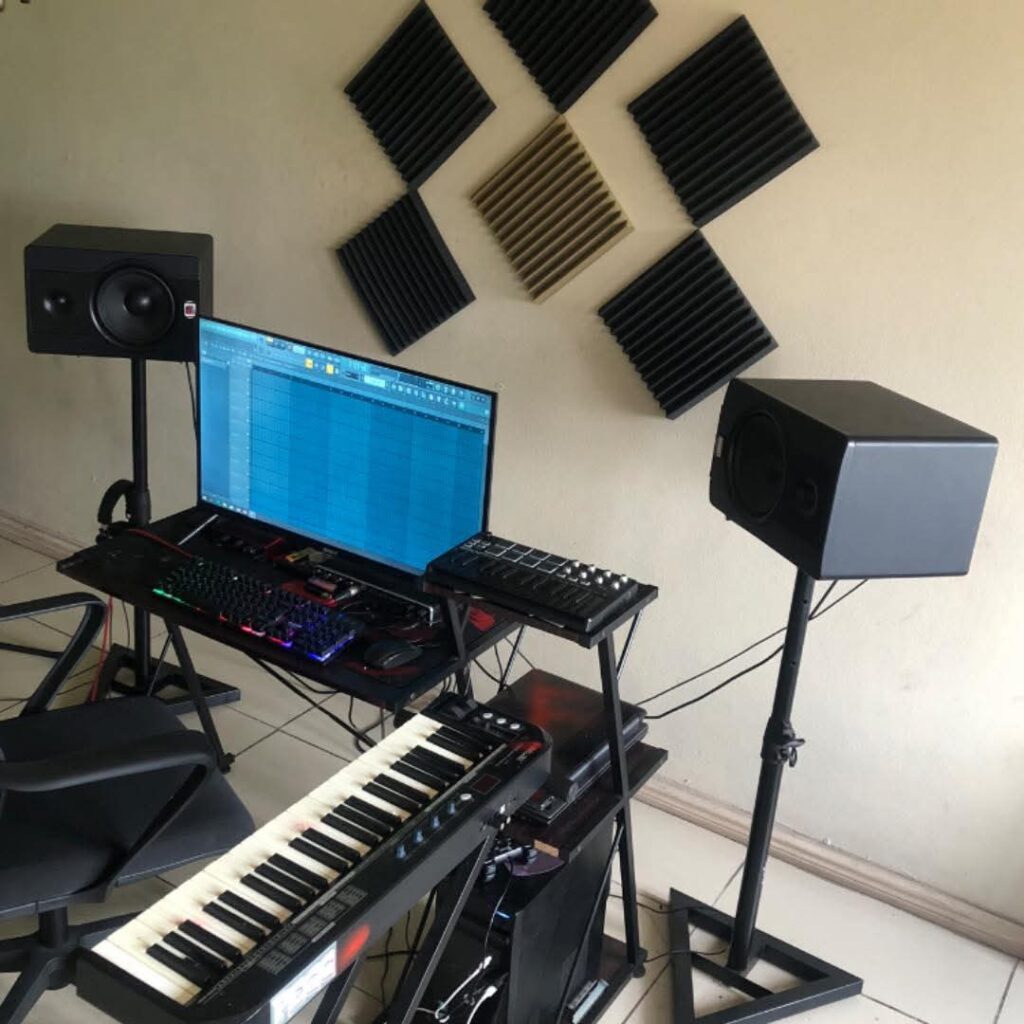
Design decisions here tend to be practical first and aesthetic second, which is part of why the look holds up.
This suits someone who values function but still wants the room to feel like theirs.
Wabi-Sabi Studio Layout for Musicians
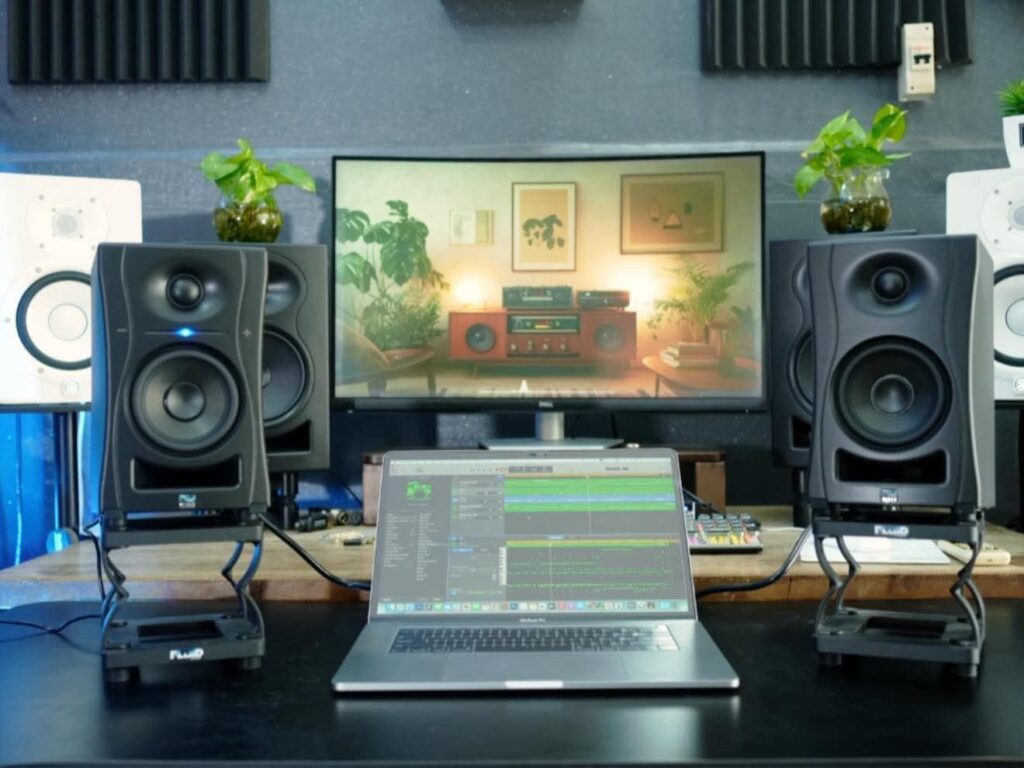
Musicians who spend more time playing than decorating tend to gravitate toward this look without trying.
It suits anyone whose studio has slowly become a reflection of years of use rather than a single afternoon of shopping.
The wear is part of the story, not something to hide.
Natural Texture Wabi-Sabi Recording Studio
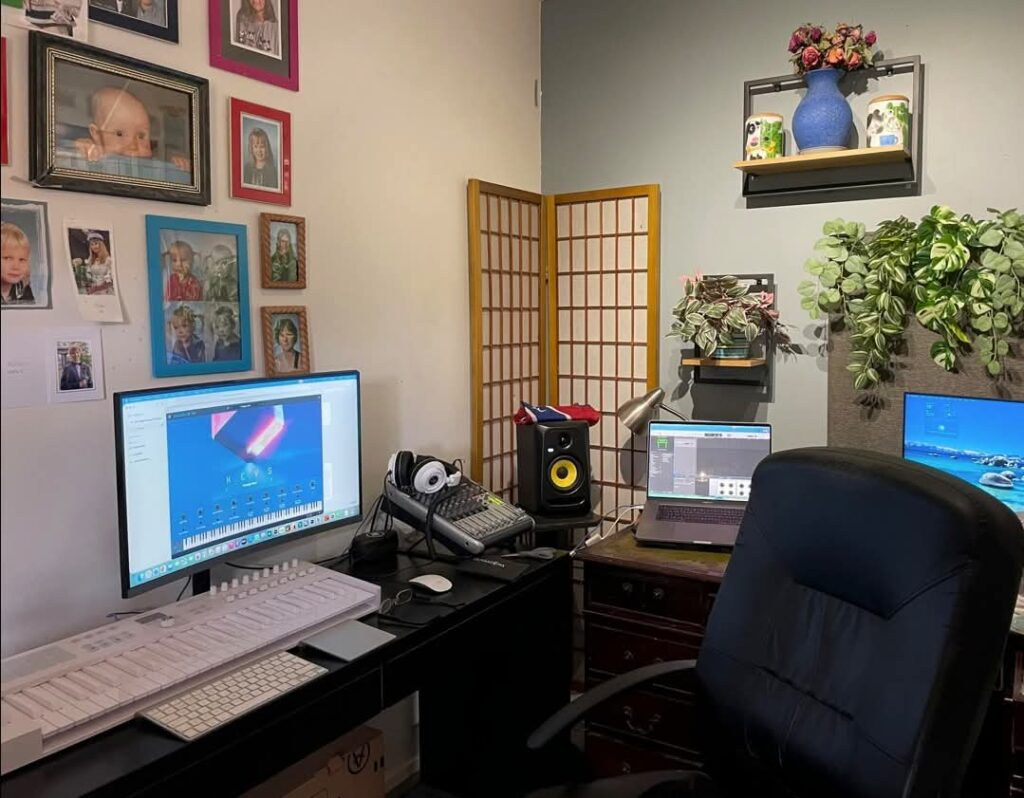
Texture does a lot of the work that color usually gets credit for. This suits someone who wants a room with depth to it, without relying on anything flashy to get there.
A textured room tends to feel calmer than a flat, uniform one.
Wabi-Sabi Home Recording Studio for Small Rooms
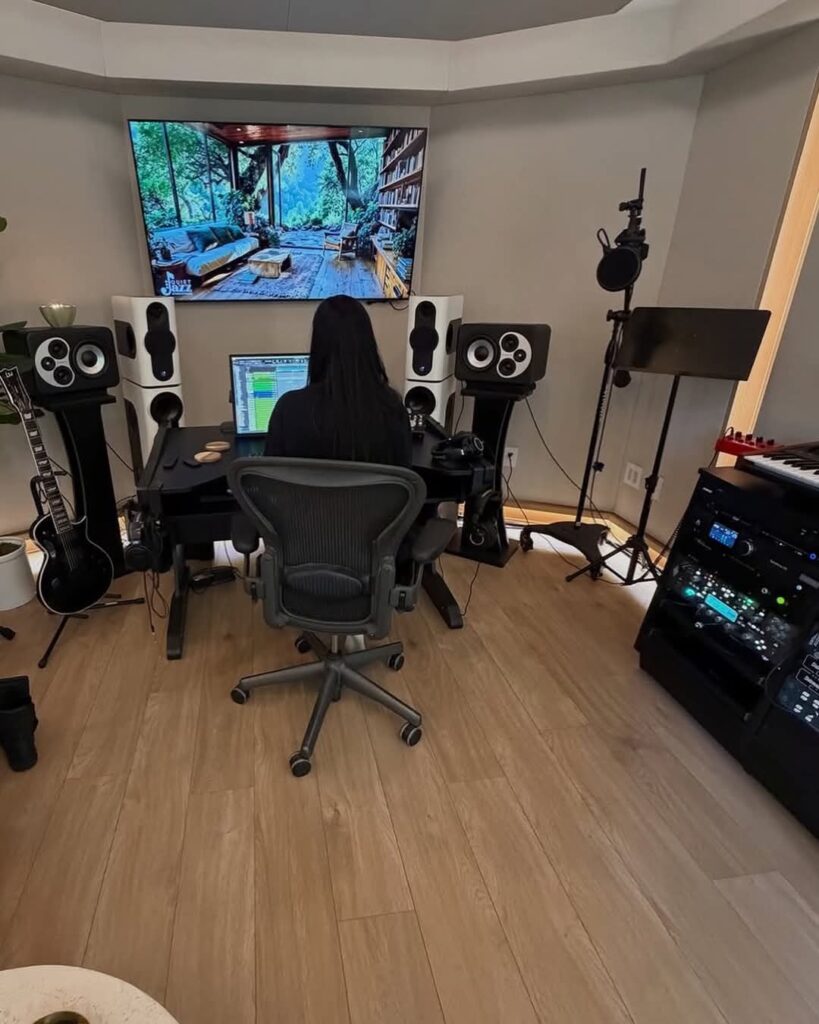
Small rooms don’t need to apologize for being small. This suits someone working with a spare bedroom, a converted closet, or a corner that was never meant to be a studio in the first place.
Wabi-sabi doesn’t ask for square footage, it asks for honesty about what you’re working with.
Handmade Wabi-Sabi Music Studio Corner
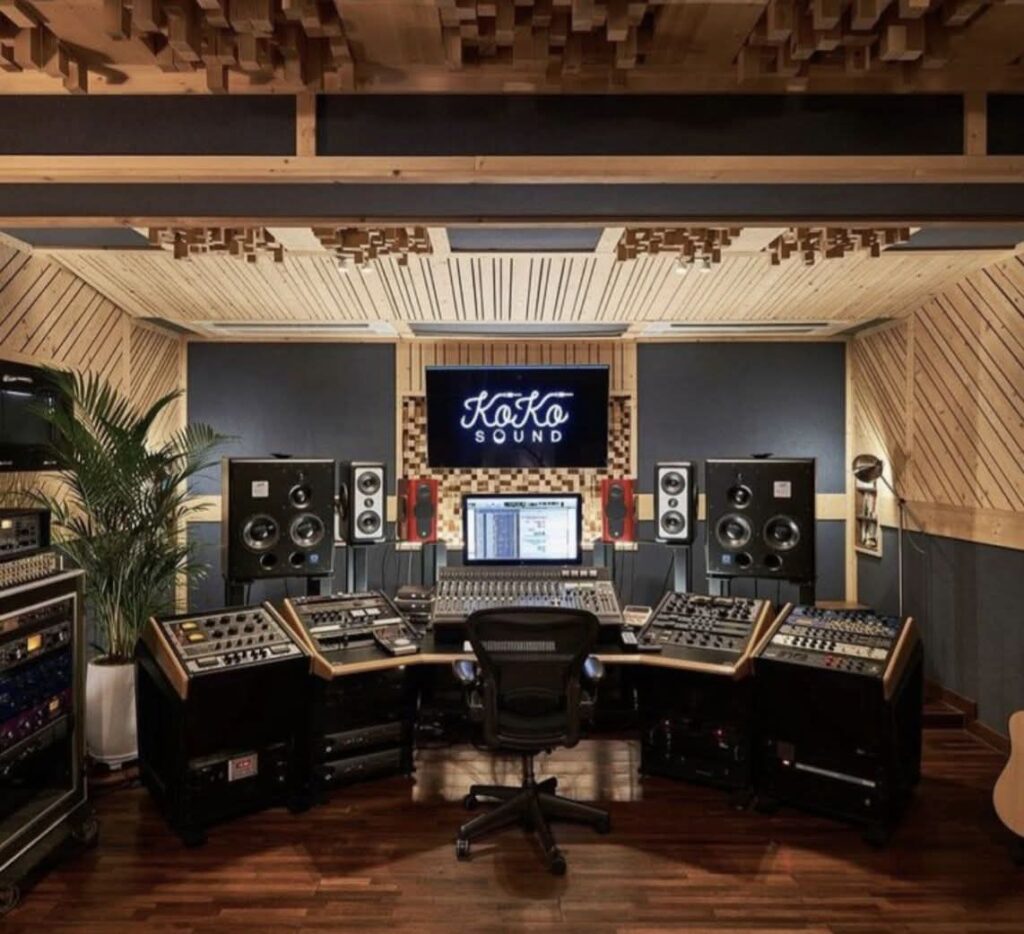
A handmade touch, even a small one, tends to make a space feel less like a showroom and more like somewhere you actually live.
This suits someone who’s built parts of their setup themselves rather than buying it all off a shelf.
👉 Read Next: You might also like our breakdown of Home Studio Bedroom Setups.
Wabi-Sabi Recording Space for Songwriters
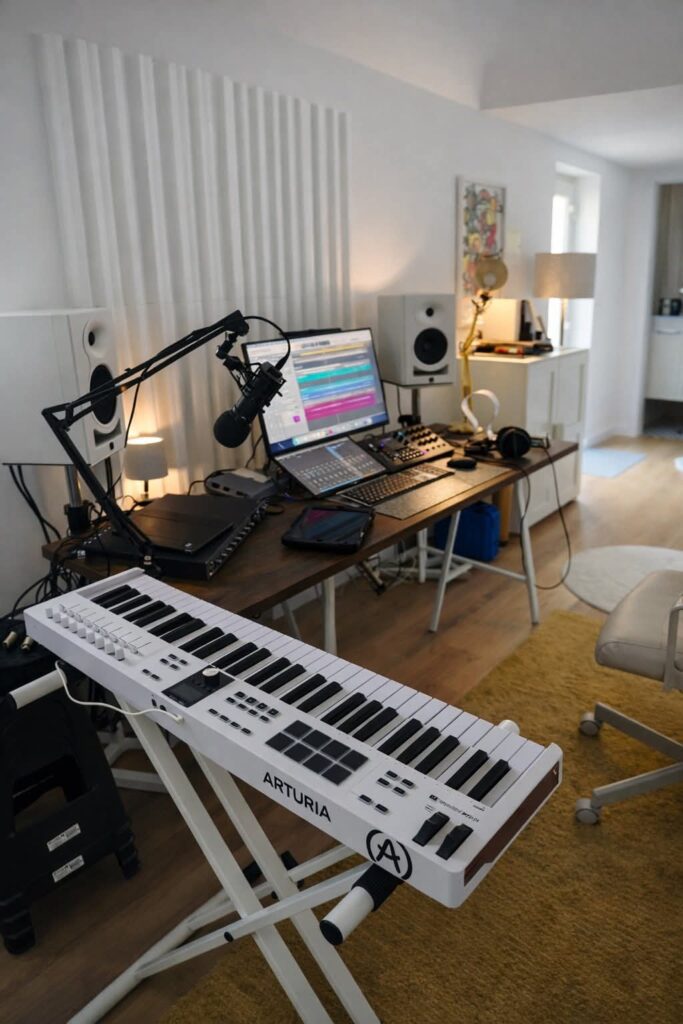
Songwriting doesn’t need much beyond quiet and a place to sit still. This suits someone whose process is mostly internal, where the room needs to support thinking more than performing.
A cluttered space can crowd out the kind of attention that writing actually needs.
Aged and Textured Wabi-Sabi Studio Setup
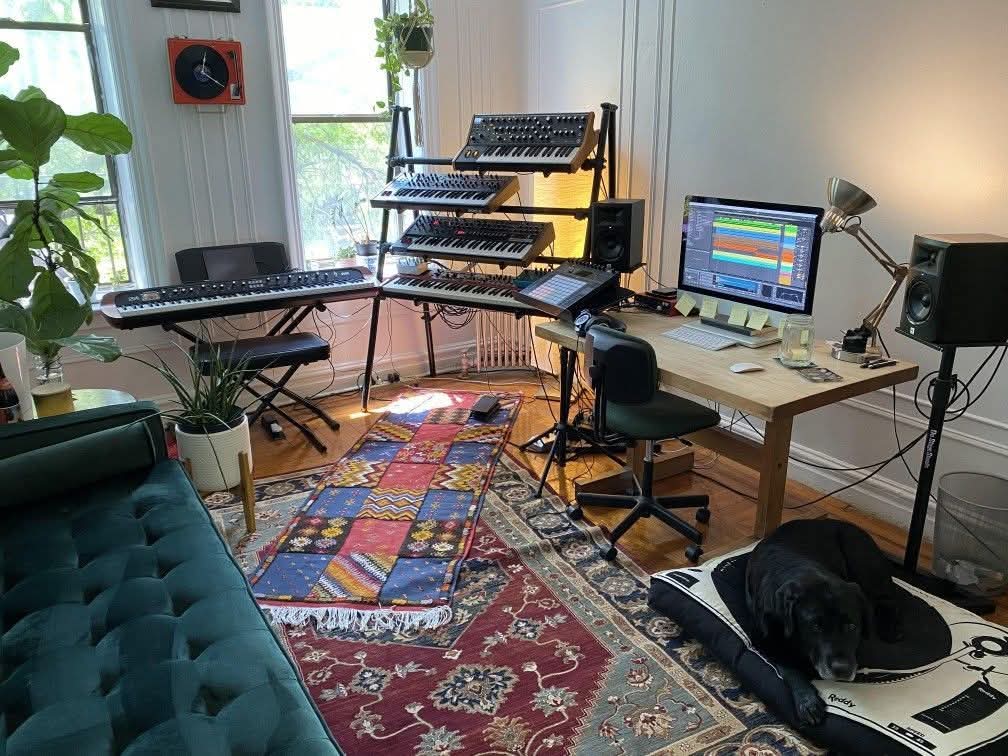
Age isn’t something to hide behind fresh paint every time it shows up. This suits someone whose gear and furniture have earned a few years of visible use and would rather lean into that than replace it all.
Wabi-Sabi Music Production Space for Producers
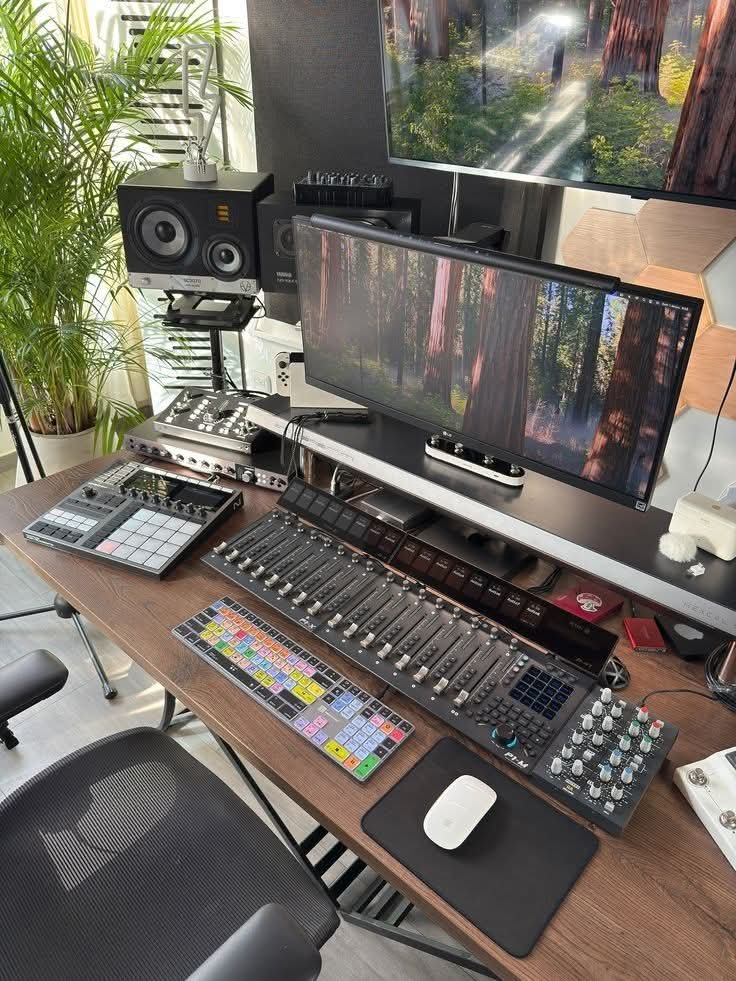
Producers who work alone for long stretches often end up preferring rooms with less visual clutter.
This suits someone whose focus tends to break easily and who’s noticed that a busier room means a busier head.
Quiet spaces produce quiet, useful hours.
Softened Minimalist Wabi-Sabi Home Studio
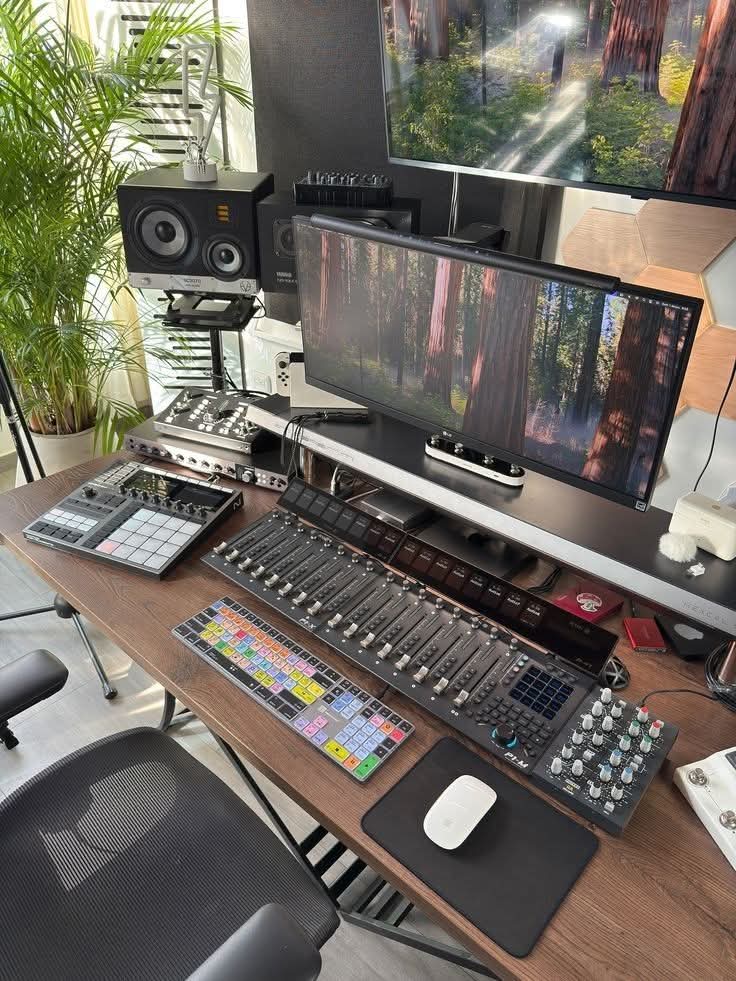
Softened minimalism keeps the calm of a stripped-back room without the coldness that sometimes comes with it.
This suits someone who wants simplicity but still wants the space to feel inviting rather than clinical.
Wabi-Sabi Recording Studio for Apartment Living
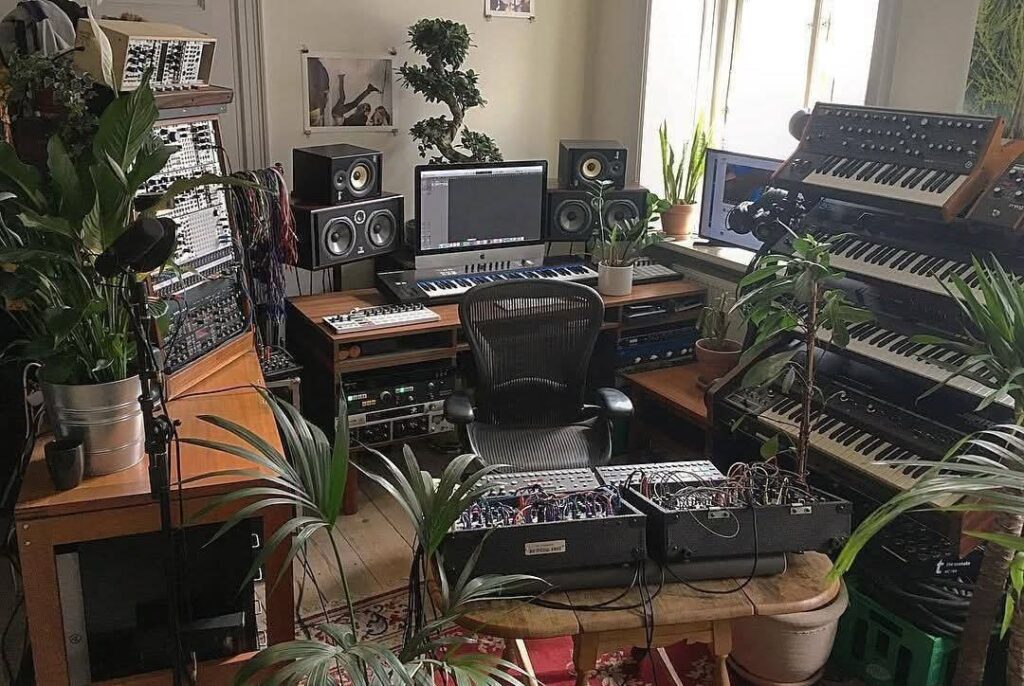
Apartments come with limits most studio guides ignore. This suits someone dealing with shared walls, limited space, and a landlord who won’t allow permanent changes.
A wabi-sabi approach works with those limits instead of pretending they don’t exist.
Unpolished Wabi-Sabi Music Studio Design
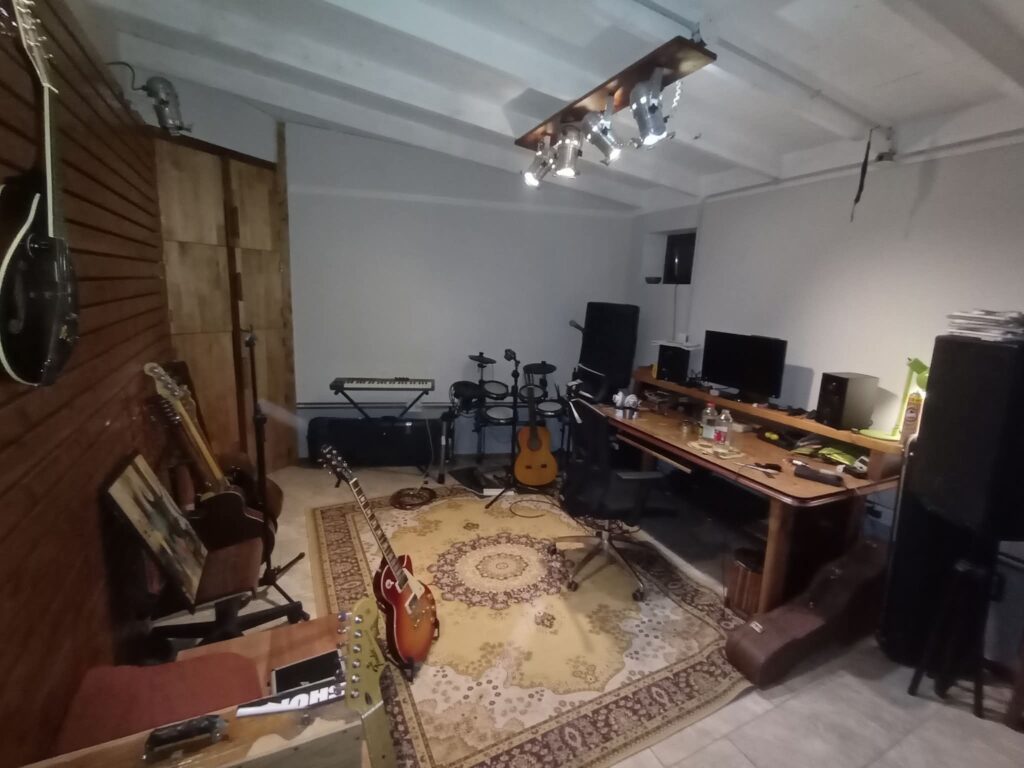
An unpolished room can still be a deliberate one. This suits someone who’s tired of studio setups that look impressive online but feel exhausting to actually sit in every day.
A room built around fewer, better decisions usually wins out over one built around more of everything.
Wabi-Sabi Studio Corner for Solo Artists
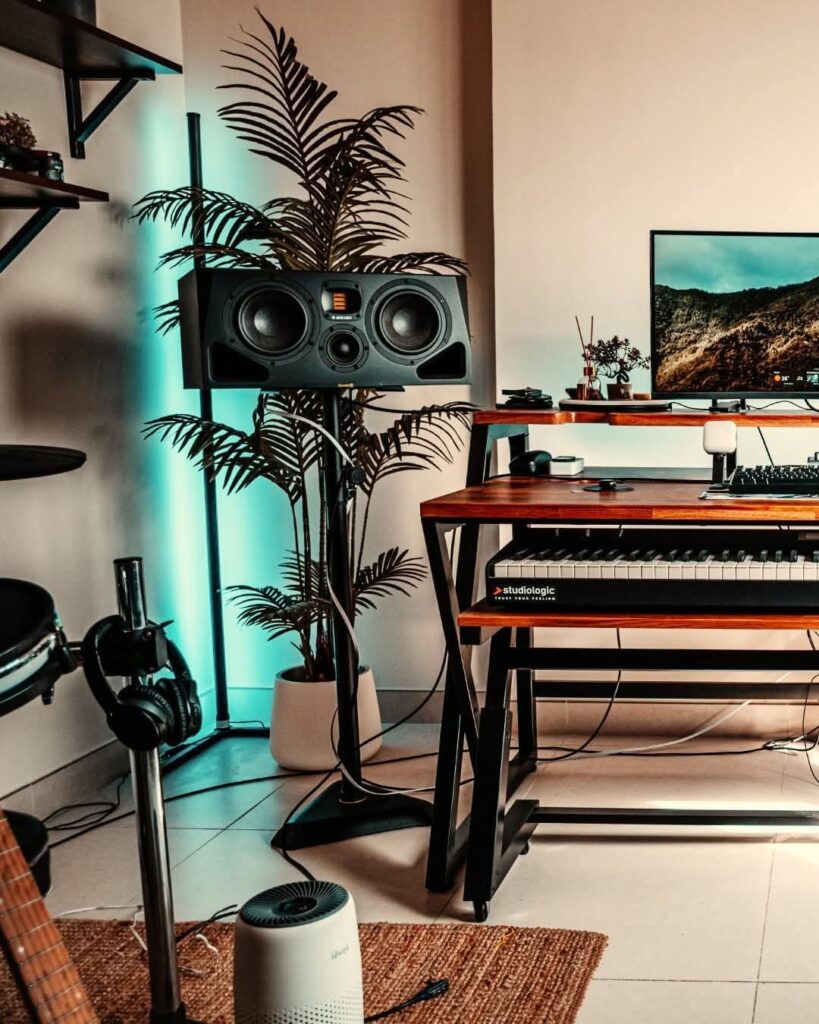
Working alone changes what a studio needs to be. This suits someone who doesn’t need a room built for collaboration, just one built for focus.
There’s less to negotiate when the only person using the space is you.
Humble Wabi-Sabi Recording Space Ideas
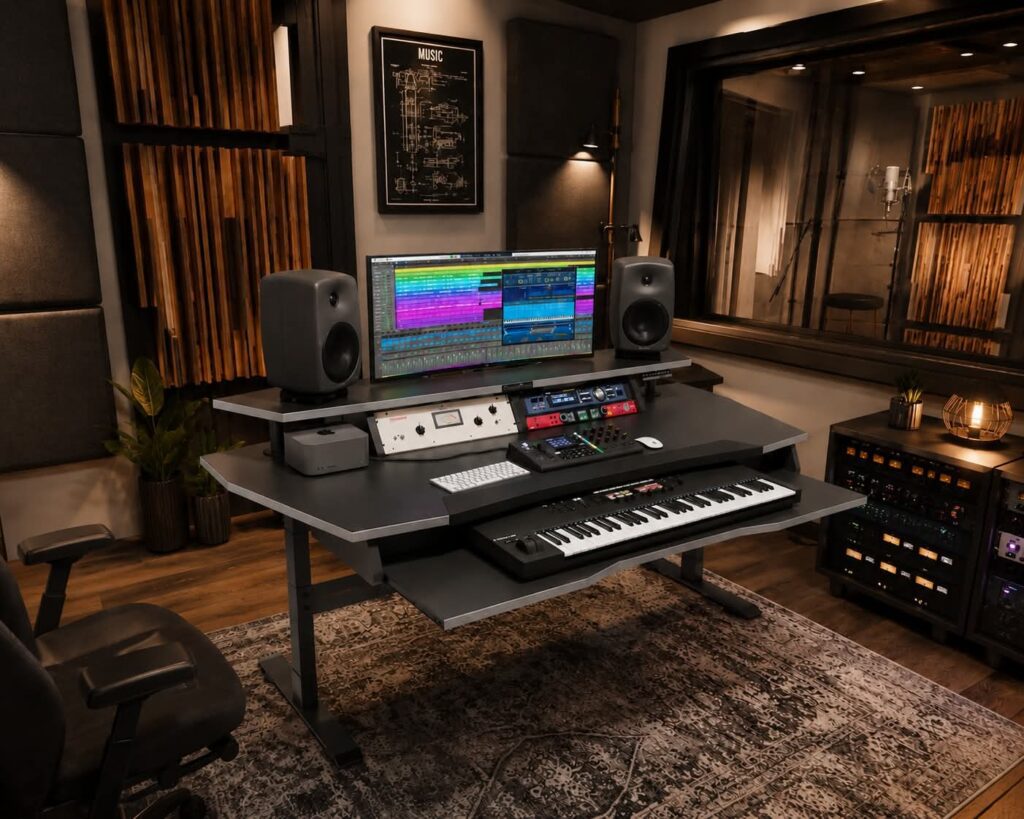
Humble rooms tend to age better than ambitious ones because there’s less to maintain and less to feel disappointed by.
This suits someone who’d rather build slowly and keep the space honest about what it actually is.
Wabi-Sabi Home Studio Nook for Small Spaces
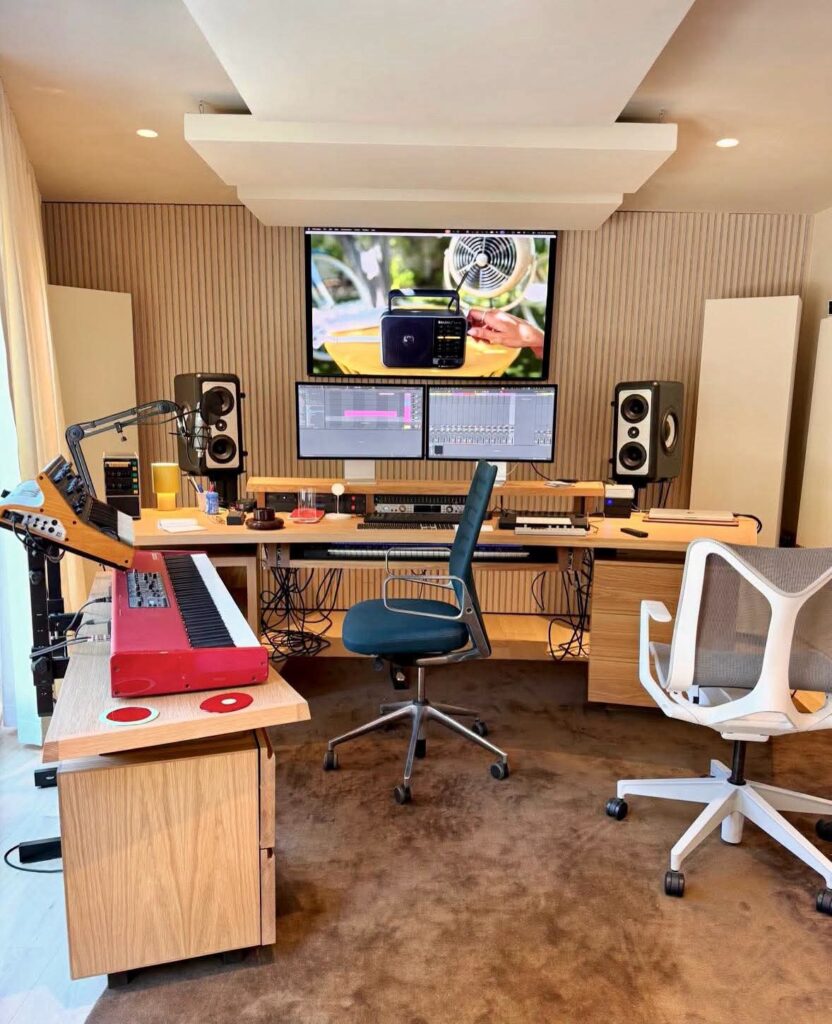
A nook works because it doesn’t try to be more than it is.
This suits someone squeezing a studio into a hallway end, a landing, or the edge of another room entirely. Small doesn’t mean unfinished.
Organic Wabi-Sabi Music Production Studio
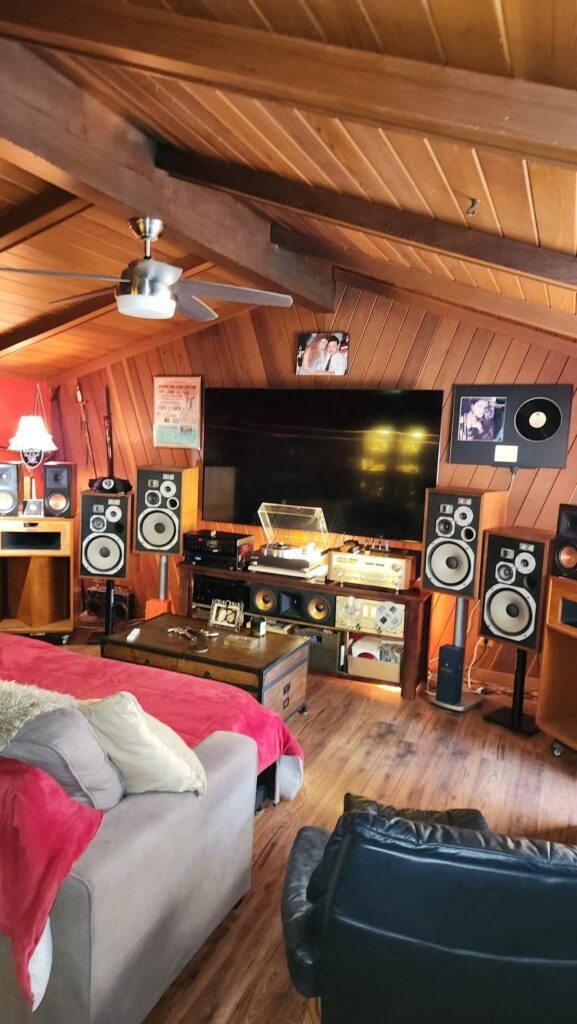
An organic feel usually comes from restraint rather than decoration. This suits someone who’s tired of studio setups that look impressive online but feel exhausting to actually sit in every day.
Wabi-Sabi Recording Studio for Podcasters
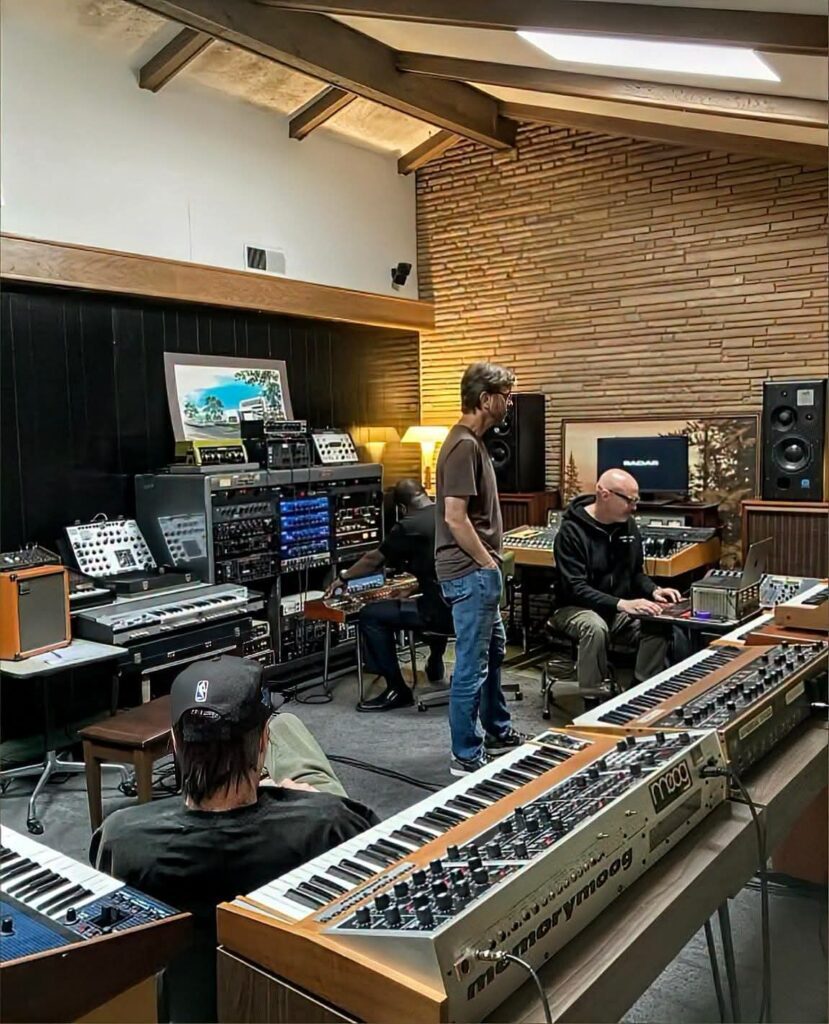
Podcasters spend hours in their space, often more than musicians do in a single sitting.
This suits someone who wants a room that feels comfortable across long recording sessions, not just visually interesting for a few minutes.
Comfort compounds over time in a way looks alone can’t.
Subtle Wabi-Sabi Home Recording Studio
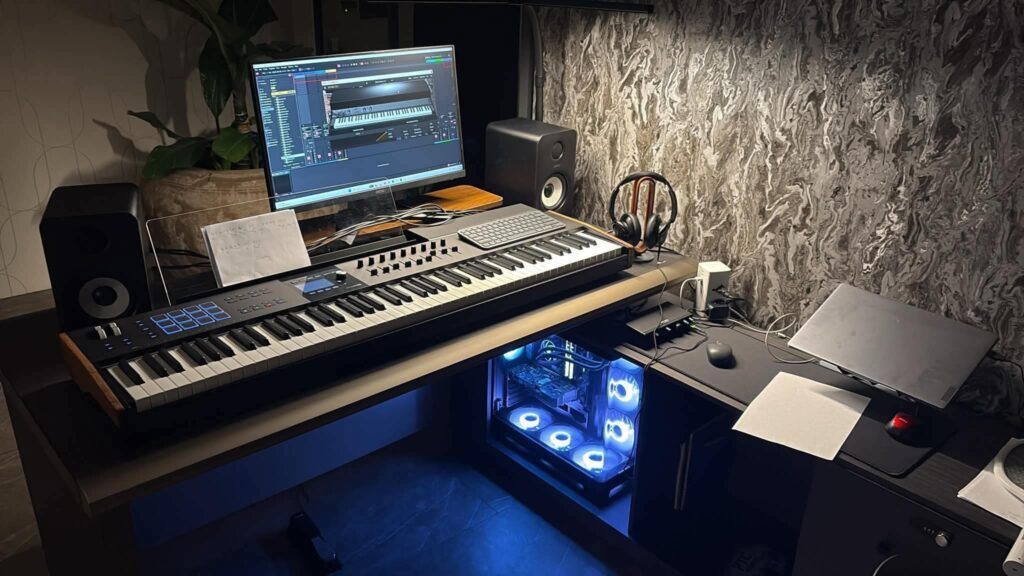
Subtlety holds up longer than statement decor, especially in a room you’re in every day.
This suits someone who’s accepted that their space will never look like a professional facility and has decided that’s fine.
Wabi-Sabi Studio Layout for Vocalists
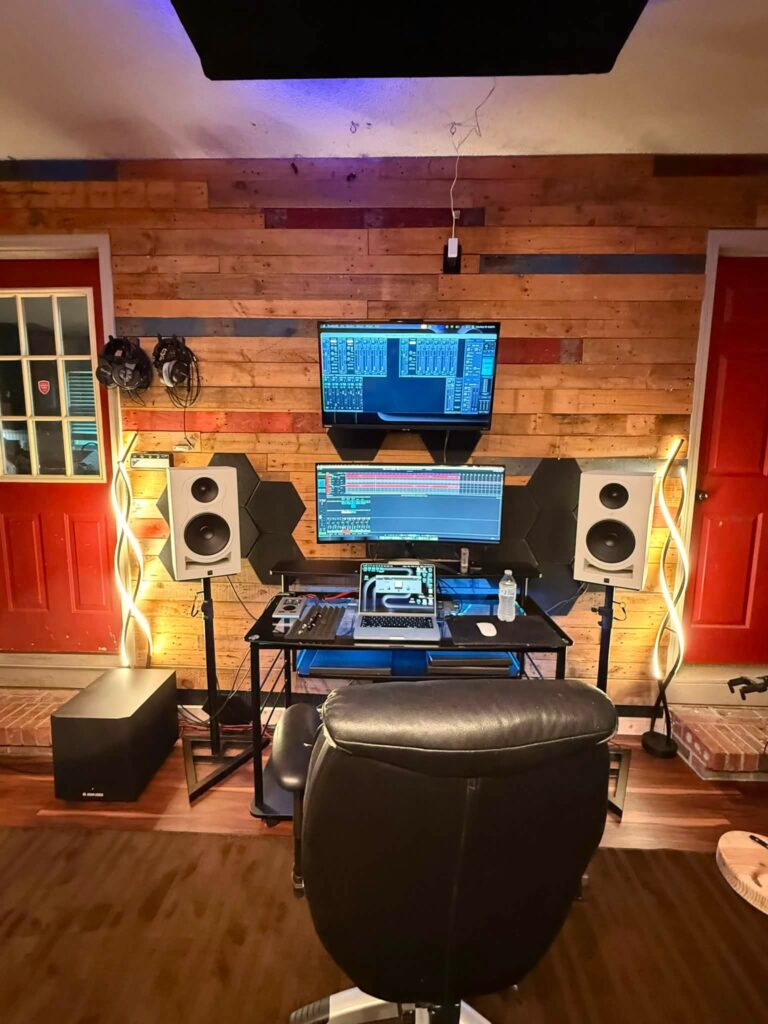
Vocalists often need less physical space than instrumentalists but more attention to how a room feels to stand in for long periods.
This suits someone recording vocals regularly who wants the space to feel calm rather than clinical. A room that feels tense tends to show up in the performance.
Understated Wabi-Sabi Recording Studio Concepts
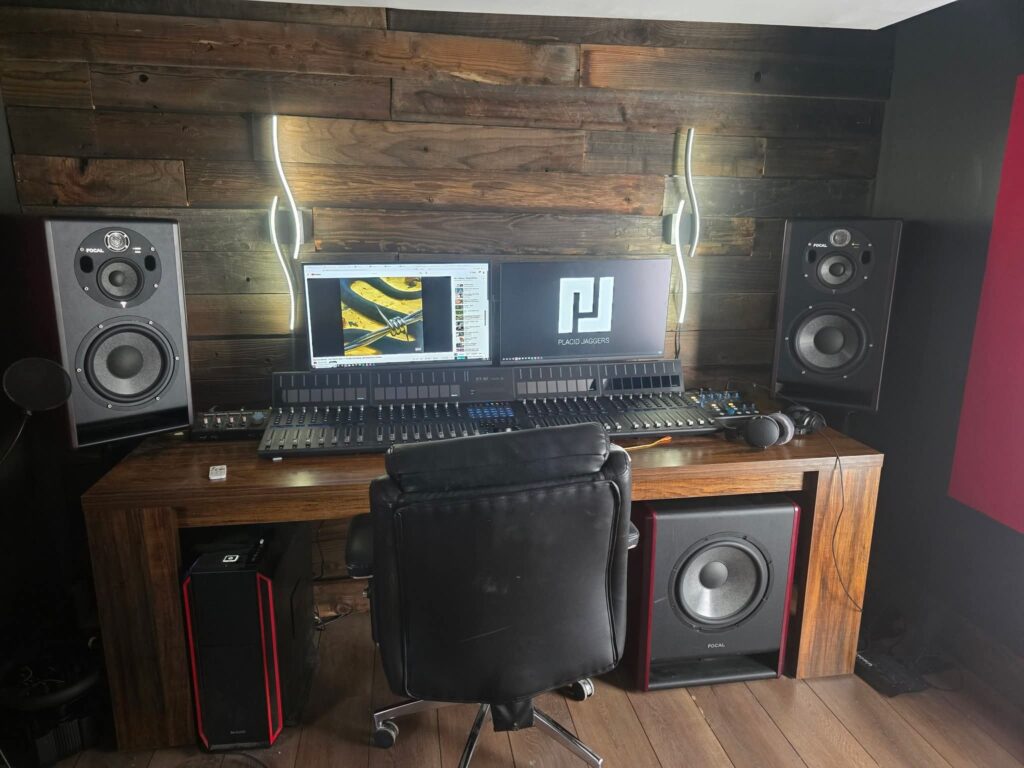
An understated room lets the work stand out instead of competing with it.
This suits someone who’d rather work with the bones of a space than fight against them.
Wabi-Sabi Music Studio for Home Producers
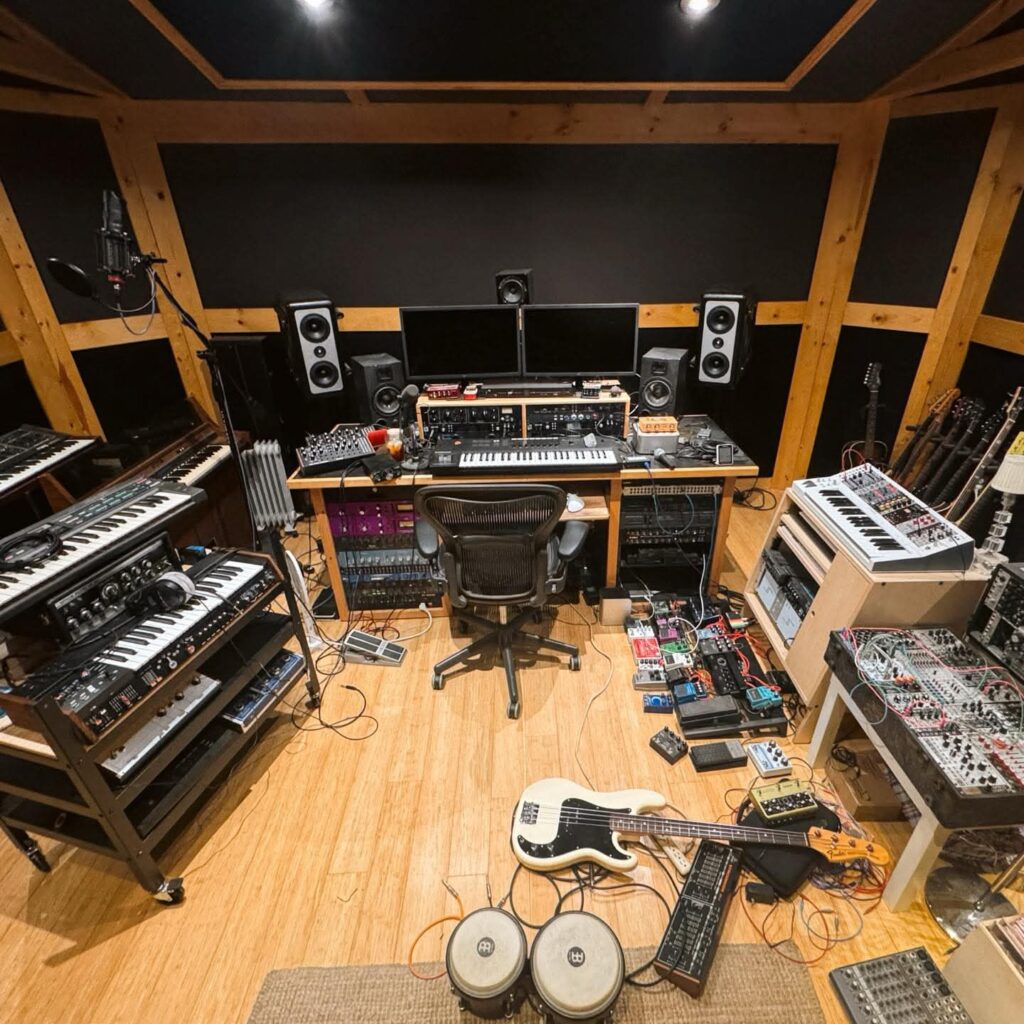
Producers working from home deal with a different set of constraints than those working in commercial studios, mainly time, space, and budget.
This suits someone balancing all three who needs a setup that’s realistic rather than aspirational.
A studio you can actually maintain beats one you can only photograph once.
Lived-In Wabi-Sabi Recording Space Setup
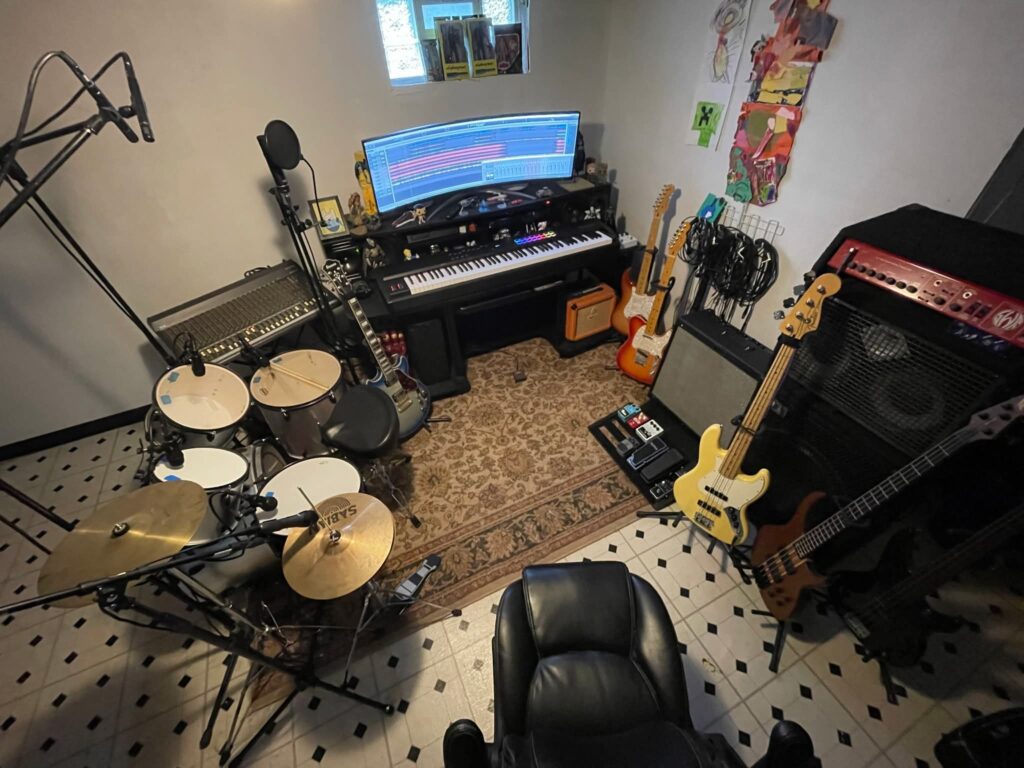
A lived-in room tells you it’s used often just by looking at it. This suits someone who’s tired of rearranging a room to match a photo instead of arranging it around how they actually work.
Wabi-Sabi Home Studio for Mindful Creators
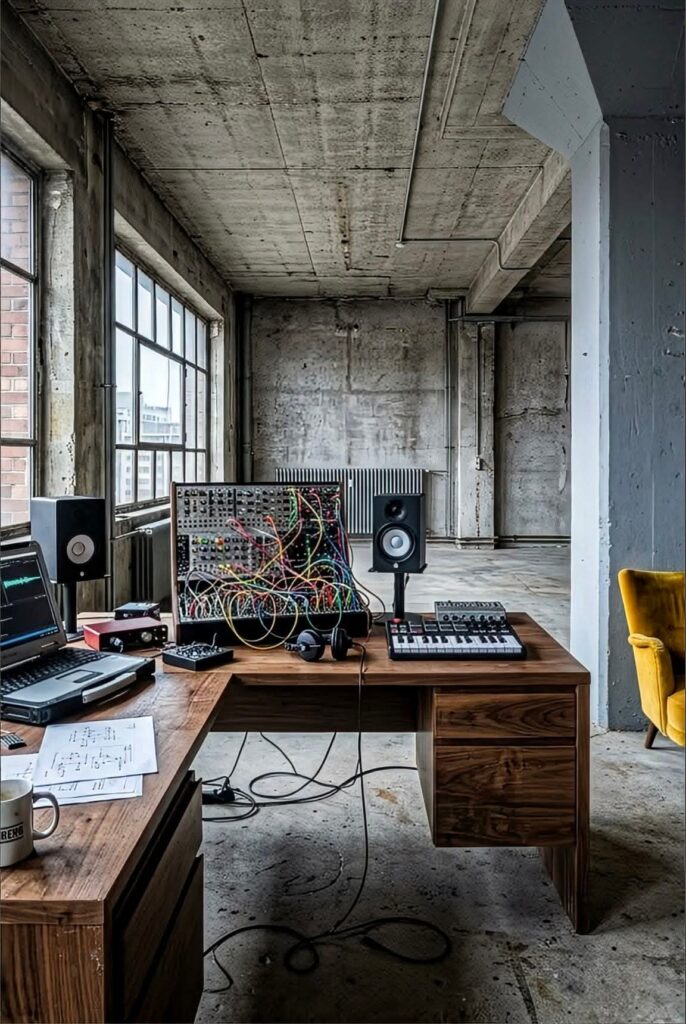
Some people approach music as a mindful practice rather than a technical pursuit. This suits someone who wants their space to support that mindset, calm, unhurried, without much demanding their attention.
A room that asks less of you visually can leave more of you for the work itself.
Timeworn Wabi-Sabi Studio Corner
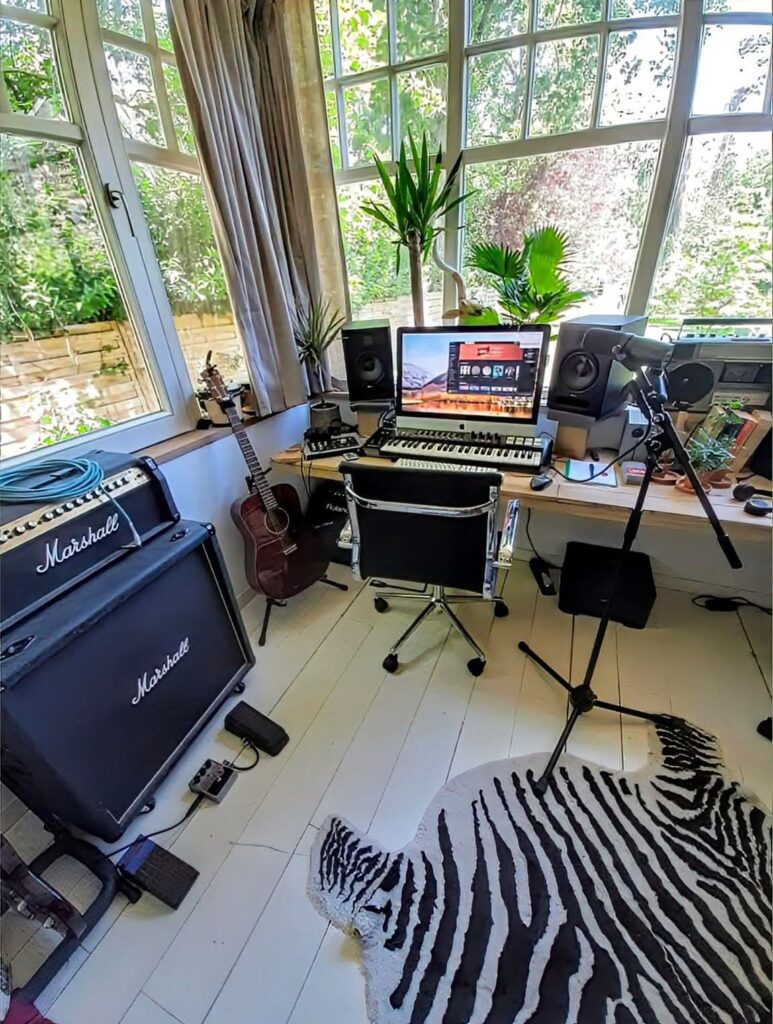
A timeworn corner carries more warmth than a brand new one usually can. This suits someone whose best ideas tend to come slowly, not under pressure. The corner becomes less a workstation and more a place to return to.
Wabi-Sabi Recording Studio for Bedroom Setups
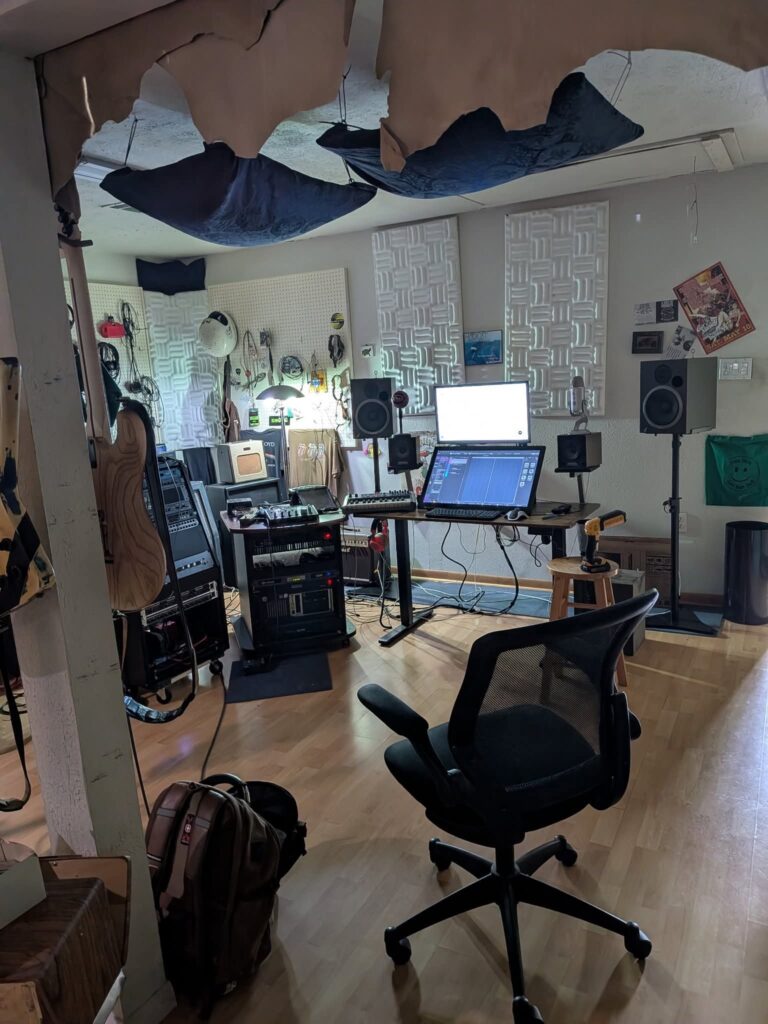
Bedroom studios come with real limitations, and pretending otherwise usually leads to frustration.
This suits someone recording in the same room they sleep in and needs the setup to fold into daily life rather than dominate it. A studio that disappears when you’re not using it tends to get used more, not less.
Raw and Honest Wabi-Sabi Music Studio Design
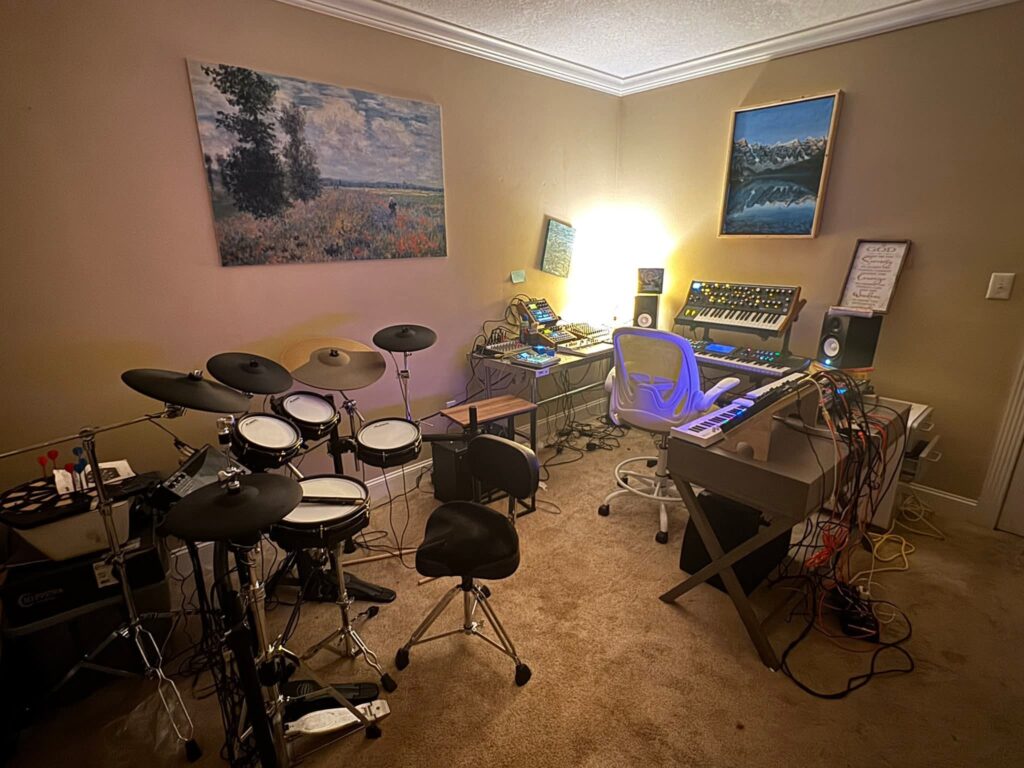
Raw doesn’t mean unfinished, it means nothing’s been dressed up to look like something it isn’t.
This suits someone building a studio slowly over months rather than furnishing it all in one weekend.
Wabi-Sabi Home Studio for Multi-Instrumentalists
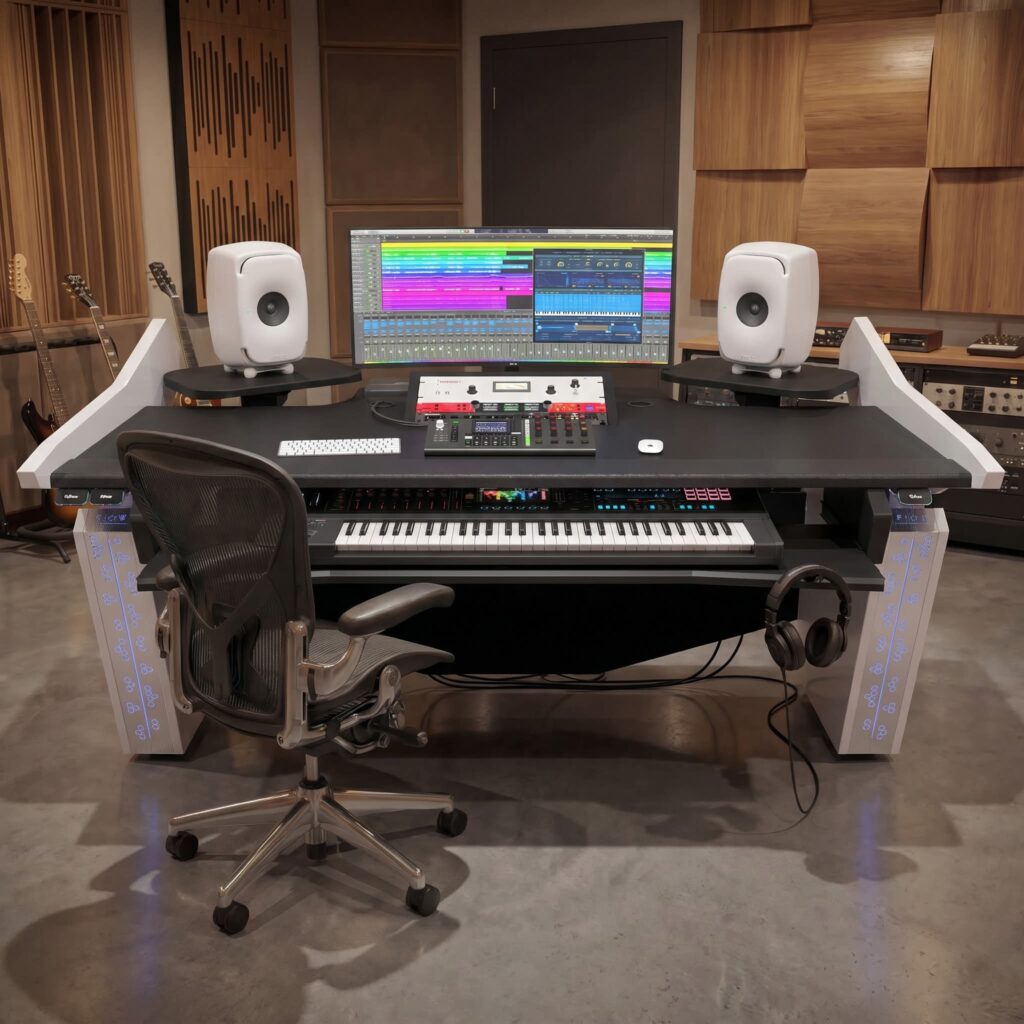
Playing several instruments changes what a studio needs to hold and how it needs to flow.
This suits someone whose space has to adapt throughout a single session rather than stay fixed around one setup. A room with some looseness built in tends to handle that kind of shifting better.
Gentle Wabi-Sabi Recording Studio Setup
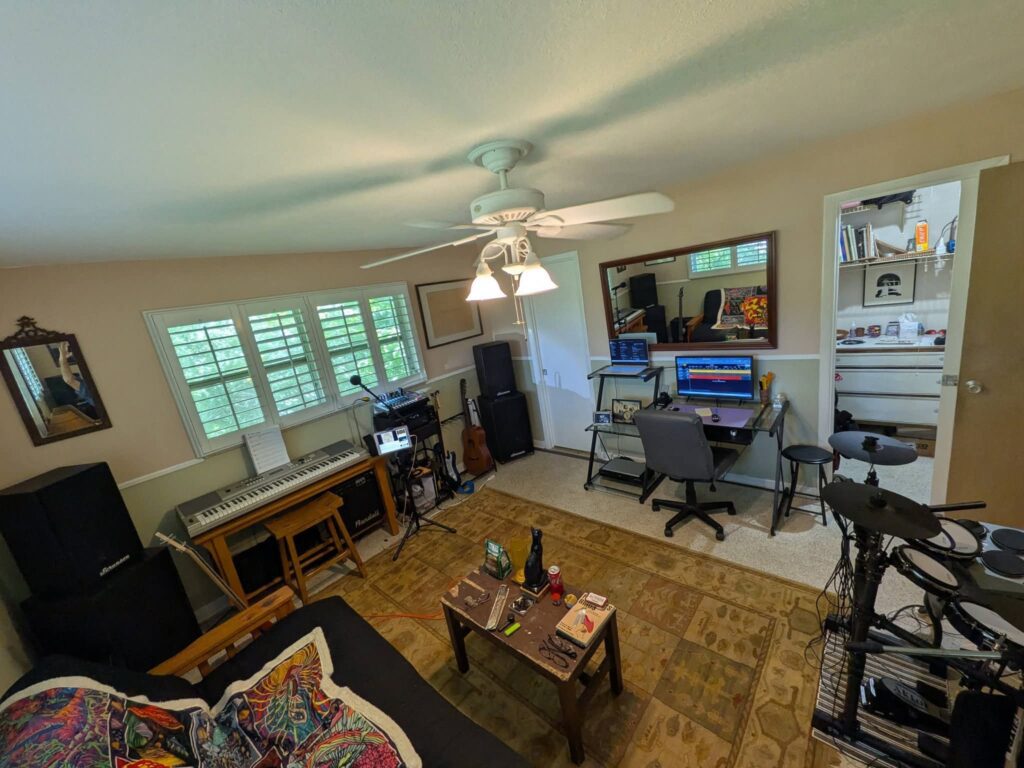
A gentle room doesn’t demand much of you the moment you walk in. This suits someone working from a limited budget who doesn’t want the room to look unfinished because of it.
Resourcefulness reads as intentional far more often than people expect.
Wabi-Sabi Studio Concepts for Minimal Gear
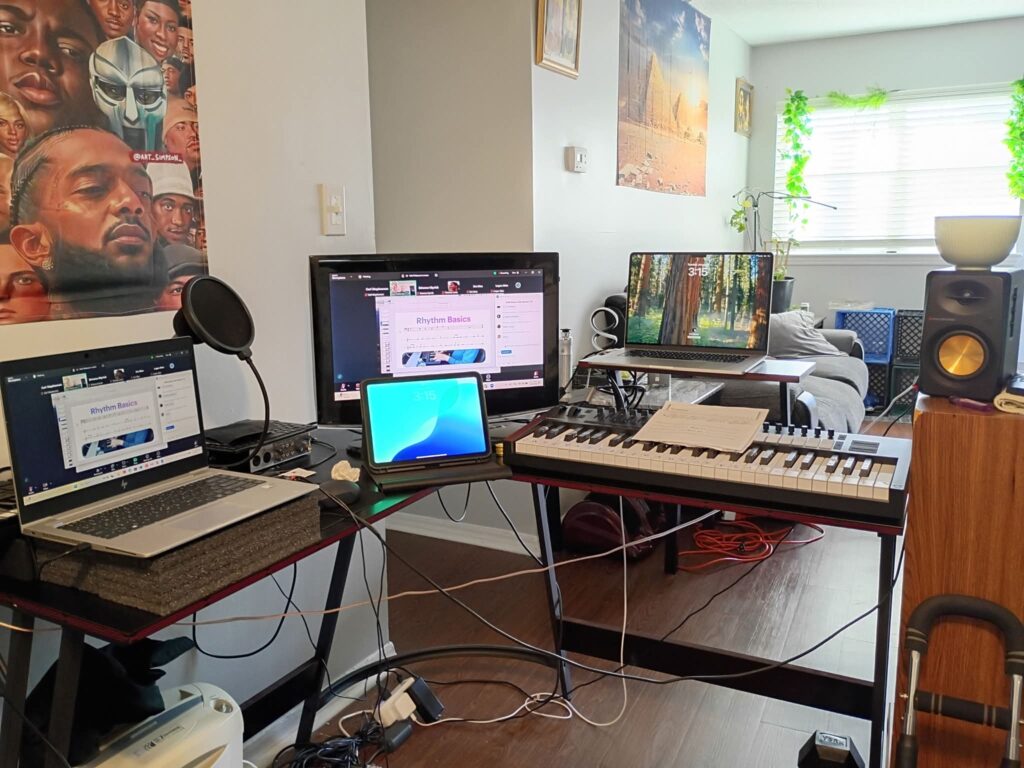
Owning less gear isn’t a limitation if the room is built around that reality instead of hiding it.
This suits someone who’s downsized their setup on purpose and wants the space to reflect that choice rather than look like something’s missing.
Calm and Quiet Wabi-Sabi Production Room
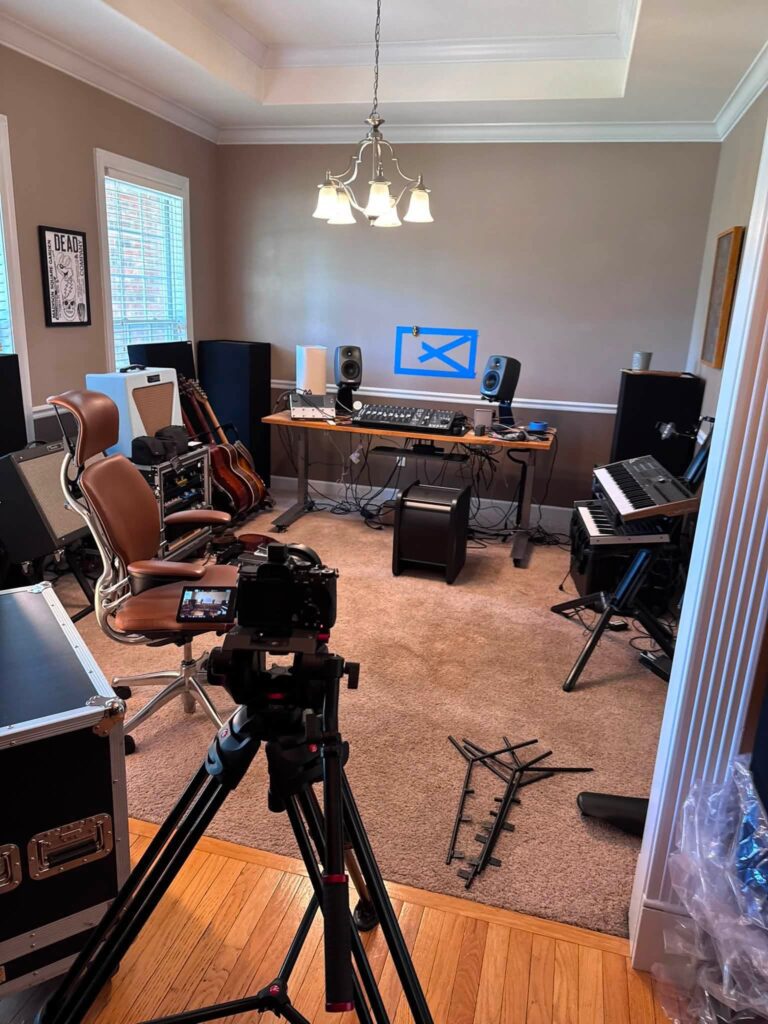
A production room needs to support long, sometimes repetitive hours of work.
This suits someone who spends more time mixing and editing than performing, and who needs the space to stay comfortable through all of it.
A room that feels good at hour four matters more than one that photographs well at minute one.
Wabi-Sabi Recording Studio for Introverted Artists
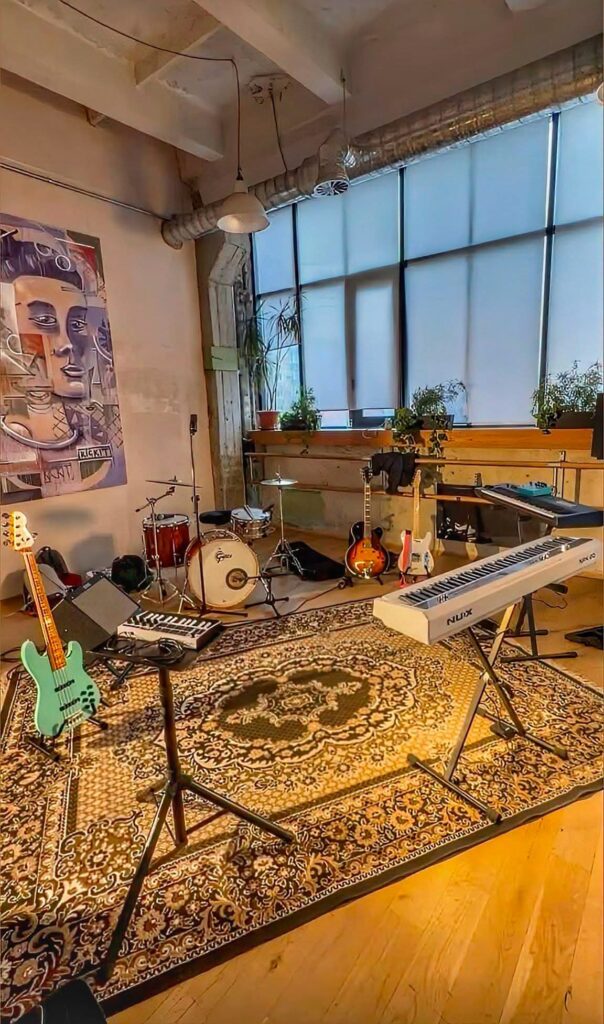
Some artists work best with as little external stimulation as possible. This suits someone who finds busy, decorated spaces draining rather than inspiring.
A quieter room can make it easier to hear your own instincts instead of everything else competing for attention.
Warm Neutral Wabi-Sabi Home Studio Layout
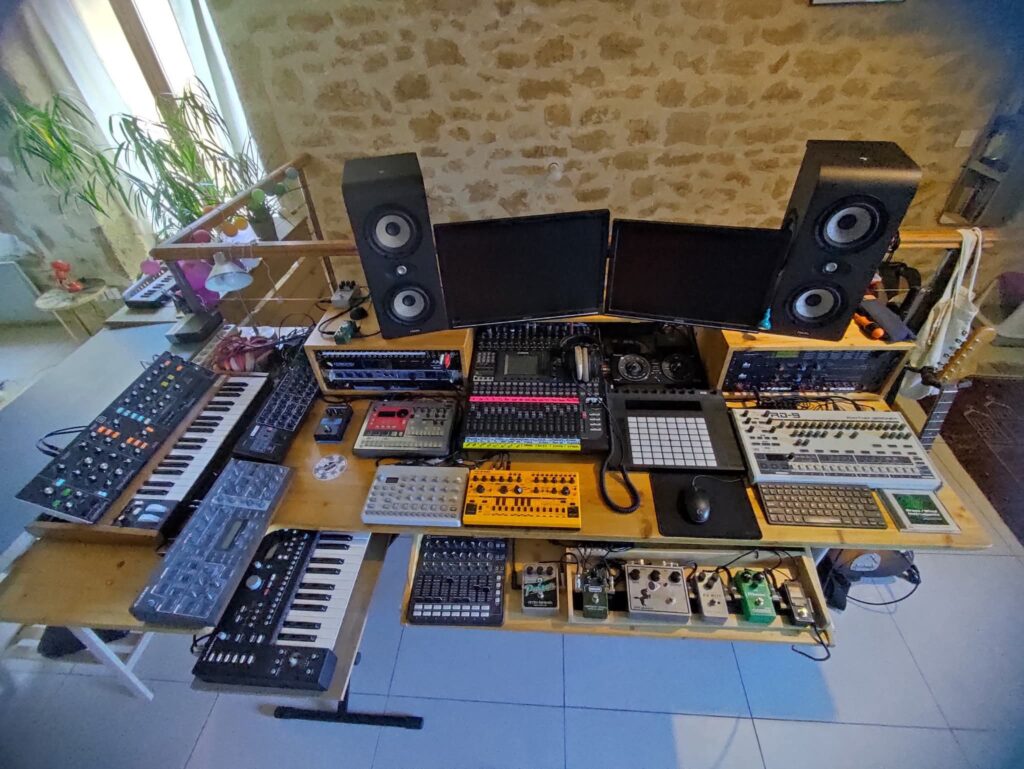
Warm neutrals tend to feel more welcoming than stark white or cold gray, without losing the calm of a simple palette.
This suits someone dealing with an awkward space and would rather design around it than against it.
Wabi-Sabi Music Studio for Loft Spaces
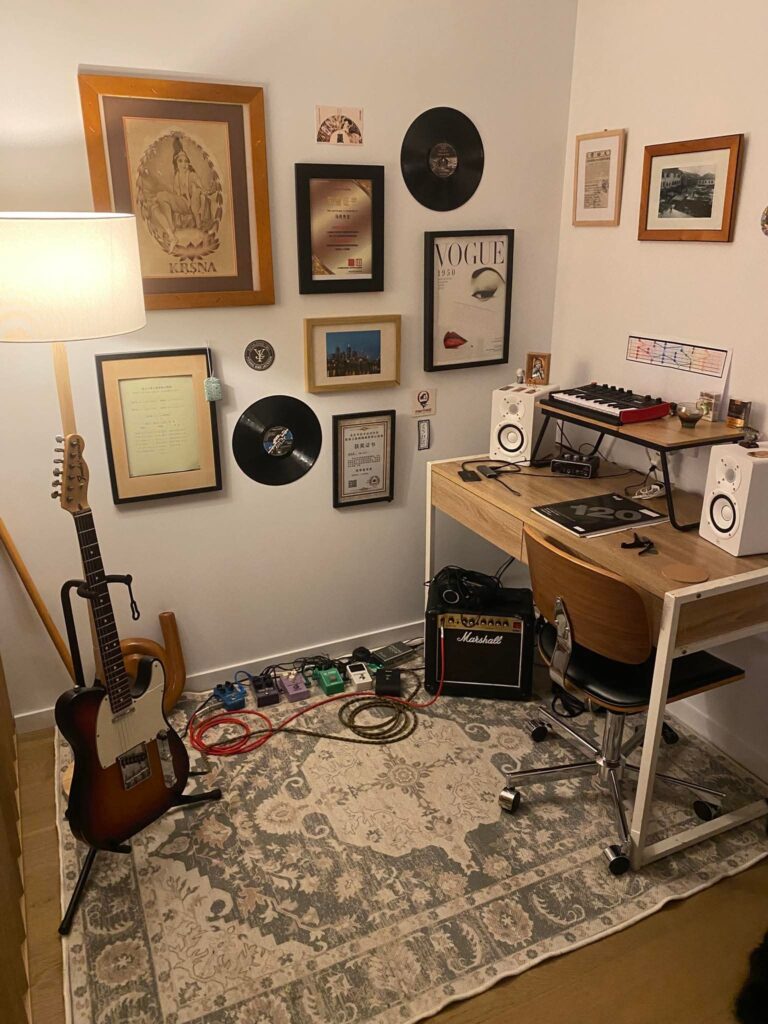
Loft spaces bring their own set of challenges, exposed structure, open sightlines, sound that travels further than expected.
This suits someone working in that kind of open layout who needs the studio to feel grounded despite the space around it being anything but contained.
Simple Wabi-Sabi Recording Studio Corner Setup
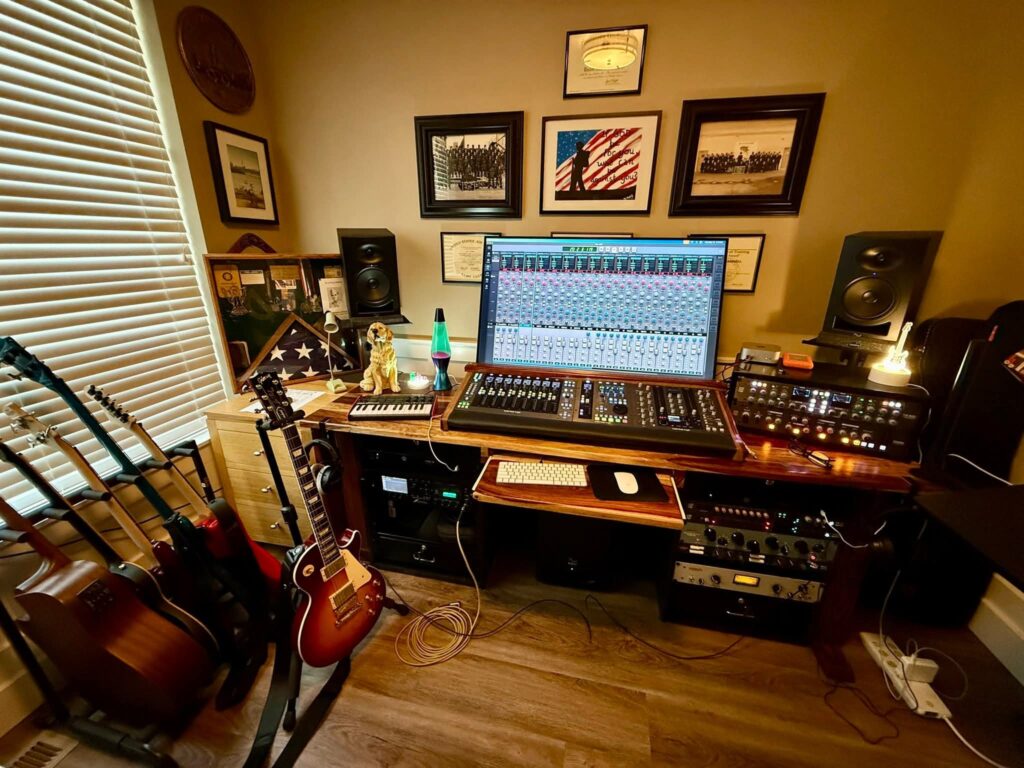
A simple corner setup asks for less commitment than a full room conversion, which makes it a reasonable starting point for a lot of people.
This suits someone who isn’t ready to dedicate an entire room yet and wants to test whether the habit sticks first.
Wabi-Sabi Studio Design for Natural Light
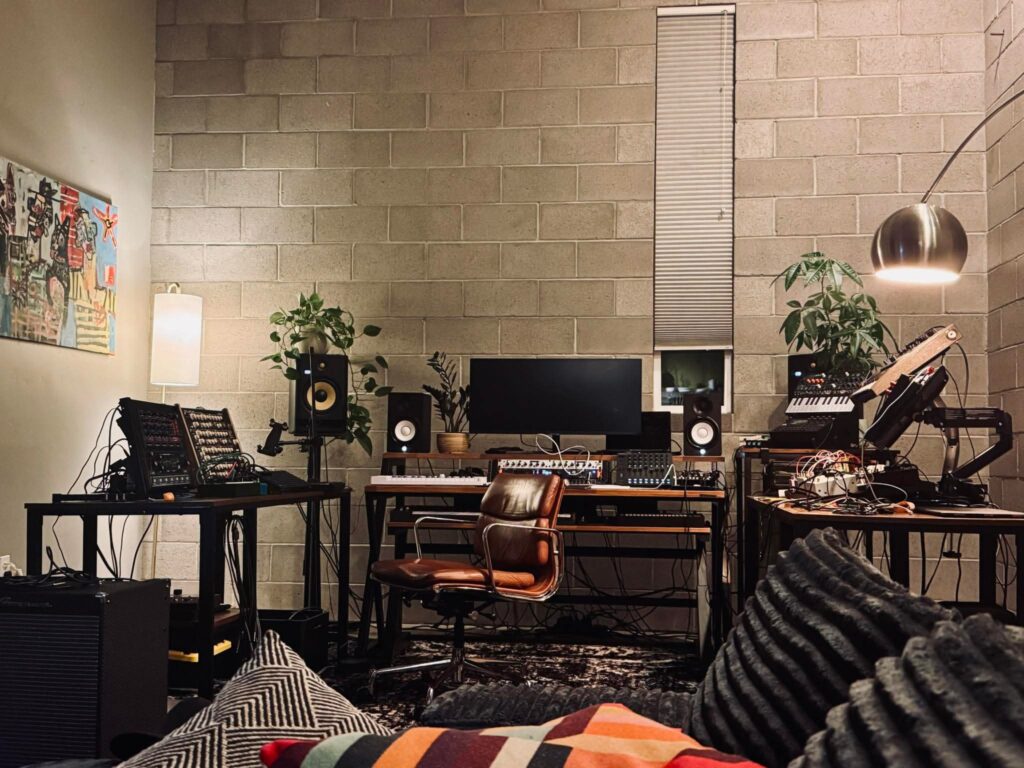
Natural light changes how a room feels to work in more than most gear changes ever will.
This suits someone whose space gets decent daylight and wants to build around that instead of blocking it out entirely. A room that shifts with the time of day tends to feel less static overall.
Mindful Wabi-Sabi Home Music Studio Retreat
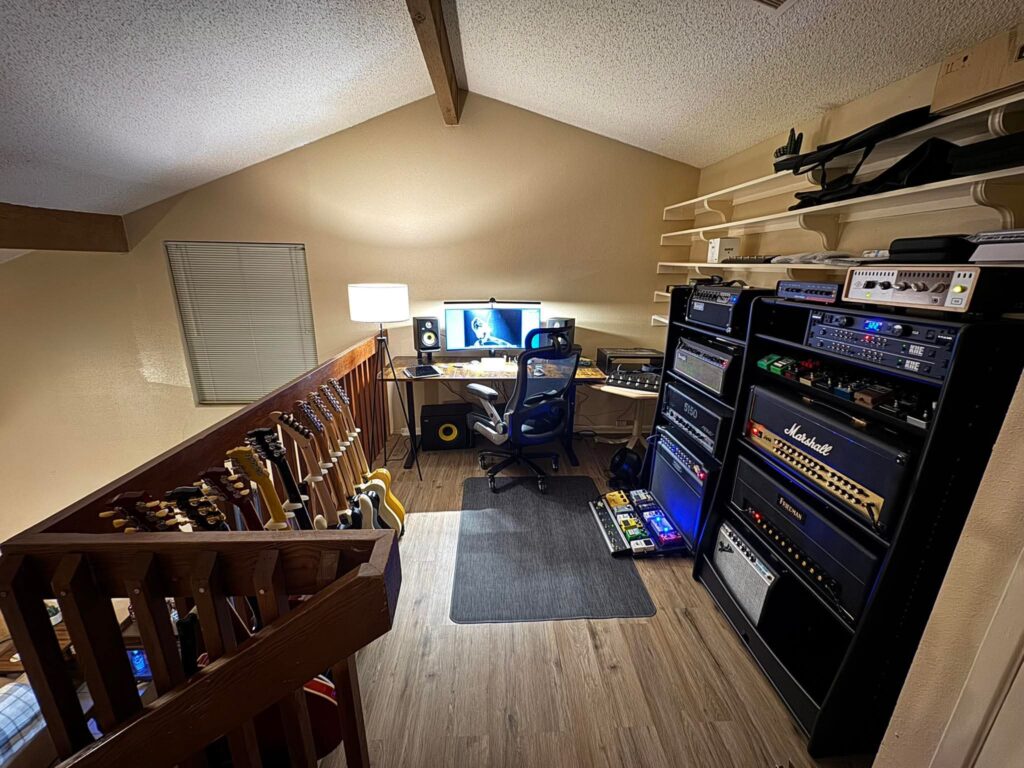
Some people treat their studio as a retreat from the rest of the house, a place to step away rather than just a place to work.
This suits someone who needs the room to feel separate, even if it’s only a curtain or a rug marking where the space begins.
That’s a Wrap
None of this requires starting over or buying anything new. Wabi-sabi works with what you’ve already got, the dented desk, the mismatched chair, the wall you never got around to painting.
If your studio has been sitting unfinished because it didn’t look right, this is your reminder that it probably already does.